- Animals
- ›Arthropods
- ›Chelicerates
- ›Arachnids
- ›Mites and Ticks
- ›Parasitiformes
- ›Ticks
- ›Hardbacked Ticks
- ›Rhipicephalus
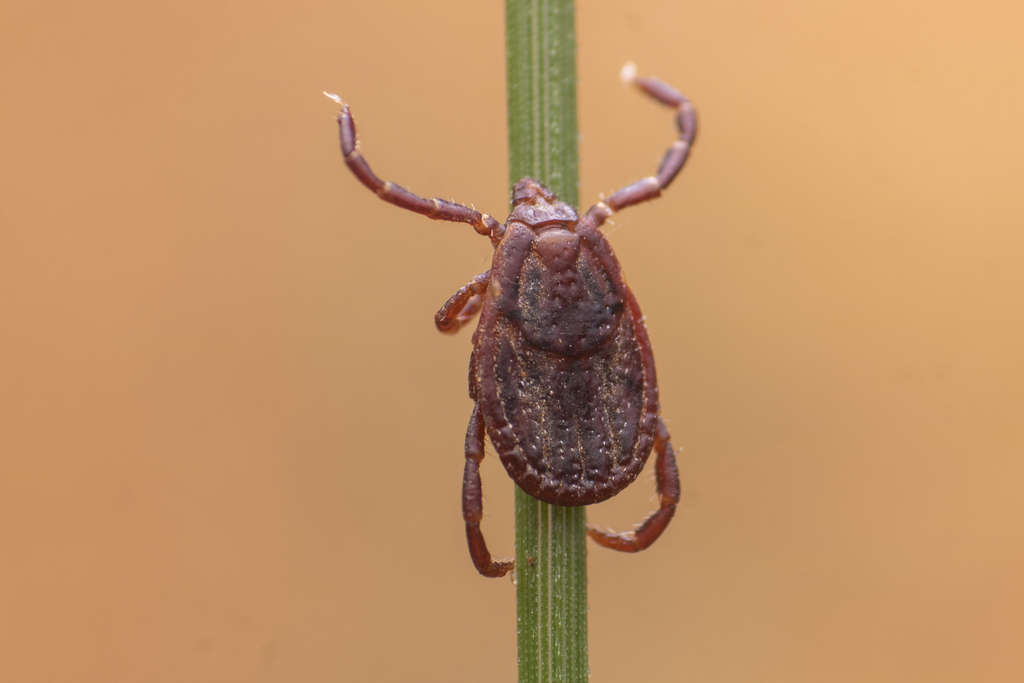
Brown Dog Tick
Rhipicephalus sanguineus
Rhipicephalus sanguineus, commonly called the brown dog tick, kennel tick, or pantropical dog tick, is a species of tick found worldwide, but more commonly in warmer climates. This species is unusual among ticks in that its entire lifecycle can be completed indoors. The brown dog tick is easily recognized by its reddish-brown color, elongated body shape, and hexagonal basis capituli (flat surface where mouthparts are attached). Adults are 2.28 to 3.18 mm in length and 1.11 to 1.68 mm in width. They do not have ornamentation on their backs.
From the article Rhipicephalus sanguineus on Wikipedia (CC BY-SA), quoted section by section
Range & habitat
A cosmopolitan species, it can be found worldwide with the exception of the United Kingdom where Hoyle et al. 2001 and Bates et al. 2002 found it only in quarantine kennels. No further intrusion into the UK has been found as of 2010. Due to global warming the distribution is changing with autochthonous cases in Hungary, for example, emerging and increasing since 2005.
Wikipedia: “Distribution”
In medicine
Rhipicephalus sanguineus is one of the most important vectors of diseases in dogs worldwide. In the United States, R. sanguineus is a vector of many disease-causing pathogens in dogs, including Ehrlichia canis, which causes canine ehrlichiosis, and Babesia canis, which is responsible for canine babesiosis. In dogs, symptoms of canine ehrlichiosis include lameness and fever; those for babesiosis include fever, anorexia, and anemia. R. sanguineus has not been shown to transmit the bacteria that cause Lyme disease in humans. In parts of Europe, Asia, and Africa, it is a vector of Rickettsia conorii, known locally as Mediterranean spotted fever, boutonneuse fever, or tick typhus. It can also transmit Rickettsia rickettsii, the bacteria responsible for causing Rocky Mountain spotted fever in humans in the Southwestern United States.
Wikipedia: “Medical importance”
Where it lives
Recorded sightings
—
geo-referenced records in GBIF, from museums, herbaria and field observers.
Drag the globe to turn it. Dots are where records exist, not a range map; darker means more records.
In the stacks
Searching the stacks…
Every page naming Rhipicephalus sanguineus in the Biodiversity Heritage Library →
This page is assembled live from iNaturalist, GBIF, Wikipedia, the Source Library and the Internet Archive. It is not yet part of the hand-edited codex. iNaturalist taxon 229905.