- Animals
- ›Chordates
- ›Vertebrates
- ›Amphibians
- ›Frogs and Toads
- ›Southern Frogs
- ›Leptodactylinae
- ›Leptodactylus
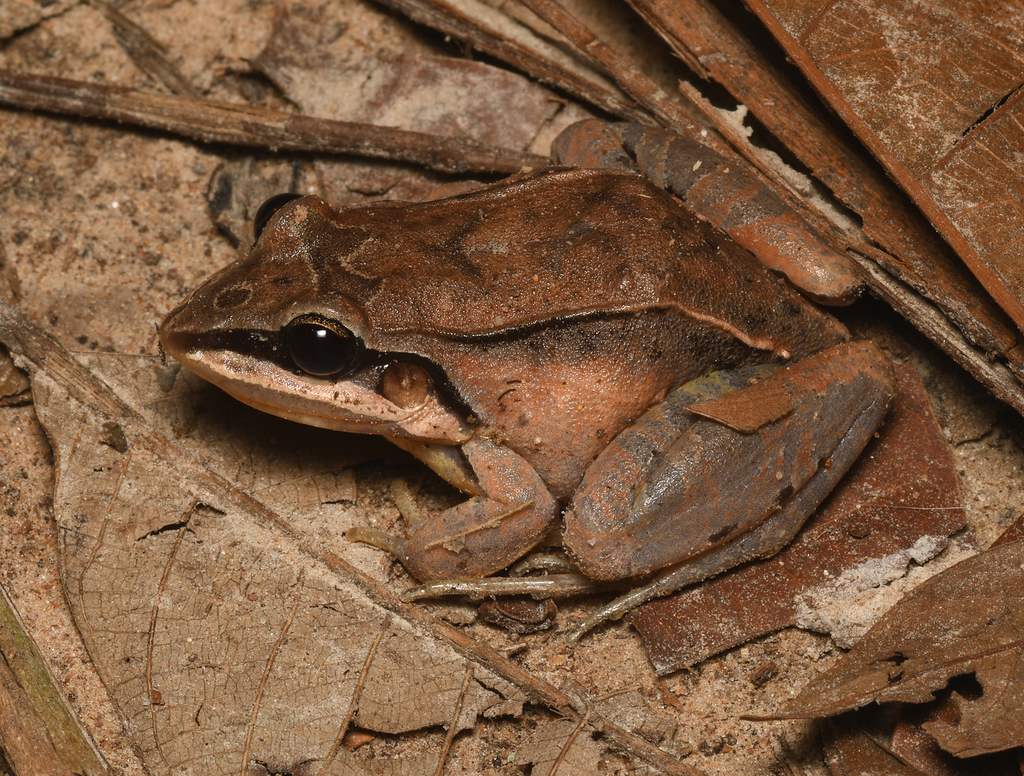
Madre de Dios Thin-toed Frog
Leptodactylus didymus
Leptodactylus didymus is a species of frog in the family Leptodactylidae. It is found in Bolivia and Peru. Its natural habitats are subtropical or tropical moist lowland forests, swamps, intermittent freshwater marshes, pastureland, rural gardens, urban areas, and heavily degraded former forest.
From the article Leptodactylus didymus on Wikipedia (CC BY-SA), quoted section by section
Range & habitat
This terrestrial frog has been seen in primary and secondary rainforests and sometimes urban areas. Scientists have seen it between 0 and 450 meters above sea level. Scientists have reported the frog in protected places: Tambopata National Reserve, Parque Ambiental Chico Mendes, Reserva Experimental Catuaba, Parque Nacional da Serra do Divisor, and Parque Zoobotânico da Universidade Federal do Acre in Brazil.
Wikipedia: “Habitat”
What it does
This frog deposits its eggs in a nest out of bubbles, a few hundred at a time. The tadpoles have been observed aggregating to survive low-water conditions.
Wikipedia: “Reproduction”
Listen
Looking for field recordings…
Where it lives
Recorded sightings
—
geo-referenced records in GBIF, from museums, herbaria and field observers.
Drag the globe to turn it. Dots are where records exist, not a range map; darker means more records.
In the stacks
Searching the stacks…
Every page naming Leptodactylus didymus in the Biodiversity Heritage Library →
This page is assembled live from iNaturalist, GBIF, Wikipedia, the Source Library and the Internet Archive. It is not yet part of the hand-edited codex. iNaturalist taxon 22964.