- Animals
- ›Molluscs
- ›Gastropods
- ›Heterobranchs
- ›Euthyneura
- ›Tectipleura
- ›Eupulmonata
- ›Common Land Snails and Slugs
- ›Helicina
- ›Arionoidei
- ›Roundback Slugs and Allies
- ›Banana Slugs and Allies
- ›Ariolimacinae
- ›Ariolimax
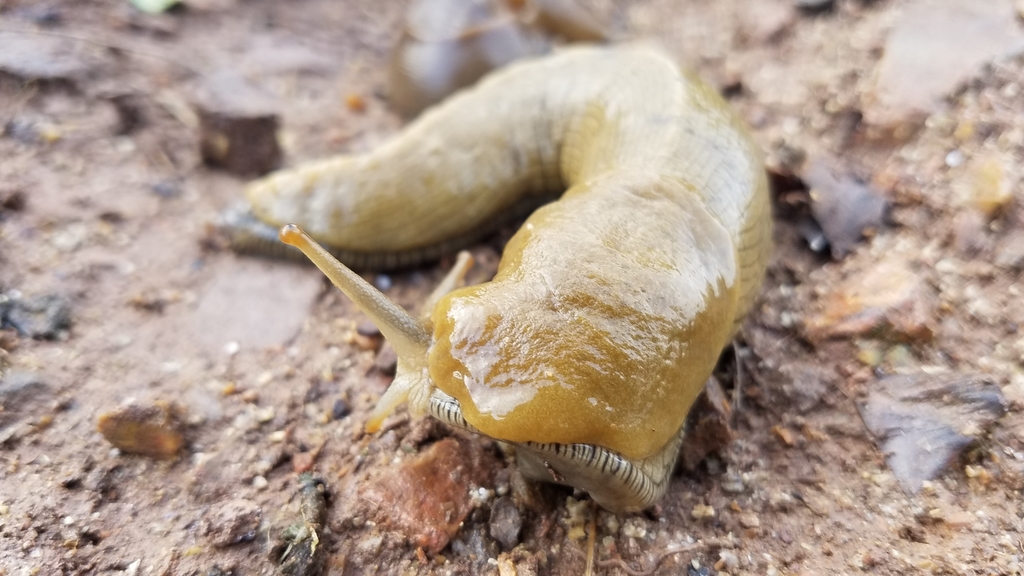
Button's Banana Slug
Ariolimax buttoni
Ariolimax buttoni is a species of banana slug native to the West Coast of the United States. The species has a yellowish-tan hue that is similar to a banana and can be either spotted or unspotted. These slugs tend to be more sedentary but will migrate to find food or reproduce.
From the article Ariolimax buttoni on Wikipedia (CC BY-SA), quoted section by section
What it does
Banana slugs are hermaphroditic, meaning they are both male and female at the same time. During reproduction, A. buttoni engages in apophallation – the behavior in which a slug chews off its mating partner's penis. Their mating season lasts from February to early September. Copulation itself is long. One study reported that on average the mating process lasted up to seven hours with extreme cases continuing for 23. Since the slugs are hermaphroditic, a slug acting as a female inverts its penis to allow sexual reproduction. However, cross-fertilization is not always necessary. A. buttoni can produce viable offspring with high rates of hatching success through uniparental reproduction.
Wikipedia: “Reproduction”
Where it lives
Recorded sightings
—
geo-referenced records in GBIF, from museums, herbaria and field observers.
Drag the globe to turn it. Dots are where records exist, not a range map; darker means more records.
In the stacks
Searching the stacks…
Every page naming Ariolimax buttoni in the Biodiversity Heritage Library →
This page is assembled live from iNaturalist, GBIF, Wikipedia, the Source Library and the Internet Archive. It is not yet part of the hand-edited codex. iNaturalist taxon 214185.