 NL·0762
Herbarium of the Nature Library
- Name
- Pharomachrus mocinno
- Family
- Trogonidae
- Native to
- Cloud forests from southern Mexico to western Panama
- Habitat
- Montane cloud forest
On eBird ↗
Resplendent Quetzal
Live sightings near you, the range map, bar charts of when it is seen, and Macaulay Library photos and recordings.
Resplendent quetzal
Pharomachrus mocinno
Also calledQuetzalli (Nahuatl) · Kʼukʼ (Kʼicheʼ Maya) · Quetzal (Spanish) · Pájaro serpiente (folk Spanish)
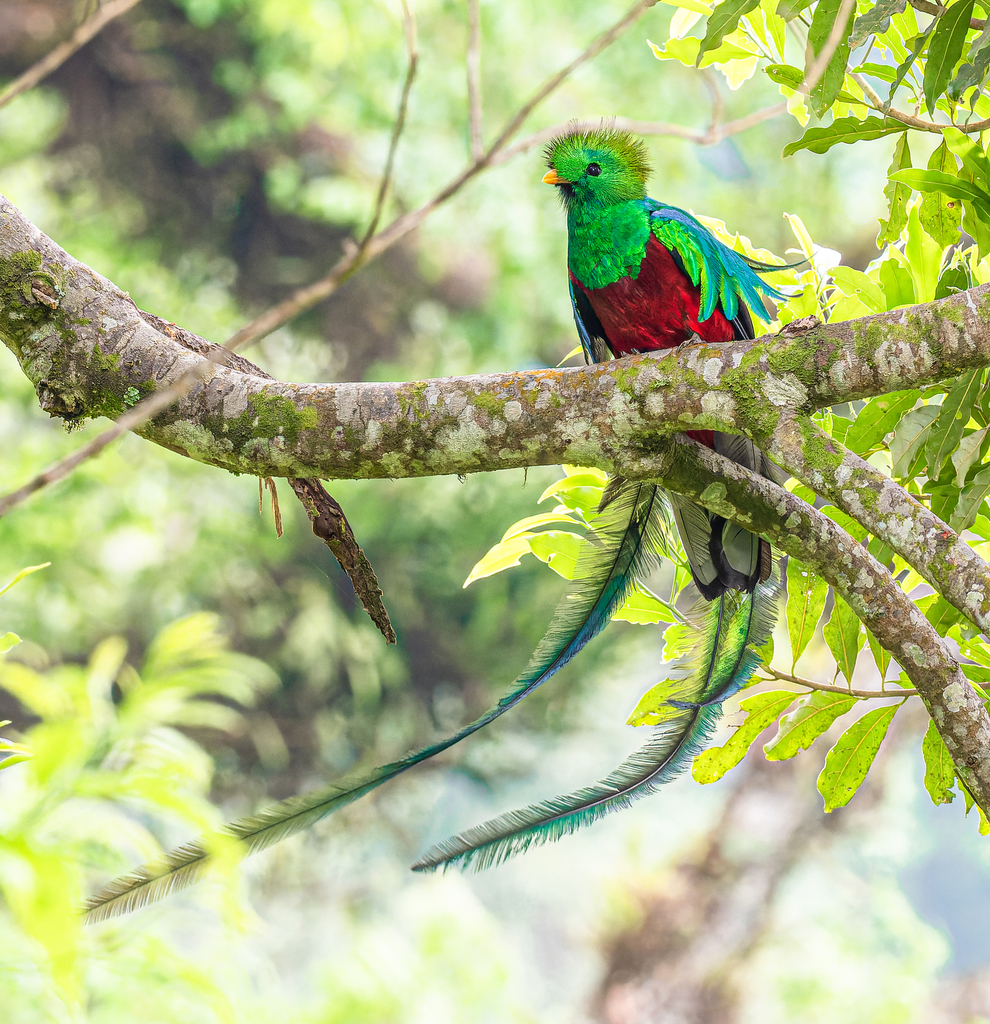
An iridescent green trogon of Central American cloud forests whose breeding males grow tail-covert streamers up to about 65 cm long, making the bird about 1 m long. It was sacred to the Maya and Aztecs and is Guatemala's national bird.
The resplendent quetzal is a small bird found in Central America and southern Mexico that lives in tropical forests, particularly montane cloud forests. They are part of the family Trogonidae and have two recognized subspecies, P. m. mocinno and P. m. costaricensis. Like other quetzals, the resplendent is mostly omnivorous; its diet mainly consists of fruits of plants in the laurel family, Lauraceae, but it occasionally also preys on insects, lizards, frogs and snails. Wikipedia
What it can do
- iMales grow streaming tail coverts longer than their body
- iiSwallows wild avocados whole and regurgitates the pits, dispersing laurel tree seeds
- iiiIts green is structural colour, shifting from gold to blue
- ivMigrates up and down mountains following fruiting trees
In the field
Field marks
- aMale shimmering emerald-green with a crimson belly
- bMale's long green tail streamers up to about 65 cm
- cHelmet-like crest and yellow bill
- dFemale duller green with grey breast and no streamers
- Voice
- A repeated, mellow 'kyow' and whistled 'kee-oo'
- Not to be confused with
- Golden-headed quetzal lives only in South America. Trogons in the same forests are smaller, with no streamers.
- Where to see it
- Monteverde and San Gerardo de Dota (Costa Rica), and cloud forests of Guatemala's Verapaz
- When
- Resident; easiest during breeding Mar–Jun, often near wild avocado (Lauraceae) trees
Listen
Looking for field recordings…
Life & habits
- Diet
- Fruit, especially wild avocados (Lauraceae); also insects and small frogs
- Habitat
- Humid montane cloud forest
- Size
- 36–40 cm, plus male tail streamers up to ~65 cm
Pairs nest in holes in rotting trees; the male's tail often pokes out of the entrance while he incubates.
Where it lives
Recorded sightings
—
geo-referenced records in GBIF, from museums, herbaria and field observers.
Native range
Cloud forests from southern Mexico to western Panama
Drag the globe to turn it. Dots are where records exist, not a range map; darker means more records.
In the old herbals & bestiaries
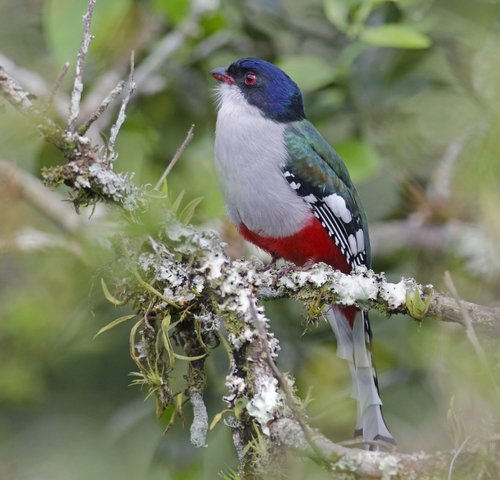
No plate in the Source Library names this exact species, so these show its closest relatives as the old naturalists drew them: same genus, or the same kind of animal. Click a plate to read the page it came from, with translation.


In the stacks
Searching the stacks…
Every page naming Pharomachrus mocinno in the Biodiversity Heritage Library →
Marginalia
Its feathers were reserved for Maya and Aztec nobility and priests, and the god Quetzalcoatl was the 'feathered serpent'. Guatemala's currency is the quetzal.
Curiosity
Legend says the quetzal's red breast was stained by the blood of the Kʼicheʼ hero Tecún Umán.
Kinship


Fact-checked: 1 correction made to this sheet. Photographs: iNaturalist contributors under the licences shown. Records: GBIF.org. Historical plates: Source Library (CC BY-SA 4.0; originals public domain). Summary text: Nature Library editors and Wikipedia (CC BY-SA). Medicinal and edibility notes are historical and educational, not advice. iNaturalist taxon 20856.