- Plants
- ›red algae
- ›true red algae
- ›Florideophycean algae
- ›Rhodymeniophycidae
- ›Bonnemaisoniales
- ›Bonnemaisoniaceae
- ›Asparagopsis
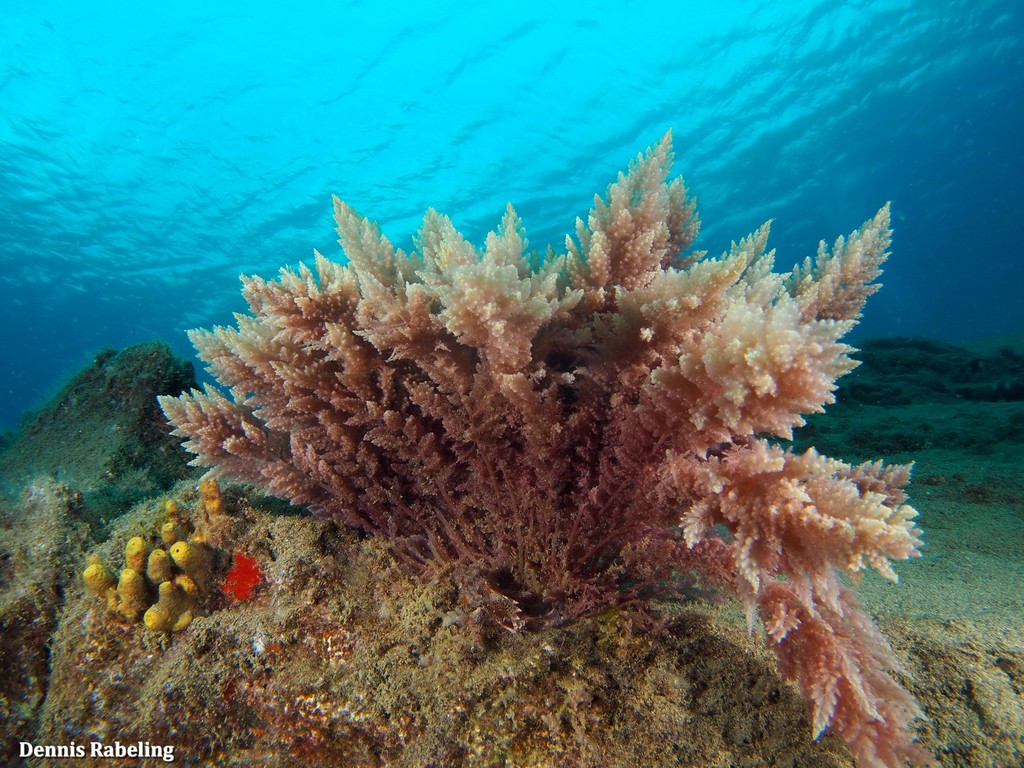
red sea plume
Asparagopsis taxiformis
Asparagopsis taxiformis (red sea plume or limu kohu), formerly A. sanfordiana, is a species of red algae, with cosmopolitan distribution in tropical to warm temperate waters. Researchers have demonstrated that feeding ruminants a diet containing 0.2% A. taxiformis seaweed reduced their methane emissions by nearly 99 percent.
From the article Asparagopsis taxiformis on Wikipedia (CC BY-SA), quoted section by section
At the table
Asparagopsis is one of the most popular types of limu. in the cuisine of Hawaii, it is principally a condiment. It is known as Limu kohu in the Hawaiian language, meaning "pleasing seaweed". Limu kohu has a bitter taste, somewhat reminiscent of iodine, and is a traditional ingredient in poke. The essential oil of limu kohu is 80% bromoform (tri-bromo-methane) by weight. It also includes many other bromine- and iodine-containing organic compounds.
Wikipedia: “Culinary uses”
In human culture
A. taxiformis has yet to be commercially farmed at scale, but several companies are working towards it as they make the seaweed available to the livestock industry. A research/development initiative called Greener Grazing is seeking to close the life cycle of A. taxiformis and demonstrate ocean-based grow-out. A startup out of KTH Royal Institute of Technology, Volta Greentech, Sea Forest, SeaStock, Immersion Group, Synergraze, Symbrosia and Blue Ocean Barns, are growing A. taxiformis in vertical, near-shore land-based tanks, using seawater to provide the proper temperature and nutrients. Symbrosia, from Yale University, is looking to integrate the cultivation with whiteleg shrimp on land, using a patent-pending technology. Another start-up, CH4 Global, has developed energy-efficient EcoParks in Australia and New Zealand to produce A. taxiformis for use in its solutions for feedlot cattle. CH4 Global has partnered with Clean Seas to grow A. taxiformis at Arno Bay, Australia, where it uses carbon and nitrogen waste from Clean Seas' ocean-based fish farms as food for the seaweed. In 2023 CH4 global reported its first commercial sale and intentions to feed the additive to 10,000 cattle. Volta Greentech, Blue Ocean Barns, Symbrosia and CH4 Global have been backed by venture capital funds.
Wikipedia: “Aquaculture”
Where it lives
Recorded sightings
—
geo-referenced records in GBIF, from museums, herbaria and field observers.
Drag the globe to turn it. Dots are where records exist, not a range map; darker means more records.
In the stacks
Searching the stacks…
Every page naming Asparagopsis taxiformis in the Biodiversity Heritage Library →
This page is assembled live from iNaturalist, GBIF, Wikipedia, the Source Library and the Internet Archive. It is not yet part of the hand-edited codex. iNaturalist taxon 208548.