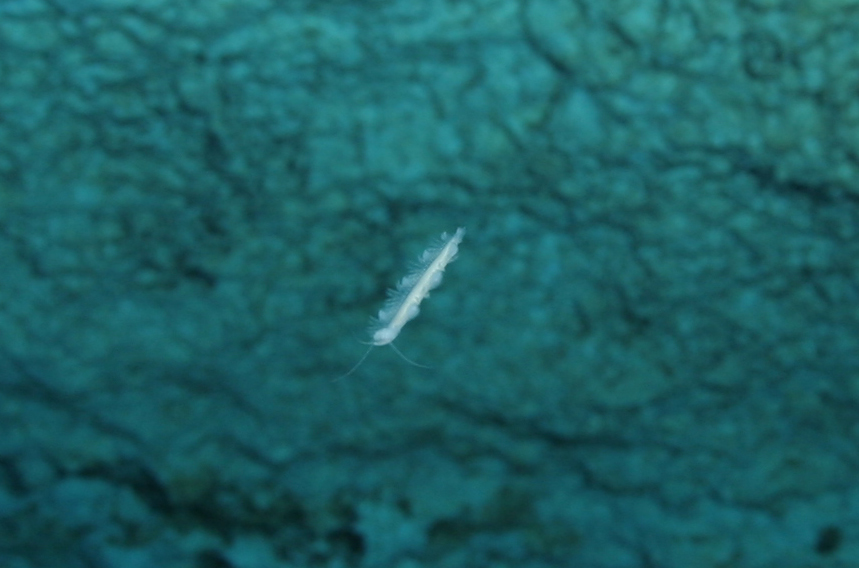
Speleonectes
Xibalbanus tulumensis (previously Speleonectes tulumensis – Speleonectes = 'cave swimmer'; tulumensis = 'occurring at Tulum' – Xibalbanus = 'from Xibalba') is a venomous, hermaphroditic crustacean found in anchialine caves on the Yucatán Peninsula in the Caribbean Sea. This blind remipede liquefies the body contents of other crustaceans with a venom similar to that of rattlesnakes, and which includes digestive enzymes and a paralysing toxin.
In her 1987 description, Smithsonian biologist Jill Yager wrote 'Body elongate, slender, without eyes or pigment. Cephalic shield small, tapering slightly at anterior end. Trunk segment numbers increasing with age, maximum number examined was 36 segments'. The numerous legs are used as oars for swimming. The species is 25–30 millimetres (1.0–1.2 in) long, and found in cenotes close to the sea, with salty seawater lying beneath the fresh water, and grading smoothly from one type to the other (halocline).
6 branches of this genus, most-observed first
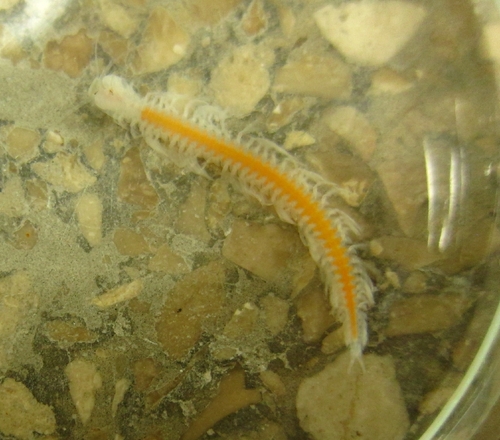
Speleonectes gironensis
speciesSpeleonectes gironensis
Speleonectes epilimnius
speciesSpeleonectes epilimnius
Speleonectes minnsi
speciesSpeleonectes minnsi
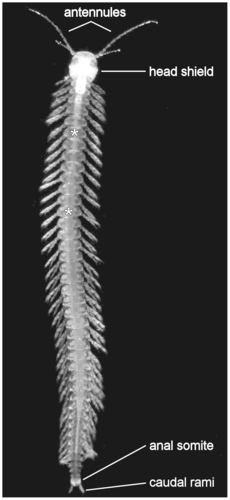
Speleonectes tanumekes
speciesSpeleonectes tanumekes
Speleonectes lucayensis
speciesSpeleonectes lucayensis
Speleonectes kakuki
speciesSpeleonectes kakuki
Where it lives
Recorded sightings
—
geo-referenced records in GBIF, from museums, herbaria and field observers.
Drag the globe to turn it. Dots are where records exist, not a range map; darker means more records.
In the stacks
Searching the stacks…
Every page naming Speleonectes in the Biodiversity Heritage Library →
This page is assembled live from iNaturalist, GBIF, Wikipedia, the Source Library and the Internet Archive. It is not yet part of the hand-edited codex. iNaturalist taxon 206827.