
Tinamous
Tinamiformes
Tinamous () are members of the order Tinamiformes (), and family Tinamidae (), divided into two distinct subfamilies, containing 46 species found in Mexico, Central America, and South America. The word "tinamou" comes from the Galibi term for these birds, tinamu. Tinamous are the only living group of palaeognaths able to fly, and were traditionally regarded as the sister group of the flightless ratites, but recent work places them well within the ratite radiation as most closely related to the extinct moa of New Zealand, implying flightlessness emerged among ratites multiple times. Tinamous first appear in the fossil record in the Miocene epoch. They are generally sedentary, ground-dwelling and, though not flightless, when possible avoid flight in favour of hiding or running away from danger. They are found in a variety of habitats, ranging from semi-arid alpine grasslands to tropical rainforests. The two subfamilies are broadly divided by habitat, with the Nothurinae referred to as steppe or open country tinamous, and the Tinaminae known as forest tinamous.
Although some species are quite common, tinamous are shy and secretive birds. They are active during the day, retiring to roosts at night. They generally have cryptic plumage, with males and females similar in appearance, though the females are usually larger. They are opportunistic and omnivorous feeders, consuming a wide variety of plant and animal food from fruits and seeds to worms, insects and small vertebrates. They will dust-bathe as well as wash themselves by standing in heavy rain.
1 branches of this order, most-observed first · about 47 known species
See this branch on the Wheel of Life →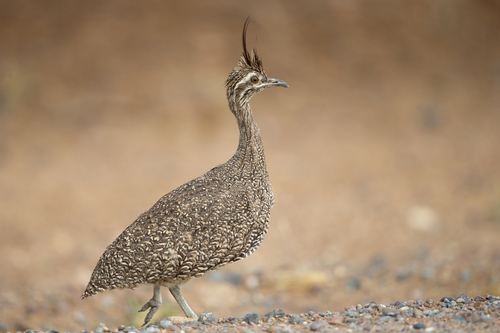
Where it lives
Recorded sightings
—
geo-referenced records in GBIF, from museums, herbaria and field observers.
Drag the globe to turn it. Dots are where records exist, not a range map; darker means more records.
In the stacks
Searching the stacks…
Every page naming Tinamiformes in the Biodiversity Heritage Library →
This page is assembled live from iNaturalist, GBIF, Wikipedia, the Source Library and the Internet Archive. It is not yet part of the hand-edited codex. iNaturalist taxon 20530.