- Animals
- ›Chordates
- ›Vertebrates
- ›Birds
- ›Cranes, Rails, and Allies
- ›Rails, Gallinules, and Coots
- ›Amaurornis
On eBird ↗
Plain Bush-hen
Live sightings near you, the range map, bar charts of when it is seen, and Macaulay Library photos and recordings.
Plain Bush-hen
Amaurornis olivacea
The plain bush-hen (Amaurornis olivacea), also named Philippine bush-hen or simply bush-hen, is a species of bird in the family Rallidae. It is endemic to the Philippines.
From the article Plain bush-hen on Wikipedia (CC BY-SA), quoted section by section
Description
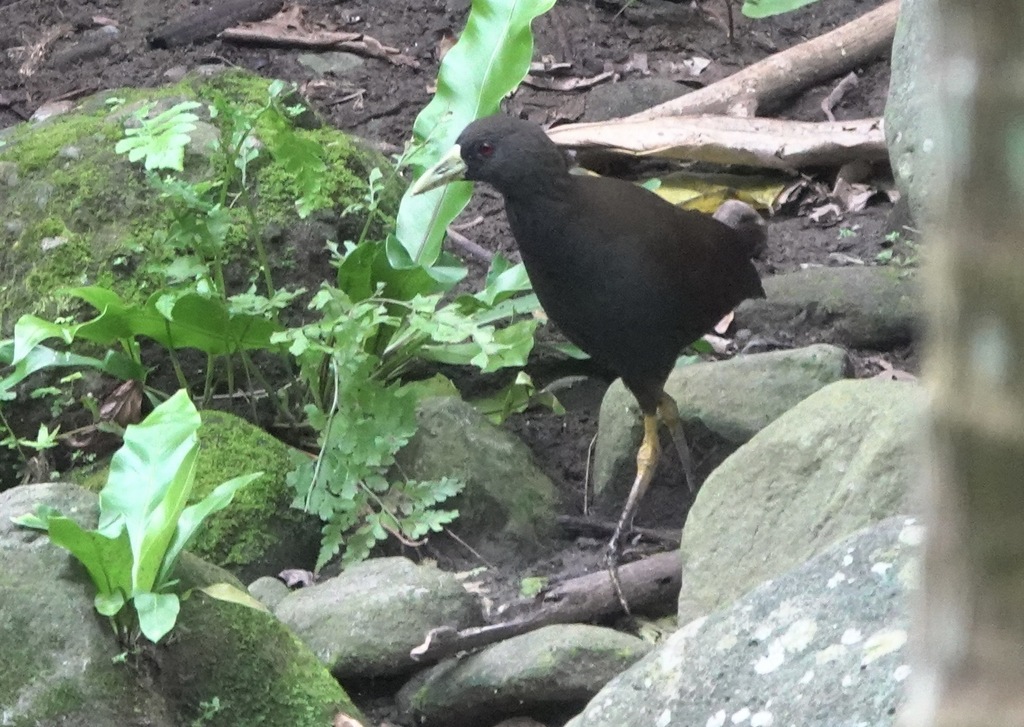
It was formerly considered conspecific with the Pale-vented bush-hen, but is differentiated by its darker plumage and by being on average slightly larger (though with much overlap). It is 24–31 cm long, with a dark brown crown, nape, back, and wings, and a dark grey face, throat, breast and belly; the under-tail coverts are dark orange-brown. The legs are light orange-brown, and the bill straw-yellow. This species is monotypic.
Wikipedia: “Description and taxonomy”
Range & habitat
This species occupies swampy grassland, shrubland and forest edge. The International Union for Conservation of Nature has assessed it as a Least-concern species owing to its wide range despite being generally uncommon. It is recommended that this be reassessed to Data deficient as its ecology and population are basically unknown. Both wetlands and forests in the Philippines are at risk from deforestation and land conversion.
== References ==
Wikipedia: “Habitat and conservation status”
What it does
There have been no species specific studies on its breeding and diet but it is presumed to have the same behaviour as the Pale-vented bush-hen. Feeds on insects, mostly earthworms and larvae, small vertebrates and vegetable matter. Not much is known about breeding but has records almost throughout the year. Nests in swampy conditions with a cup shaped nest made of plant matter. Known to lay 4 creamy white eggs with red spots.
Wikipedia: “Ecology and behaviour”
Listen
Looking for field recordings…
Where it lives
Recorded sightings
—
geo-referenced records in GBIF, from museums, herbaria and field observers.
Drag the globe to turn it. Dots are where records exist, not a range map; darker means more records.
In the stacks
Searching the stacks…
Every page naming Amaurornis olivacea in the Biodiversity Heritage Library →
This page is assembled live from iNaturalist, GBIF, Wikipedia, the Source Library and the Internet Archive. It is not yet part of the hand-edited codex. iNaturalist taxon 204.