On eBird ↗
Tongan Megapode
Live sightings near you, the range map, bar charts of when it is seen, and Macaulay Library photos and recordings.
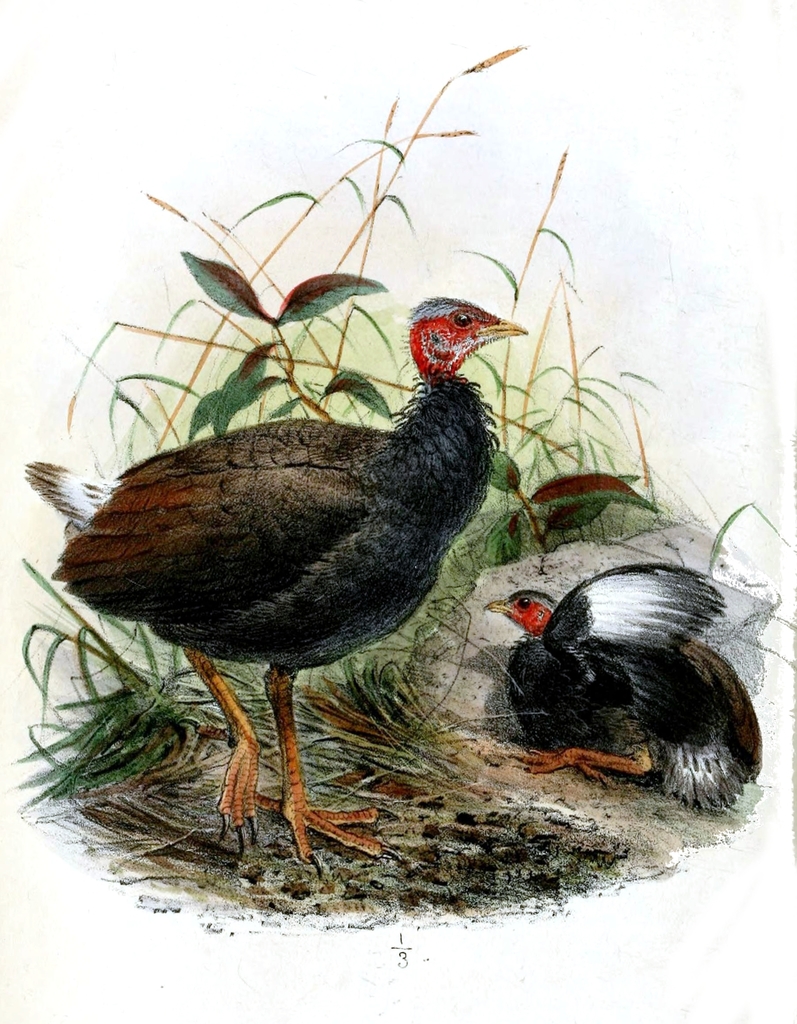
Tongan Megapode
Megapodius pritchardii
The Tongan megapode (Megapodius pritchardii) is a species of bird in the megapode family, Megapodiidae, currently endemic to Tonga. The species is also known as the Polynesian megapode, and as the Niuafo'ou megapode after the island of Niuafo'ou to which it was restricted for many years. The specific epithet honours British consul William Thomas Pritchard.
From the article Tongan megapode on Wikipedia (CC BY-SA), quoted section by section
Range & habitat
The Tongan megapode is the only remaining species of megapode in Tonga out of the four or five species that were present on the islands in prehuman times (as shown through the fossil record), and indeed the only species of megapode that survives in Polynesia. Similar extinctions occurred in Fiji and New Caledonia, which apparently had three species in prehistory. The species itself once had a more widespread distribution, occurring across most of Tonga, Samoa, and Niue. The cause of all these extinctions and declines was the arrival of humans on the islands, and the associated predation on adults and particularly eggs, as well as predation by introduced species. On Niuafo'ou the small human population and remoteness of its habitat probably saved the species. The only megapode to survive human arrival in Western Polynesia, "the megapode nesting grounds were carefully controlled by the ruling chief, thus assuring the continued survival of this population." Its natural habitat is tropical moist lowland forests. On Niuafo'ou it is most common on the central caldera. The Tongan megapode, like all megapodes, does not incubate its eggs by sitting on them; instead the species buries them in warm volcanic sands and soil and allows them to develop. On islands in former parts of its range without volcanoes it presumably created mounds of rotting vegetation and laid the eggs there. …
Wikipedia: “Distribution and habitat”
Listen
Looking for field recordings…
Where it lives
Recorded sightings
—
geo-referenced records in GBIF, from museums, herbaria and field observers.
Drag the globe to turn it. Dots are where records exist, not a range map; darker means more records.
In the stacks
Searching the stacks…
Every page naming Megapodius pritchardii in the Biodiversity Heritage Library →
This page is assembled live from iNaturalist, GBIF, Wikipedia, the Source Library and the Internet Archive. It is not yet part of the hand-edited codex. iNaturalist taxon 2021.