On eBird ↗
Moluccan Megapode
Live sightings near you, the range map, bar charts of when it is seen, and Macaulay Library photos and recordings.
Moluccan Scrubfowl
Eulipoa wallacei
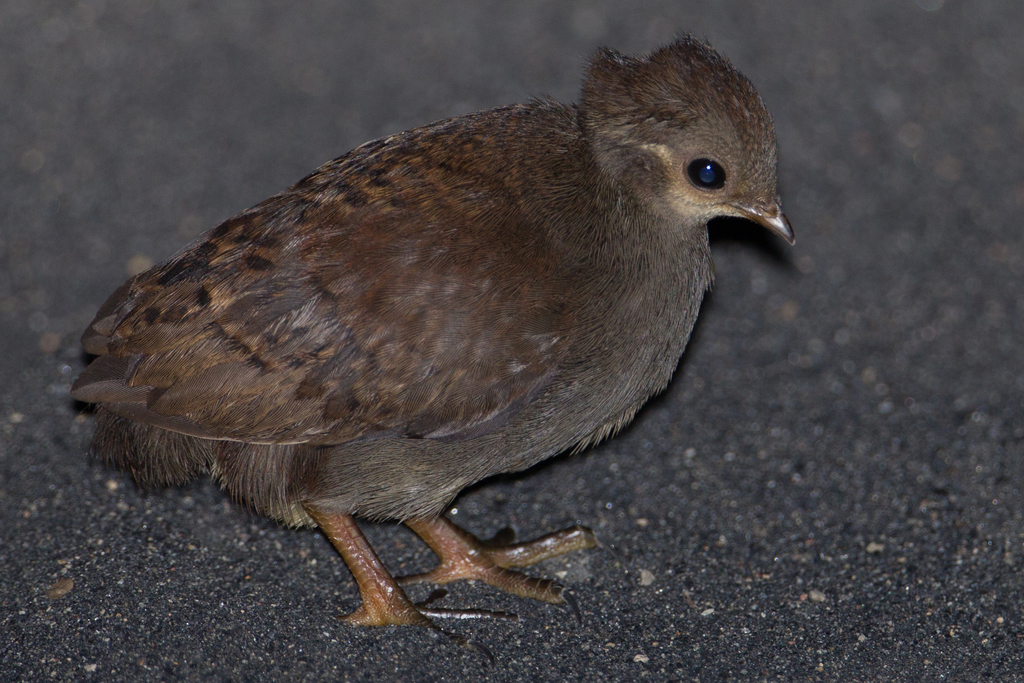
The Moluccan megapode (Eulipoa wallacei), also known as Wallace's scrubfowl, Moluccan scrubfowl or painted megapode, is a small, approximately 31 cm long, olive-brown megapode. The genus Eulipoa is monotypic, but the Moluccan megapode is sometimes placed in Megapodius instead. Both sexes are similar with an olive-brown plumage, bluish-grey below, white undertail coverts, brown iris, bare pink facial skin, bluish-yellow bill and dark olive legs. There are light grey stripes on reddish-maroon feathers on its back. The young has brownish plumage, a black bill, legs and hazel iris.
From the article Moluccan megapode on Wikipedia (CC BY-SA), quoted section by section
Range & habitat
An Indonesian endemic, the Moluccan megapode is confined to hill and mountain forests on the Maluku Islands of Halmahera, Buru, Seram, Ambon, Ternate, Haruku and Bacan. It is also found on Misool Island in West Papua province.
Wikipedia: “Distribution and habitat”
What it does
The Moluccan megapode is the only megapode known to lay its eggs nocturnally. The nesting grounds are usually located in sun-exposed beach or volcanic soils.
Wikipedia: “Behaviour”
Listen
Looking for field recordings…
Where it lives
Recorded sightings
—
geo-referenced records in GBIF, from museums, herbaria and field observers.
Drag the globe to turn it. Dots are where records exist, not a range map; darker means more records.
In the stacks
Searching the stacks…
Every page naming Eulipoa wallacei in the Biodiversity Heritage Library →
This page is assembled live from iNaturalist, GBIF, Wikipedia, the Source Library and the Internet Archive. It is not yet part of the hand-edited codex. iNaturalist taxon 2020.