- Animals
- ›Molluscs
- ›Bivalves
- ›Autobranchia
- ›Pteriomorphia
- ›Oysters and Allies
- ›Ostreoidea
- ›True Oysters
- ›Cupped Oysters
- ›Crassostrea
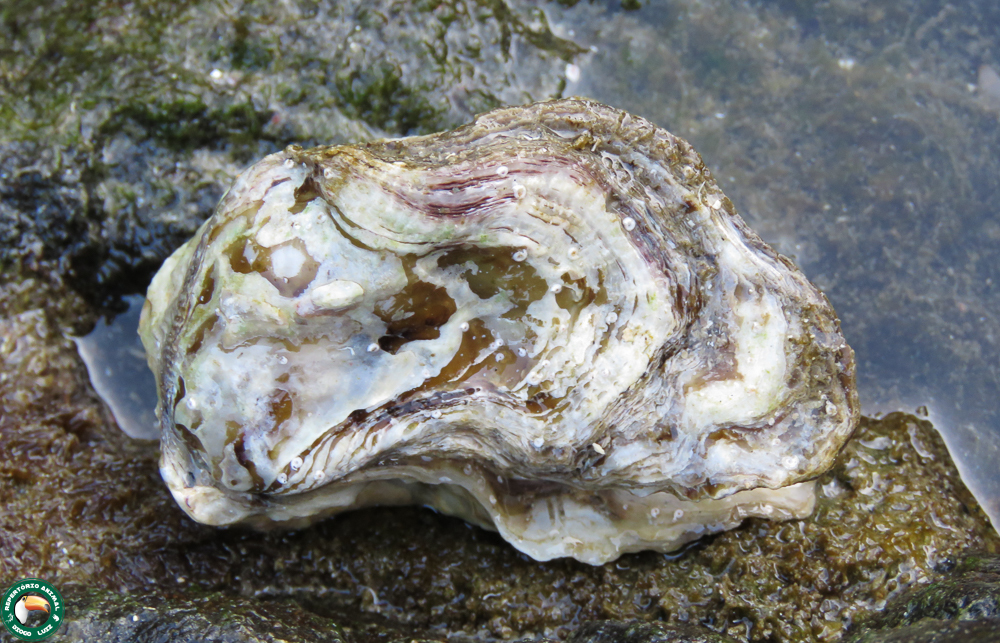
Mangrove Cupped Oyster
Crassostrea rhizophorae
Crassostrea rhizophorae, also known as the mangrove cupped oyster, is a species of euryhaline bivalve in the family Ostreidae. The common name mangrove cupped oyster comes from its association with the red mangrove tree Rhizophora mangle. C. rhizophorae is one of the predominant oyster species in the South Atlantic, specifically in Central and South America. It is often found in the vast mangrove ecosystem along the coast of multiple countries such as Brazil, Venezuela, Cuba, Mexico, Puerto Rico and many other along the Caribbean coastline.
From the article Crassostrea rhizophorae on Wikipedia (CC BY-SA), quoted section by section
Description
C. rhizophorae is often called the Caribbean or mangrove oyster due to the environment that it is found in. This species of oysters is an oviparous species, which indicates that they are animals that reproduce by laying their eggs without much embryonic development within the mother. C. rhizophorae, and more generally the genus, Crassostrea, are cup-like, or cupped, oysters, meaning that the shell itself has a cup shape to it. C. rhizophorae has a promyal chamber and small ostia. The oyster also has a thin, foliaceous, deeply cupped right valve and the upper left valve is small and flat, which enables it to fit into the lower one. The beak is twisted dorsally, and the muscle scar is near the dorsal margin of the shell. The shell is primarily composed of Calcium carbonate (CaCO3). Internally its anatomy consists of an abductor muscle, gills, labial palp, hinge, mouth, anus, mantle, digestive gland, heart and intestine, its muscle scar is often unpigmented. Adult C. rhizophorae can reach up to 10 cm (3.9 in) in height. However, in their natural environment, their growth is stunted, leading to a maximum height of 5 cm (2.0 in).
Wikipedia: “Characteristics”
What it does
Adult Crassostrea rhizophorae spawn into the water column where the eggs get fertilized by the sperm. The zygote is the first stage in its larval period which can last from a couple of hours up to approximately 24 hours. When the larvae starts developing a cilia the trochophore stage begins, they are now free-swimming. This stage lasts approximately 12h until the shell starts to develop, changing into D-shaped veliger larvae. At the 20h mark approximately, it will develop the Umbo, for the next 4 days it will be developing until and eye spot and a pedal organ will begin to develop. Both will help in the process of identifying and settling in the selected substrate, this period is called the pediveliger phase which lasts around 16 days. Now the larvae settle and commence the metamorphosis and settlement process. Finally after settled the larvae will begin to form gills and other organs finishing its post larval stage which can last up to 20 days. After going through metamorphosis the larvae becomes spat and finishes developing its organs.
Wikipedia: “Life cycle”
Where it lives
Recorded sightings
—
geo-referenced records in GBIF, from museums, herbaria and field observers.
Drag the globe to turn it. Dots are where records exist, not a range map; darker means more records.
In the stacks
Searching the stacks…
Every page naming Crassostrea rhizophorae in the Biodiversity Heritage Library →
This page is assembled live from iNaturalist, GBIF, Wikipedia, the Source Library and the Internet Archive. It is not yet part of the hand-edited codex. iNaturalist taxon 194680.