On eBird ↗
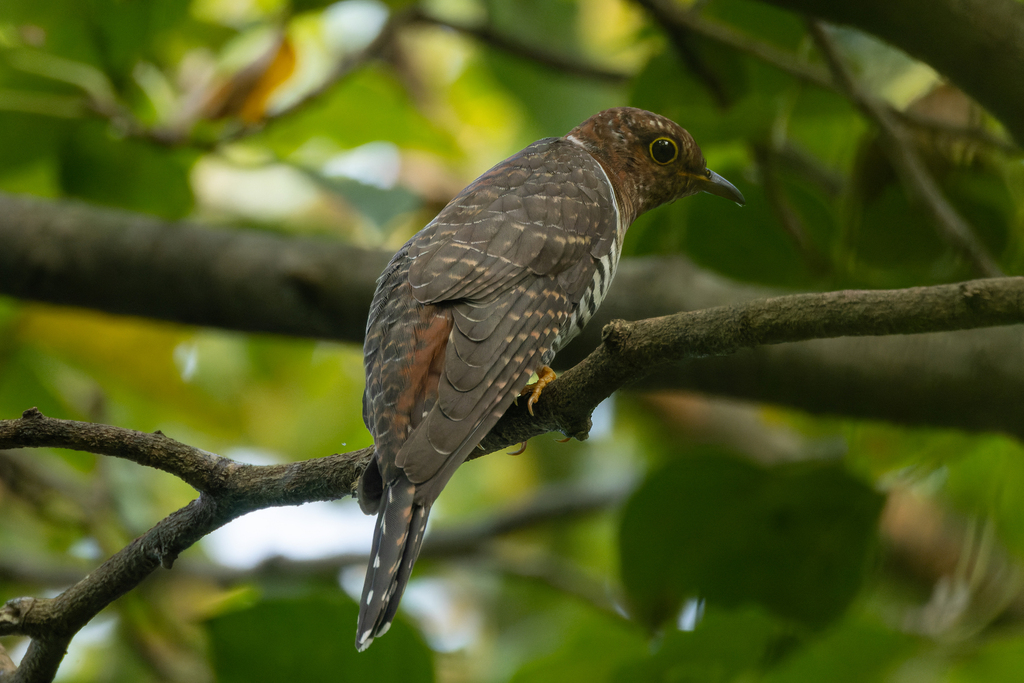
Lesser Cuckoo
Live sightings near you, the range map, bar charts of when it is seen, and Macaulay Library photos and recordings.
Lesser Cuckoo
Cuculus poliocephalus
The lesser cuckoo (Cuculus poliocephalus) is a species of cuckoo in the family Cuculidae.
It is native to East Asia and the Himalayas; it winters to East Africa and Sri Lanka.
From the article Lesser cuckoo on Wikipedia (CC BY-SA), quoted section by section
In human culture
In Japan, the bird is called hototogisu (ホトトギス/杜鵑) and frequently praised in senryu for its song. It has been celebrated by numerous waka poets since the anthology Kokin wakashū (920). Sei Shōnagon in her essay The Pillow Book (1002) mentions a trip she and other courtiers mounted on just to hear this bird, and it was expected of them that they would compose poetry on the occasion. It is also the central image in poem 81 by Tokudaiji Sanesada in the anthology of 100 poems, the Hyakunin Isshu. The Japanese haiku magazine Hototogisu takes its name from the bird, and the magazine's mastermind Masaoka Shiki's adopted pen name, Shiki (子規) also refers to the lesser cuckoo; shiki corresponds to the Chinese zǐguī (子規), which is an alias for its standard name dùjuān (杜鵑). In Chinese, dùjuān is a generic name and the species' common name is xiāodùjuān (小杜鵑). In Korean literature, the song of the lesser cuckoo represents the sound of sadness.
== References ==
Wikipedia: “In culture”
Listen
Looking for field recordings…
Where it lives
Recorded sightings
—
geo-referenced records in GBIF, from museums, herbaria and field observers.
Drag the globe to turn it. Dots are where records exist, not a range map; darker means more records.
In the stacks
Searching the stacks…
Every page naming Cuculus poliocephalus in the Biodiversity Heritage Library →
This page is assembled live from iNaturalist, GBIF, Wikipedia, the Source Library and the Internet Archive. It is not yet part of the hand-edited codex. iNaturalist taxon 1902.