- Animals
- ›Chordates
- ›Vertebrates
- ›Mammals
- ›Therians
- ›Placental Mammals
- ›Ungulates, Carnivorans, and Allies
- ›Bats
- ›Yangochiroptera
- ›Vespertilionoid Bats
- ›Evening Bats
- ›Vesper Bats
- ›Tricolored and Canyon Bats

Perimyotis
The tricolored bat (Perimyotis subflavus) or American perimyotis is a species of microbat native to eastern North America. Formerly known as the eastern pipistrelle, based on the incorrect belief that it was closely related to European Pipistrellus species, the closest known relative of the tricolored bat is now recognized as the canyon bat. Its common name "tricolored bat" derives from the coloration of the hairs on its back, which have three distinct color bands. It is the smallest bat species in the eastern and midwestern US, with individuals weighing only 4.6–7.9 g (0.16–0.28 oz). This species mates in the fall before hibernation, though due to sperm storage, females do not become pregnant until the spring. Young are born helpless, though rapidly develop, flying and foraging for themselves by four weeks old. It has a relatively long lifespan, and can live nearly fifteen years.
In the summer, females roost in small groups and males roost solitarily in tree foliage or beard lichen. It eats a diverse array of insects, foraging with a slow, erratic flight and navigating via echolocation. Though once considered one of the most common bat species in its range, its populations have declined rapidly since 2006 with the introduction of the fungal disease white-nose syndrome. It was listed as an endangered species in 2012 in Canada, and has been petitioned for inclusion on the US endangered species list.
1 branches of this genus, most-observed first · about 1 known species
See this branch on the Wheel of Life →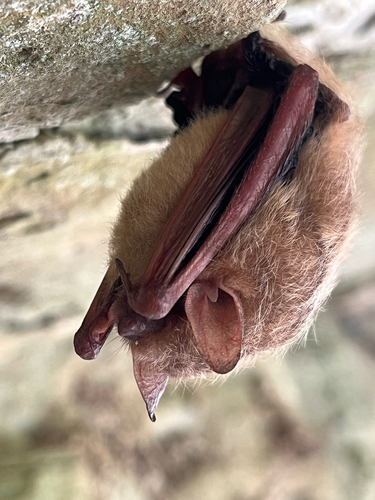
Where it lives
Recorded sightings
—
geo-referenced records in GBIF, from museums, herbaria and field observers.
Drag the globe to turn it. Dots are where records exist, not a range map; darker means more records.
In the stacks
Searching the stacks…
Every page naming Perimyotis in the Biodiversity Heritage Library →
This page is assembled live from iNaturalist, GBIF, Wikipedia, the Source Library and the Internet Archive. It is not yet part of the hand-edited codex. iNaturalist taxon 183165.