- Fungi Including Lichens
- ›Ascomycete Fungi
- ›Sac Fungi and Lichens
- ›Common Lichens
- ›Shield Lichens, Sunburst Lichens, Rosette Lichens, and Allies
- ›shield lichens, rim lichens, and allies
- ›shield lichens and allies
- ›typical shield lichens
- ›Pseudevernia
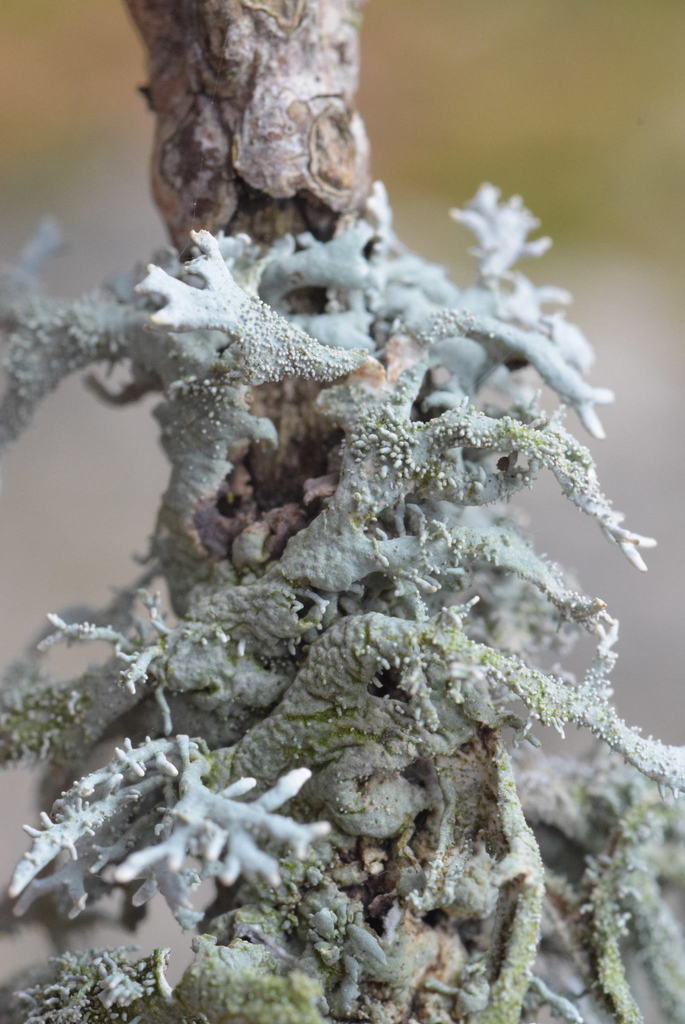
tree moss
Pseudevernia furfuracea
Pseudevernia furfuracea, commonly known as tree moss, is a lichenized species of fungus that grows on the bark of firs and pines. The lichen is rather sensitive to air pollution, its presence usually indicating good air conditions in the growing place. The species has numerous human uses, including use in perfume, embalming and in medicine. Large amounts of tree moss is annually processed in France for the perfume industry.
From the article Pseudevernia furfuracea on Wikipedia (CC BY-SA), quoted section by section
Description
Pseudevernia furfuracea is associated with photobionts from the green algae genus Trebouxia. It reproduces asexually by isidia. The ontogeny of isidia development and its role in CO2 gas exchange in P. furfuracea has been investigated. The preferred growing surfaces for P. furfuracea are the so-called "nutrient poor" bark trees, including birch, pine and spruce. While P. furfuracea reproduces mainly through isidia, some specimens rarely develop soralia. When present, the soralia are regularly capitate, substipitate, whitish, and occur on both laminal and marginal surfaces of the thalli. The species has two morphologically identical varieties that are distinguished by the secondary metabolites they produce: var. ceratea Zopf. produces olivetoric acid and other physodic acids, while var. furfuracea produces physodic but not olivetoric acid. Some authors (e.g., Hale 1968) have separated the chemotypes at the species level, designating the olivetoric acid-containing specimens as Pseudevernia olivetorina, but more recent literature separates them at the varietal level.
In medicine
In Alfacar and Viznar, Andalucia (Spain), P. furfuracea is used for respiratory complaints. The thallus is washed and boiled for a long time to prepare a decoction that is drunk. Water extracts of this species have been shown to have a potent protective effect on genotoxicity caused by bismuth compounds such as colloidal bismuth subcitrate.
Wikipedia: “Medicinal use”
Where it lives
Recorded sightings
—
geo-referenced records in GBIF, from museums, herbaria and field observers.
Drag the globe to turn it. Dots are where records exist, not a range map; darker means more records.
In the old herbals & bestiaries


In the stacks
Searching the stacks…
Every page naming Pseudevernia furfuracea in the Biodiversity Heritage Library →
This page is assembled live from iNaturalist, GBIF, Wikipedia, the Source Library and the Internet Archive. It is not yet part of the hand-edited codex. iNaturalist taxon 175355.