- Animals
- ›Arthropods
- ›Chelicerates
- ›Arachnids
- ›Spiders
- ›Typical Spiders
- ›Entelegyne Spiders
- ›Orbweavers and Allies
- ›Comb-footed Spiders
- ›Theridiinae
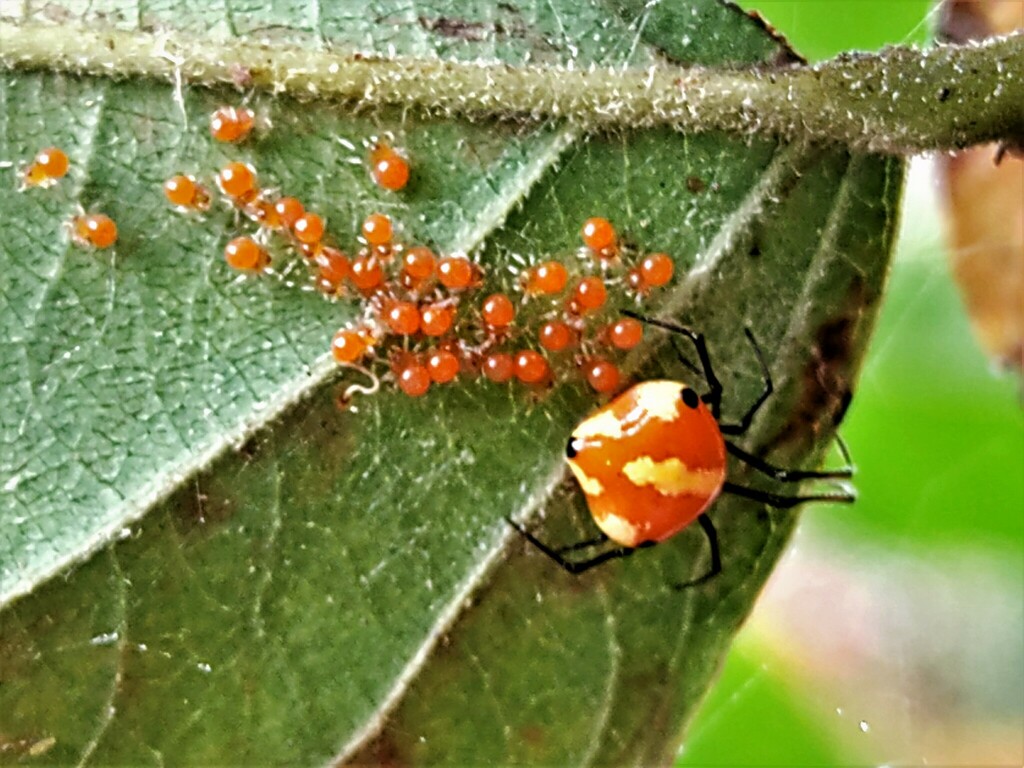
Physcoa
In Greek mythology, Physcoa (Ancient Greek: Φυσκόα Phuskóa) was a woman from the deme Orthia of Elis. She was credited with a variety of notable deeds, which are recorded in Pausanias' Description of Greece.
Physcoa was believed to have belonged to the very first, legendary set of the so-called Sixteen Women. One of the accounts cited by Pausanias relates that the Eleans suffered much harm from Damophon, tyrant of Pisa, and that after his death people of both Pisa and Elis chose to no longer associate with his misdeeds and to establish mutual peace. For that purpose, each of the sixteen cities of Elis sent a female envoy, "this woman to be the oldest, the most noble, and the most esteemed of all the women"; one of the delegates was Physcoa. The Sixteen Women performed the establishment of peace, and were subsequently entrusted with management of the Heraean Games, particularly with ritual weaving of the robe for Hera.
9 branches of this genus, most-observed first
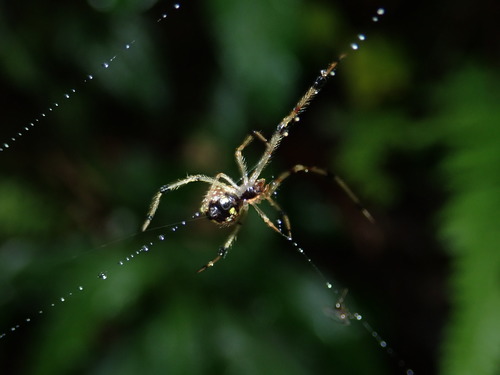
Physcoa scintillans
speciesPhyscoa scintillans

Physcoa trimaculata
speciesPhyscoa trimaculata

Physcoa angula
speciesPhyscoa angula
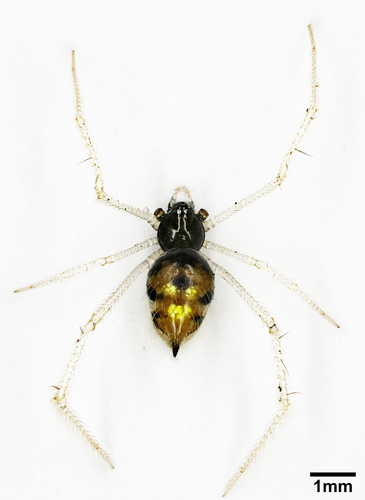
Physcoa oxycera
speciesPhyscoa oxycera
Physcoa cyclocera
speciesPhyscoa cyclocera
Physcoa fanjingshan
speciesPhyscoa fanjingshan
Physcoa wenxianensis
speciesPhyscoa wenxianensis
Physcoa trispinula
speciesPhyscoa trispinula
Physcoa mingyaoi
speciesPhyscoa mingyaoi
Where it lives
Recorded sightings
—
geo-referenced records in GBIF, from museums, herbaria and field observers.
Drag the globe to turn it. Dots are where records exist, not a range map; darker means more records.
In the stacks
Searching the stacks…
Every page naming Physcoa in the Biodiversity Heritage Library →
This page is assembled live from iNaturalist, GBIF, Wikipedia, the Source Library and the Internet Archive. It is not yet part of the hand-edited codex. iNaturalist taxon 1665032.