- Animals
- ›Arthropods
- ›Chelicerates
- ›Arachnids
- ›Spiders
- ›Typical Spiders
- ›Entelegyne Spiders
- ›Orbweavers and Allies
- ›Leaf-curling Orbweavers
- ›Zygiella
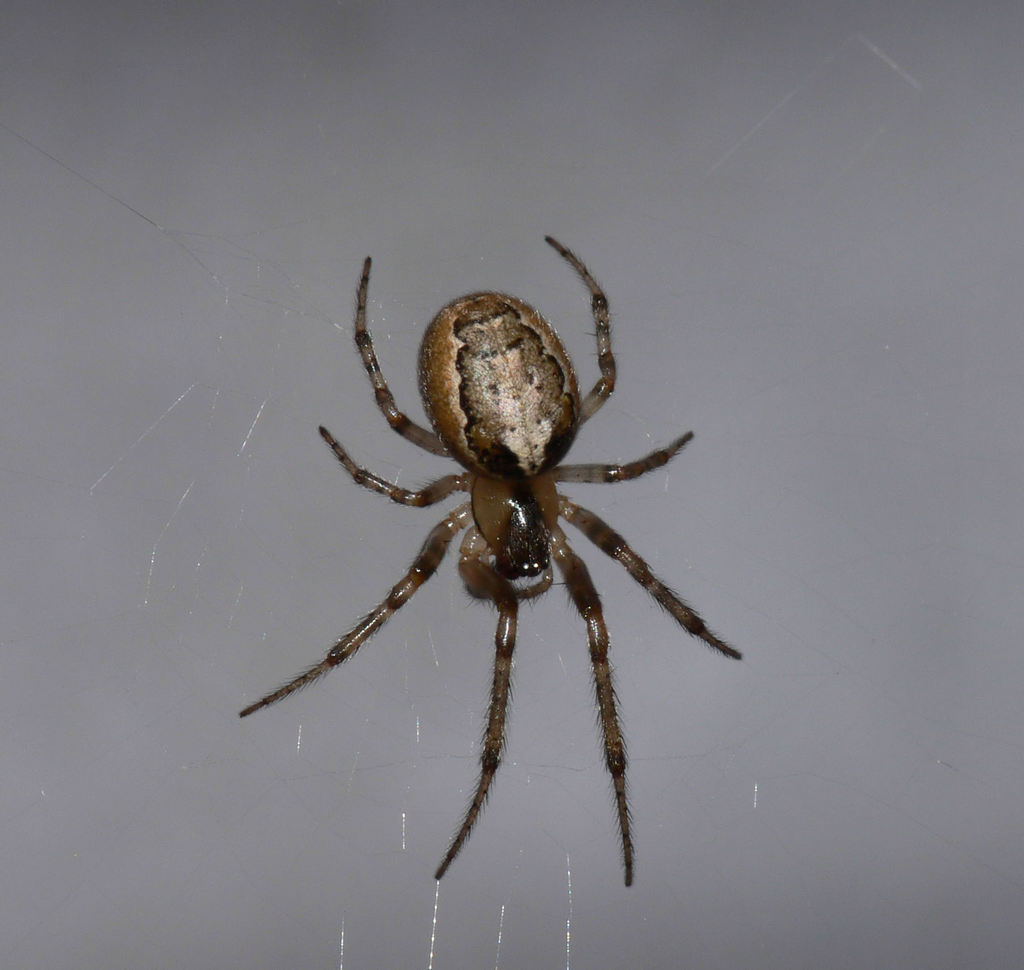
Silver-sided Sector Spider
Zygiella x-notata
Zygiella x-notata, sometimes known as the missing sector orb weaver or the silver-sided sector spider, is a spider species in the family Araneidae. They are solitary spiders, residing in daily spun orb webs. Z. x-notata is a member of the genus Zygiella, the orb-weaving spiders. The adult female is easily recognized by the characteristic leaf-like mark on her posterior opisthosoma, caudal to the yellow-brown cephalothorax.
The webs of Zygiella x-notata spiders are known for their characteristic missing sector, lending to the common name of spider as the "missing sector orb weaver." This species is distributed widely around the world, primarily inhabiting areas of human occupancy in northern Europe.
From the article Zygiella x-notata on Wikipedia (CC BY-SA), quoted section by section
Description
The adult female Zygiella x-notata has a body size of 5-11mm in length, while adult males have a body size up to 7mm. In adult females, the carapace width is 1.5 mm. The dorsal tibia of the walking legs and pedipalps contain a group of trichobothria. There is only one sensillum on the leg metatarsus. The prosoma is yellow-brown, with a leaf-like mark on the opisthosoma. The abdomen has a silvery sheen due to guanine crystals below the skin. Adult females are recognizable from their grey banded legs and pattern of dark grey waves on their dorsal side. Adult males are smaller than adult females, and display a dark dorsal exterior with dark brown legs and cephalothorax. The male abdomen is smaller and less marked with a shiny cream color than the female abdomen. In moderate climate, adults appear from July to October, sometimes even into December. In warmer regions, Z. x-notata is active all year.
Range & habitat
Zygiella x-notata is common in areas inhabited by humans, including on boats and docks. They are also found on urban vegetation like bushes or shrubs. Females construct an orb-web preferentially near human settlements, and this is where they live out their adult lives. Zygiella x-notata has been discovered on cliffs and bushes in Britain and across Europe.
Wikipedia: “Habitat”
What it does
Juvenile zygiella x-notata characteristically build a new web each day until they reach adulthood. Adult Zygiella x-notata spin orb-webs which are used to capture and incapacitate prey. Rather than building a new web every day as juveniles do, adult female Z. x-notata build an initial web and renew it nearly every day as needed. The female spider will sit in her retreat on the web, which is attached to a signal strand in the characteristic missing orb-web sector. When prey are caught in the web, the female can thus detect its presence through vibrations in the signal strand. As these vibrations are detected, she climbs down the silken signal thread to the hub of the web where the prey has been trapped. Prey type is dependent on the spider's native habitat and geographical location, but usually consists of flying prey such as Diptera. Male Zygiella x-notata feed similarly to females as juveniles, but once they reach adulthood they no longer build webs in order to capture prey, rather focusing on successful reproduction.
Predatory feeding behavior. There are four stages of predatory behavior in Zygiella x-notata as described by Venner et al.: first, the "waiting phase" occurs, in which the spider is immobile in its retreat in the top corner of the web. A foreleg rests on the signal thread that spans from the spider's retreat to the hub of the web. …
Wikipedia: “Feeding”
Where it lives
Recorded sightings
—
geo-referenced records in GBIF, from museums, herbaria and field observers.
Drag the globe to turn it. Dots are where records exist, not a range map; darker means more records.
In the stacks
Searching the stacks…
Every page naming Zygiella x-notata in the Biodiversity Heritage Library →
This page is assembled live from iNaturalist, GBIF, Wikipedia, the Source Library and the Internet Archive. It is not yet part of the hand-edited codex. iNaturalist taxon 155279.