On eBird ↗
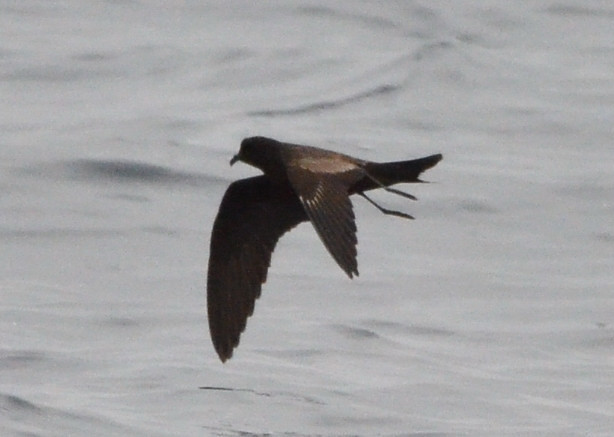
Black Storm-Petrel
Live sightings near you, the range map, bar charts of when it is seen, and Macaulay Library photos and recordings.
Black Storm-Petrel
Hydrobates melania
html.skin-theme-clientpref-night .mw-parser-output .infobox.biota tr{background:transparent!important}html.skin-theme-clientpref-night .mw-parser-output .infobox.biota img{background:white}@media(prefers-color-scheme:dark){html.skin-theme-clientpref-os .mw-parser-output .infobox.biota tr{background:transparent!important}html.skin-theme-clientpref-os .mw-parser-output .infobox.biota img{background:white}}
From the article Black storm petrel on Wikipedia (CC BY-SA), quoted section by section
What it does
The species breeds colonially on islands off the southern California coast of the United States and off the Baja Peninsula and Gulf of California of Mexico. Nesting sites are usually in rock crevices, occasionally in small burrows in soft earth. It also uses unused burrows from auklets. Colonies are attended nocturnally in order to avoid predatory birds such as gulls, hawks and owls. Like most petrels, its walking ability is limited to a short shuffle to the burrow. The female lays a single white egg per breeding season, if the egg is lost then it is replaced only rarely. Both parents share incubation duties, incubation lasting around 50 days. The chick is brooded for a few days after hatching until it is able to thermoregulate by itself, after which both parents forage to provide food. Chicks fledge 10 weeks after hatching. The black storm petrel spends the rest of the year at sea, but occurring closer to shore than most other storm-petrels. Because of this, it sometimes can be seen from the mainland. It undertakes a migration away from the waters surrounding its breeding colonies and, unusually, has two wintering grounds, one in the California Current off Central California and another further south off the coast of Central America as far south as Colombia and Ecuador. …
Wikipedia: “Behavior”
Listen
Looking for field recordings…
Where it lives
Recorded sightings
—
geo-referenced records in GBIF, from museums, herbaria and field observers.
Drag the globe to turn it. Dots are where records exist, not a range map; darker means more records.
In the stacks
Searching the stacks…
Every page naming Hydrobates melania in the Biodiversity Heritage Library →
This page is assembled live from iNaturalist, GBIF, Wikipedia, the Source Library and the Internet Archive. It is not yet part of the hand-edited codex. iNaturalist taxon 1289613.