Psammina
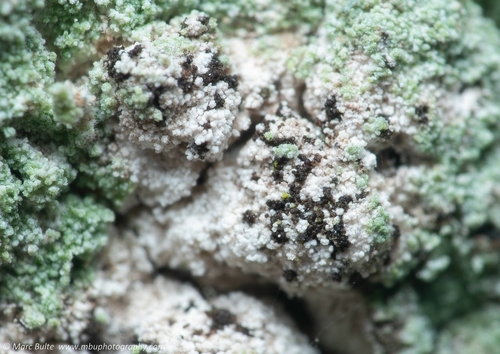
Psammina is a fungal genus in the division Ascomycota. The relationship of this taxon to other taxa within the division is unknown (incertae sedis), and it has not yet been placed with certainty into any class, order, or family. The genus comprises fungi that inhabit various environments, growing on plants, algae, and lichens. These fungi are notable for their unique reproductive structures, which resemble tiny hands or palms when viewed under a microscope. Psammina species play diverse ecological roles: some form partnerships with algae to create lichens, others grow on existing lichens, and some can cause damage to their host organisms. The genus was first proposed in 1890 and currently includes ten recognised species. While Psammina fungi have been found mainly in Europe, with sightings in countries such as the United Kingdom, the Netherlands, and France, at least one species has been reported in Brazil, suggesting a potentially wider distribution.
Where it lives
Recorded sightings
—
geo-referenced records in GBIF, from museums, herbaria and field observers.
Drag the globe to turn it. Dots are where records exist, not a range map; darker means more records.
In the stacks
Searching the stacks…
Every page naming Psammina in the Biodiversity Heritage Library →
This page is assembled live from iNaturalist, GBIF, Wikipedia, the Source Library and the Internet Archive. It is not yet part of the hand-edited codex. iNaturalist taxon 1285289.