- Animals
- ›Arthropods
- ›Crustaceans
- ›Typical Crustaceans
- ›Barnacles and Copepods
- ›Barnacles and Allies
- ›Barnacles
- ›Normal Barnacles
- ›Thoracican Barnacles
- ›Symmetrical Sessile Barnacles
- ›Balanoidea
- ›Balanidae
- ›Amphibalaninae
- ›Amphibalanus
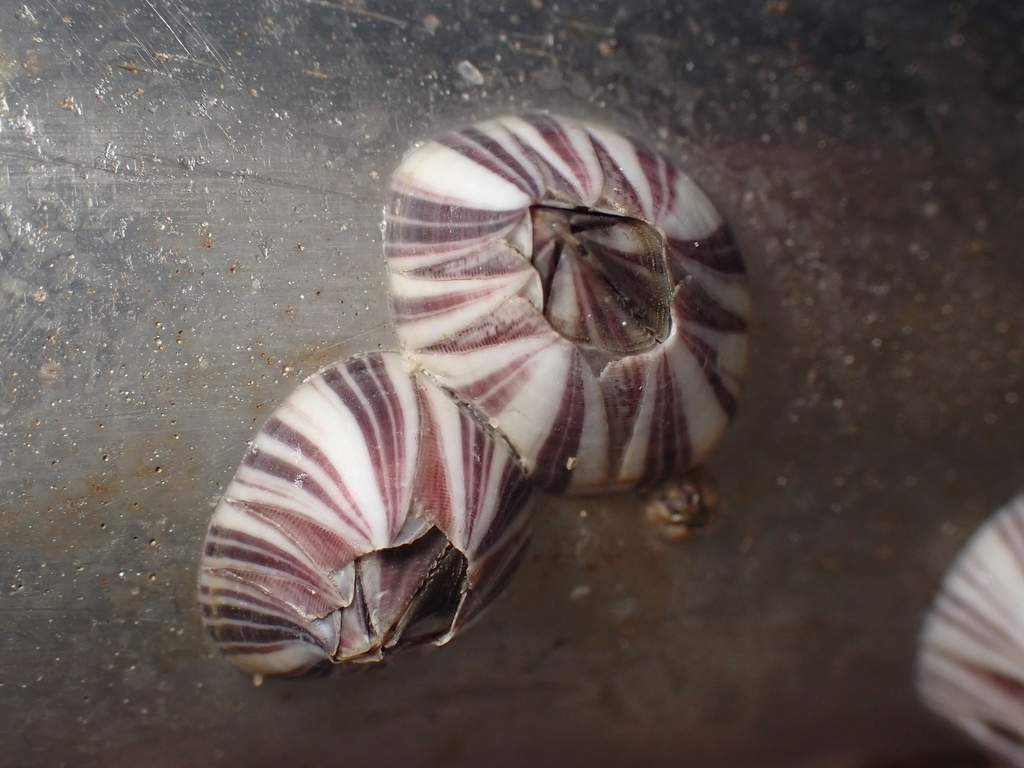
Striped Barnacle
Amphibalanus amphitrite
Amphibalanus amphitrite is a species of acorn barnacle in the Balanidae family. Its common names include the striped barnacle, the purple acorn barnacle and Amphitrite's rock barnacle. It is found in warm and temperate waters worldwide.
From the article Amphibalanus amphitrite on Wikipedia (CC BY-SA), quoted section by section
Description
A. amphitrite is a medium-sized, cone-shaped sessile barnacle with distinctive narrow vertical purple or brown stripes. The surface of the test has vertical ribbing. It has a diamond-shaped operculum protected by a movable lid formed from two triangular plates. It grows to about twenty millimetres in diameter.
Range & habitat
It is uncertain where A. amphitrite originated but it may have been in the Indian Ocean or southwestern Pacific Ocean as fossils of the species have been found in these regions. It has now spread to most of the warm and temperate seas of the world.
Wikipedia: “Distribution”
Where it lives
Recorded sightings
—
geo-referenced records in GBIF, from museums, herbaria and field observers.
Drag the globe to turn it. Dots are where records exist, not a range map; darker means more records.
In the stacks
Searching the stacks…
Every page naming Amphibalanus amphitrite in the Biodiversity Heritage Library →
This page is assembled live from iNaturalist, GBIF, Wikipedia, the Source Library and the Internet Archive. It is not yet part of the hand-edited codex. iNaturalist taxon 119104.