- Animals
- ›Chordates
- ›Vertebrates
- ›Cartilaginous Fishes
- ›Sharks and Rays
- ›Rays
- ›Skates
- ›Hardnose Skates
- ›Zearaja
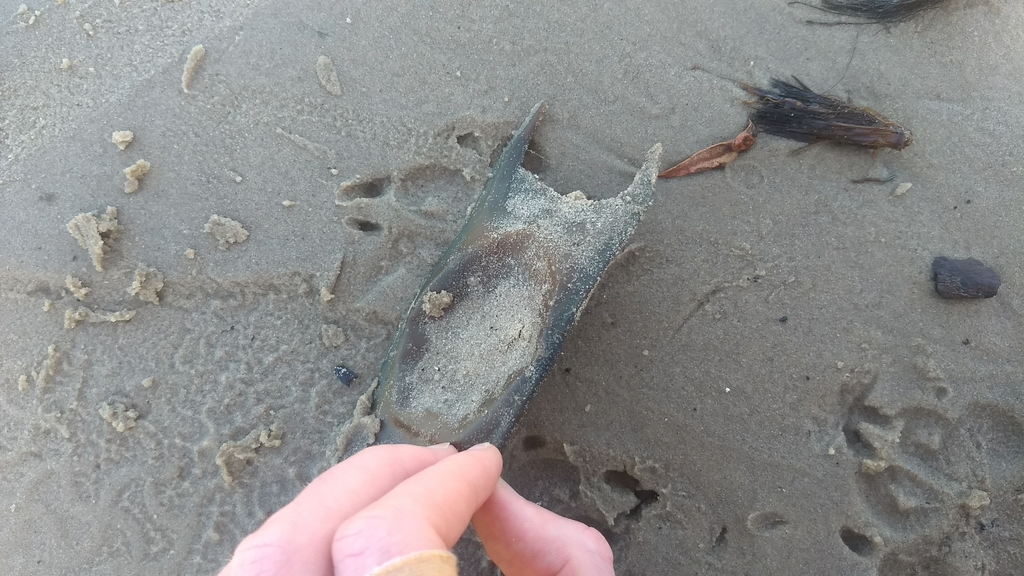
Maugean Skate
Zearaja maugeana
The Maugean skate or Port Davey skate (Dipturus maugeanus, alternatively Zearaja maugeana) is an endangered species of fish in the family Rajidae. Also known as the 'thylacine of the sea', it is endemic to Tasmania, only found in the brackish estuarine waters of Macquarie Harbour and Bathurst Harbour. The species was discovered in 1988 by Dr Graham Edgar. It was named in honour of René Maugé, a zoologist on the Baudin expedition to Australia, who died in Tasmania in 1802 and was buried on Maria Island.
The skate is recognised as one of the Gondwana-era natural values of Tasmania's Wilderness World Heritage Area (TWWHA). Its potential extinction carries global significance.
From the article Maugean skate on Wikipedia (CC BY-SA), quoted section by section
Description
The Maugean skate is a medium-sized skate with a maximum total length of approximately 74 cm in males and 87 cm in females. It has a quadrangular disc-shaped body, a narrowly pointed, elongated snout and dark-edged ventral pores. The dorsal surface of the skate is almost uniformly dark grey to brown with small and faint white spots. The tail is moderately broad at the base and tapers towards large dorsal fins. Males have three rows of thorns along the tail, whereas females have five. The Maugean skate is distinguishable from other, closely related Zearaja species by its smaller adult size, longer snout and smoother dorsal surface. The only other skate species known within its distribution is the thornback skate (Dentiraja lemprieri) which can be distinguished by its smaller size, brown to grey-black dorsal surface with fine spots and reticulations, short, rounded snout and long, narrow claspers.
Range & habitat
The Maugean skate is restricted to brackish, estuarine waters in two isolated estuaries on the west coast of Tasmania; Macquarie Harbour and Bathurst Harbour. No individuals have been found in marine waters outside of these harbours. Its preferred habitat is benthic, in shallow channels between 5 and 15 metres in depth with poor light penetration, high tannin loads in the water and silty substrate. There have been only four confirmed observations of the species in Bathurst Harbour, the last in 1992. Multiple surveys between 1992 and 2022 have failed to verify the presence of the species there, and recent eDNA samples collected in 2022 have detected minimal levels of Maugean skate DNA. This suggests it may be either locally extinct, vagrant, or occurring in very small numbers.
Wikipedia: “Distribution and habitat”
What it does
The Maugean skate holds a high trophic position (3.7) in the food web. Their diet consists of benthic prey species, with crustaceans as their dominant prey type.
Wikipedia: “Diet”
Where it lives
Recorded sightings
—
geo-referenced records in GBIF, from museums, herbaria and field observers.
Drag the globe to turn it. Dots are where records exist, not a range map; darker means more records.
In the stacks
Searching the stacks…
Every page naming Zearaja maugeana in the Biodiversity Heritage Library →
This page is assembled live from iNaturalist, GBIF, Wikipedia, the Source Library and the Internet Archive. It is not yet part of the hand-edited codex. iNaturalist taxon 115239.