- Animals
- ›Chordates
- ›Vertebrates
- ›Ray-finned Fishes
- ›Spiny-rayed fishes
- ›Rivulines, Killifishes, and Livebearers
- ›Cyprinodontoidei
- ›Live-bearers and Topminnows
- ›Typical Livebearers
- ›Gambusia
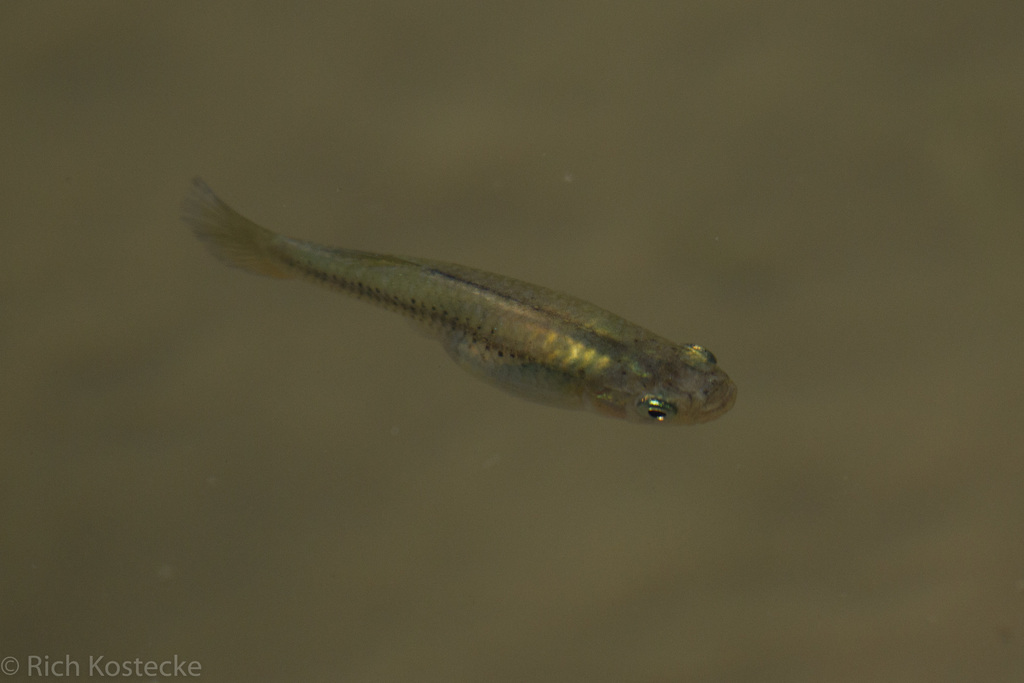
Pecos Gambusia
Gambusia nobilis
The Pecos gambusia (Gambusia nobilis), also known as the Pecos mosquitofish, is a species of fish in the family Poeciliidae endemic to the Pecos River in Texas and New Mexico in the United States. This two-inch species, as most of its family, is a livebearer. Females produce broods of up to 40 fry every four to five days. The fish are omnivorous, eating algae and small invertebrates, and are endangered due to loss of their spring-fed desert habitat.
From the article Pecos gambusia on Wikipedia (CC BY-SA), quoted section by section
Range & habitat
The Pecos gambusia is endemic to the Pecos River basin in southeastern New Mexico and western Texas. The species inhabits the springs and spring systems. Historically, it inhabited Comanche Springs and Leon Springs drainages of Texas near Fort Stockton as well as a chain of springs within the Toyah drainage. Comanche Springs has since dried, however, the species can still be found in Leon Creek and Toyah drainages. In New Mexico, this species is currently only found in Bitter Lake National Wildlife Refuge and Blue Spring south of Roswell. Pecos inhabit stenothermal springs, marshes affected by spring flow, and irrigation canals fed by spring water. Populations can also be found in gypsum sinkholes and sedge-covered marshes. They inhabit shallow, clear, and vegetated areas of the springs. They prefer areas with natural cover, such as aquatic vegetation, submerged cliffs, and overhanging banks, tending to avoid open water. They are typically found in the surrounding areas of springheads that experience still water or low-velocity flows.
Wikipedia: “Distribution and habitat”
What it does
Pecos gambusia feed on insects found in the top half of the water column, most commonly on the surface. The species feeds throughout the day, but prime feeding time is at night when insect activity is highest. Corixidae and Culicidae are the most common sources of food, but they will prey on insects of a sufficient size. Pecos gambusia are live-bearing fish. Males use their gonopodium during copulation, females carry fertilized eggs until they hatch internally and young fish emerge from the female. Breeding season is typically from April through August, females typically have one to four broods during this time with an average of around 38 embryos. This species has been found to shift reproductive strategies depending on the season. During early season females focus on caring for many of its small embryos, and fewer, larger offspring later into the season. Females also have shown indication of matrotrophy as they carry embryos at multiple stages of development.
Wikipedia: “Diet and reproduction”
Where it lives
Recorded sightings
—
geo-referenced records in GBIF, from museums, herbaria and field observers.
Drag the globe to turn it. Dots are where records exist, not a range map; darker means more records.
In the stacks
Searching the stacks…
Every page naming Gambusia nobilis in the Biodiversity Heritage Library →
This page is assembled live from iNaturalist, GBIF, Wikipedia, the Source Library and the Internet Archive. It is not yet part of the hand-edited codex. iNaturalist taxon 101209.