 NL·0402
Herbarium of the Nature Library
- Name
- Labeo catla
- Family
- Cyprinidae
- Native to
- Rivers and lakes of northern India, Pakistan, Bangladesh, Nepal and Myanmar; introduced widely elsewhere in Asia
- Habitat
- Large rivers, Floodplain lakes, Ponds and reservoirs
Catla
Labeo catla
Also calledKatla কাতলা (Bengali) · Bhakur भाकुर (Hindi) · Thaila تھیلا (Urdu/Punjabi)
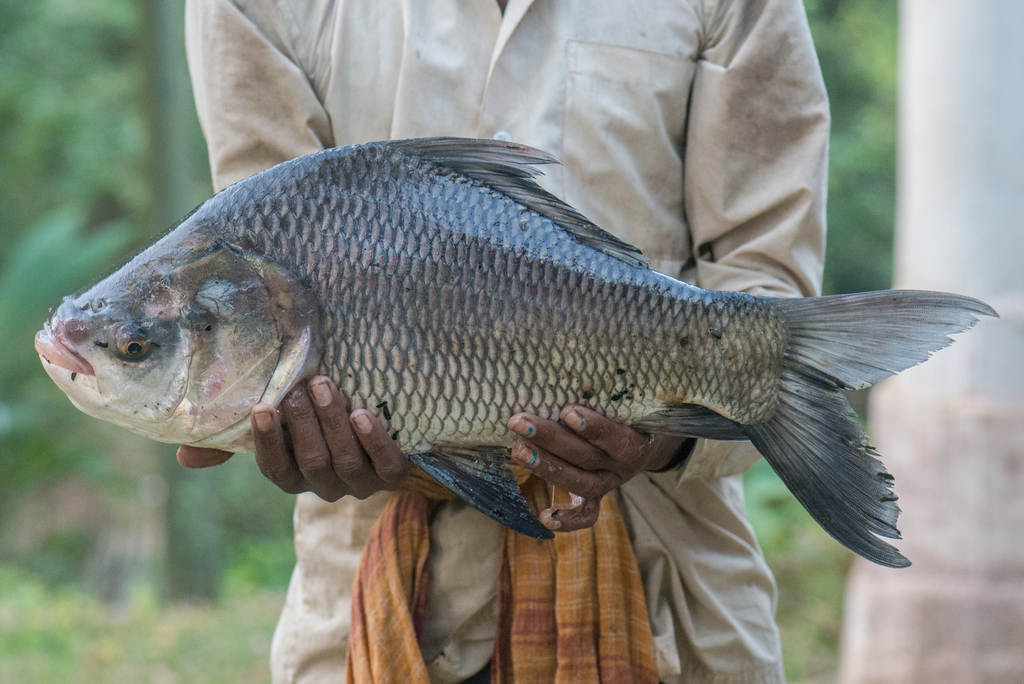
The fastest-growing of the Indian major carps, a big-headed fish that feeds at the surface. It takes the top layer of South Asian polyculture ponds, while rohu feeds in mid-water and mrigal on the bottom.
Catla also known as the major South Asian carp, is an economically important South Asian freshwater fish in the carp family Cyprinidae. It is native to rivers and lakes in northern India, Bangladesh, Myanmar, Nepal, and Pakistan, but has also been introduced elsewhere in South Asia and is commonly farmed. Wikipedia
What it can do
- iFilters zooplankton and floating algae from surface waters with long, fine gill rakers
- iiCan pass 1 kg in its first year in a fertilised pond
- iiiSpawns on monsoon floods; one large female carries hundreds of thousands to millions of eggs
In the field
Field marks
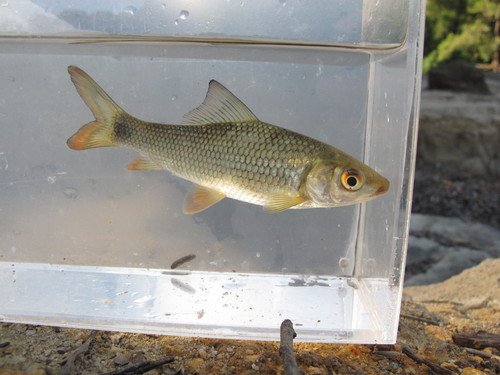
- aVery large, broad head, much bigger than in other carps
- bWide, upturned mouth with a prominent lower jaw and no barbels
- cDeep, short body; greyish back and silvery-white flanks with large scales
- dFins dusky grey
- Not to be confused with
- Rohu has a smaller head, a mouth on the underside with fringed lips, and reddish scale centres. Bighead carp (Hypophthalmichthys nobilis), introduced in South Asia, also has a huge head, but its eyes sit low on the head and its scales are tiny.
- Where to see it
- Kolkata's wholesale fish markets; Bangladesh pond-fish markets; reservoirs of the Gangetic plain; the Indus near Sukkur
- When
- Resident; breeds in the monsoon (June–August)
Life & habits
- Diet
- Mainly zooplankton, plus phytoplankton and floating plant matter
- Habitat
- Rivers, reservoirs, floodplain lakes and farm ponds; stays in the warm upper water
- Size
- Commonly 50–80 cm; up to about 1.8 m and 39 kg
- Lifespan
- Around 10–12 years
Cruises close to the surface sieving plankton, and wild fish spawn in shallow flooded river margins during the monsoon.
Where it lives
Recorded sightings
—
geo-referenced records in GBIF, from museums, herbaria and field observers.
Native range
Rivers and lakes of northern India, Pakistan, Bangladesh, Nepal and Myanmar; introduced widely elsewhere in Asia
Drag the globe to turn it. Dots are where records exist, not a range map; darker means more records.
In the stacks
Searching the stacks…
Every page naming Labeo catla in the Biodiversity Heritage Library →
Marginalia
Catla was described by Francis Buchanan-Hamilton in 'An Account of the Fishes Found in the River Ganges' (1822), the founding work of Indian ichthyology. In Bengal a catla head cooked with rice or moong dal (muri ghonto) is a classic dish for honoured guests.
Curiosity
Many references still call it Catla catla. Genetic studies showed it sits inside the genus Labeo, and the iNaturalist name follows them.
Kinship


Fact-checked: 1 correction made to this sheet. Photographs: iNaturalist contributors under the licences shown. Records: GBIF.org. Historical plates: Source Library (CC BY-SA 4.0; originals public domain). Summary text: Nature Library editors and Wikipedia (CC BY-SA). Medicinal and edibility notes are historical and educational, not advice. iNaturalist taxon 1316235.