 NL·0337
Herbarium of the Nature Library
- Name
- Furcifer pardalis
- Family
- Chamaeleonidae
- Native to
- Northern and eastern Madagascar and nearby islands; introduced to Réunion and Mauritius
- Habitat
- Tropical dry forest, Coastal scrub, Plantations
Panther chameleon
Furcifer pardalis
Also calledCaméléon panthère (French) · Camaleón pantera (Spanish)
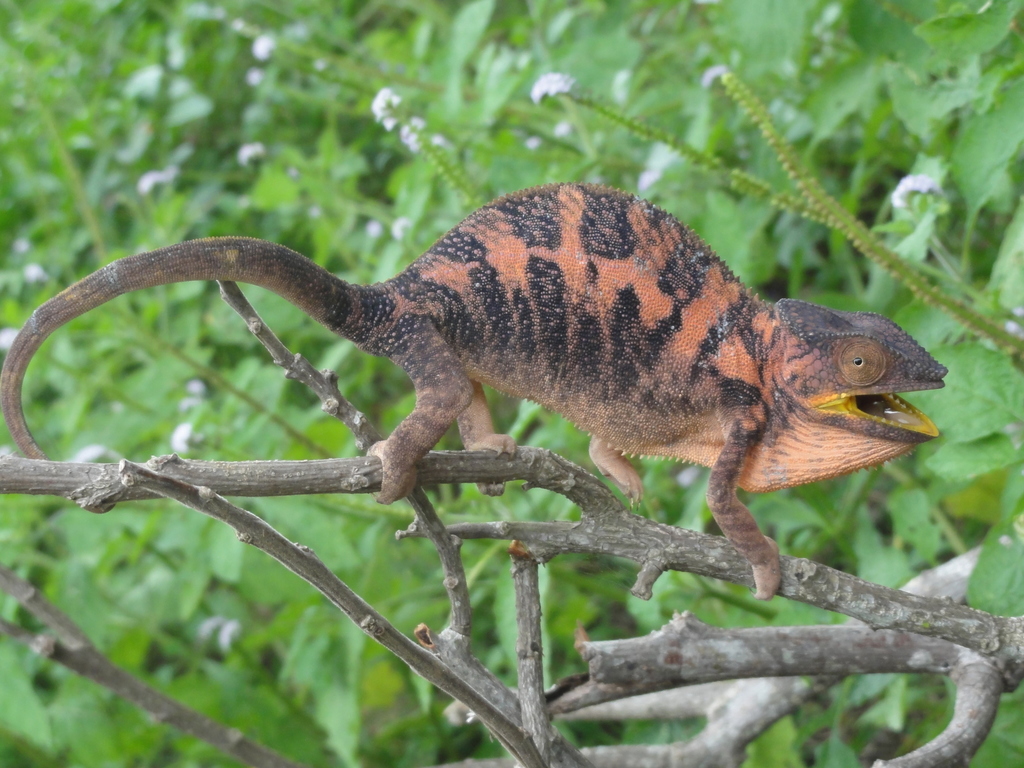
A big, vividly coloured chameleon of northern and eastern Madagascar. Males of each locality have distinct colour patterns, from turquoise to flame-red, and change colour when they display.
The panther chameleon is a species of chameleon found in the eastern and northern parts of Madagascar in a tropical forest biome. Additionally, it has been introduced to Réunion and Mauritius, as well as the state of Florida within the United States. Wikipedia
What it can do
- iChanges colour by adjusting the spacing of guanine nanocrystals in its skin, which shifts how light reflects
- iiFires its tongue out to more than its body length in a fraction of a second
- iiiMoves each eye independently, scanning nearly 360°, then focuses both on prey
- ivGrips branches with pincer-like feet and a prehensile tail
In the field
Field marks
- aLarge chameleon with a bony crest on the head
- bMales brightly coloured — green, red, blue or orange depending on locality
- cPale stripe along the side
- dFemales smaller, tan or brown
- Not to be confused with
- Other Furcifer and Calumma chameleons; colours vary by region.
- Where to see it
- Nosy Be (Lokobe), Ankarana and Amber Mountain, northern Madagascar
- When
- Resident; most visible in the warm, wet season
Life & habits
- Diet
- Insectivore: crickets, grasshoppers, flies, other invertebrates
- Habitat
- Bushes and trees in warm, humid lowlands, often near villages
- Size
- Males up to ~50 cm including tail; females about half that
- Lifespan
- Females 2–3 years; males 5–7 years
When a rival male approaches, a male inflates his body and flashes brilliant colour. A female signals refusal with dark colours and orange patches.
Where it lives
Recorded sightings
—
geo-referenced records in GBIF, from museums, herbaria and field observers.
Native range
Northern and eastern Madagascar and nearby islands; introduced to Réunion and Mauritius
Drag the globe to turn it. Dots are where records exist, not a range map; darker means more records.
In the old herbals & bestiaries
No plate in the Source Library names this exact species, so these show its closest relatives as the old naturalists drew them: same genus, or the same kind of animal. Click a plate to read the page it came from, with translation.

The Great Art of Light and Shadow
Relative · Athanasius Kircher · 1671 · p.99

Garden of Health
Relative · Jacob Meydenbach · 1491 · p.528

Garden of Health
Relative · 1507 · p.430

Treasury of Medical Matters of New Spain
Relative · Francisco Hernández · 1651 · p.770

Commentaries on the Six Books of Pedanius Dioscorides on Medical Matter
Relative · Pietro Andrea Mattioli · 1565 · p.537
In the stacks
Searching the stacks…
Every page naming Furcifer pardalis in the Biodiversity Heritage Library →
Marginalia
In many Malagasy communities chameleons are fady (taboo), and touching one is unlucky. Georges Cuvier described the species in 1829.
Curiosity
A 2015 study on panther chameleons showed that their colour change comes from tuning nanocrystals, not just moving pigments.
Kinship
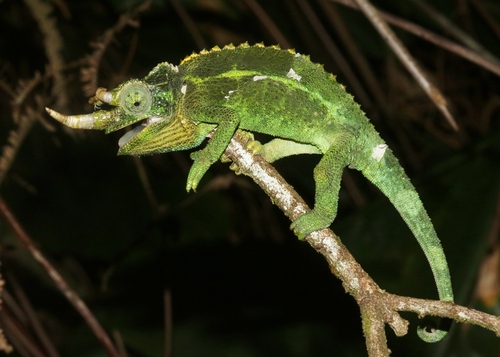




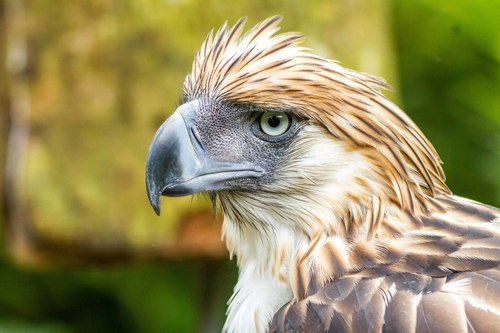
Photographs: iNaturalist contributors under the licences shown. Records: GBIF.org. Historical plates: Source Library (CC BY-SA 4.0; originals public domain). Summary text: Nature Library editors and Wikipedia (CC BY-SA). Medicinal and edibility notes are historical and educational, not advice. iNaturalist taxon 33004.