 NL·0625
Herbarium of the Nature Library
- Name
- Desmodus rotundus
- Family
- Phyllostomidae
- Native to
- Mexico through Central America to northern Chile, Argentina and Uruguay; Trinidad and Margarita islands
- Habitat
- Tropical forest, Dry forest, Grassland with livestock, Caves
Common vampire bat
Desmodus rotundus
Also calledVampiro común (Spanish) · Morcego-vampiro (Portuguese) · Murciélago vampiro (Spanish)
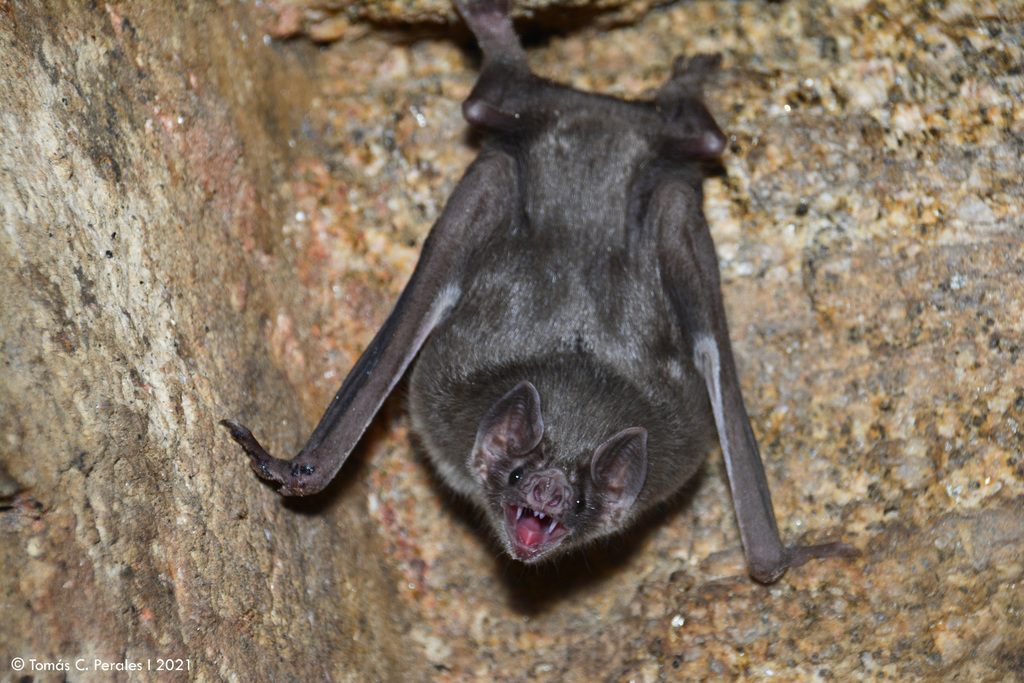
The only mammals that feed exclusively on blood, vampire bats make a tiny cut in sleeping livestock or wild mammals and lap the flowing blood. Heat-sensing pits on the nose guide them to blood vessels near the skin, and their saliva contains anticoagulants studied for stroke drugs. Roostmates famously share regurgitated blood with those who failed to feed.
The common vampire bat is a small, leaf-nosed bat native to the Americas. It is one of three extant species of vampire bats, the other two being the hairy-legged and the white-winged vampire bats. Wikipedia
What it can do
- iSenses infrared heat with nose pits, using a specially modified TRPV1 receptor
- iiSaliva anticoagulant (draculin and plasminogen activators) keeps blood flowing; a derivative, desmoteplase, was trialled as a stroke drug
- iiiRuns and leaps on the ground on its forelimbs, unusual for a bat
- ivShares blood with hungry roostmates, preferring those who shared with them before
In the field
Field marks
- aShort, flat, pug-like snout with a small U-shaped nose-leaf
- bLong, strong thumbs used for walking
- cNo tail; grey-brown fur
- dSharp, blade-like upper incisors; signs include small cuts and blood trickles on livestock, and roosts that smell of ammonia with dark, tarry droppings
- Not to be confused with
- White-winged and hairy-legged vampire bats (Diaemus, Diphylla) feed mainly on birds and have white wing-tips or furry legs. Fruit-eating leaf-nosed bats have tall spear-shaped nose leaves.
- Where to see it
- Lamanai Archaeological Reserve (Belize, night bat tours); caves of Mexico's Yucatán; Pantanal and Amazon cattle ranches (Brazil)
- When
- Resident year-round
Listen
Looking for field recordings…
Life & habits
- Diet
- Blood of mammals, mainly cattle, horses and pigs; also wild mammals
- Habitat
- Caves, hollow trees, mines and buildings within reach of mammal prey
- Size
- Body 7–9 cm, wingspan about 35–40 cm; 25–40 g
- Lifespan
- Up to about 29 years in captivity; about 9 in the wild
Leaves the roost after full darkness, often avoiding bright moonlight. Drinks about half its own body weight in blood in a 20–30 minute feed.
Where it lives
Recorded sightings
—
geo-referenced records in GBIF, from museums, herbaria and field observers.
Native range
Mexico through Central America to northern Chile, Argentina and Uruguay; Trinidad and Margarita islands
Drag the globe to turn it. Dots are where records exist, not a range map; darker means more records.
In the stacks
Searching the stacks…
Every page naming Desmodus rotundus in the Biodiversity Heritage Library →
Marginalia
European naturalists named it after the vampire of Slavic folklore; in turn, Bram Stoker's Dracula (1897) gave the bat a central place in vampire fiction. Rabies spread by vampire bats is a major veterinary problem across Latin America.
Curiosity
A vampire bat that misses two nights of blood meals can starve, which is why sharing among roostmates matters so much.
Kinship





Fact-checked: 2 corrections made to this sheet. Photographs: iNaturalist contributors under the licences shown. Records: GBIF.org. Historical plates: Source Library (CC BY-SA 4.0; originals public domain). Summary text: Nature Library editors and Wikipedia (CC BY-SA). Medicinal and edibility notes are historical and educational, not advice. iNaturalist taxon 41168.