- Animals
- ›Chordates
- ›Vertebrates
- ›Ray-finned Fishes
- ›Salmons, Pikes and Mudminnows
- ›Salmons, Trouts, and Whitefishes
- ›Salmons, Trouts, and Whitefishes
- ›Graylings
- ›Thymallus
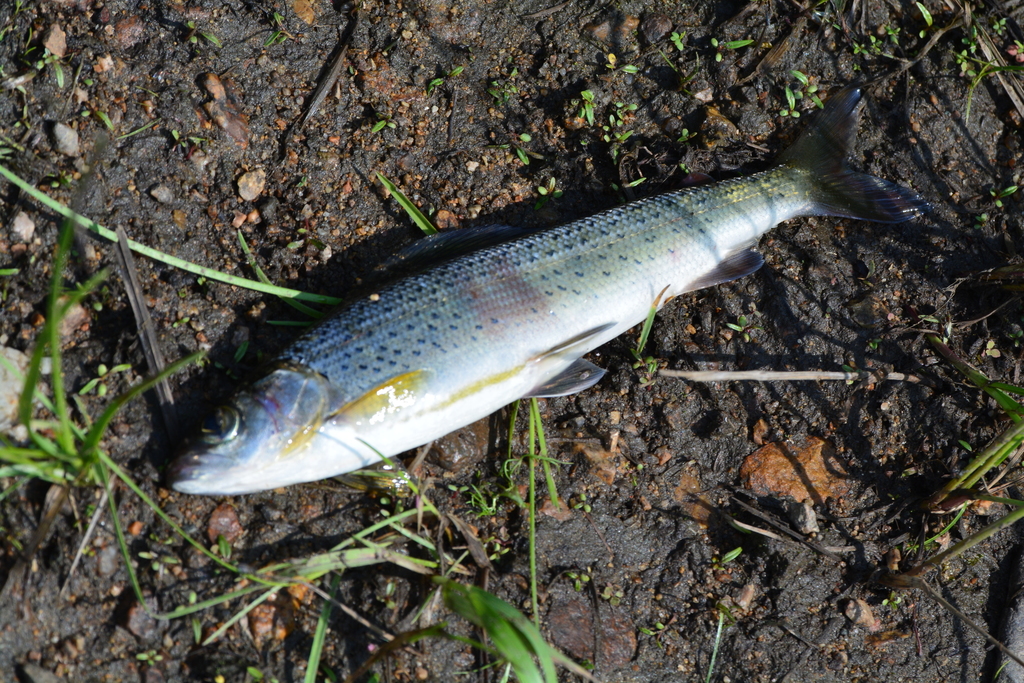
Amur Grayling
Thymallus grubii
The Amur grayling (Thymallus grubii) is a species of freshwater ray-finned fish from the genus Thymallus (graylings) of the family Salmonidae, endemic to the Amur basin in Russian Far East and Northeast China and also the Onon and Kherlen basins in Mongolia. It is sometimes difficult to differentiate the species with the Lower Amur grayling (Thymallus tugarinae). It is seen as a game fish and food fish in Russian Far East and the Chinese Heilongjiang province.
From the article Amur grayling on Wikipedia (CC BY-SA), quoted section by section
Description
The body of Amur grayling is usually dark, with its back being slightly purple. There are some small dark spots on the sides of the body. The edge of the dorsal fin is purplish red mixed with some spots. It can reach a maximum length of 31.3 cm.
What it does
In winter, adult Amur grayling are found in deep parts of mountain streams. While in summer, they are usually found in clear streams flowing slowly with thick aquatic weeds. Most Amur grayling is feed on benthic organisms and insects. They form schools while breeding in clear, fast-flowing streams.
Wikipedia: “Life cycle”
Where it lives
Recorded sightings
—
geo-referenced records in GBIF, from museums, herbaria and field observers.
Drag the globe to turn it. Dots are where records exist, not a range map; darker means more records.
In the stacks
Searching the stacks…
Every page naming Thymallus grubii in the Biodiversity Heritage Library →
This page is assembled live from iNaturalist, GBIF, Wikipedia, the Source Library and the Internet Archive. It is not yet part of the hand-edited codex. iNaturalist taxon 620247.