- Animals
- ›Chordates
- ›Vertebrates
- ›Reptiles
- ›Snakes and Lizards
- ›Lizards
- ›Iguanas and Allies
- ›Dragons and Chameleons
- ›Chameleons
- ›Furcifer
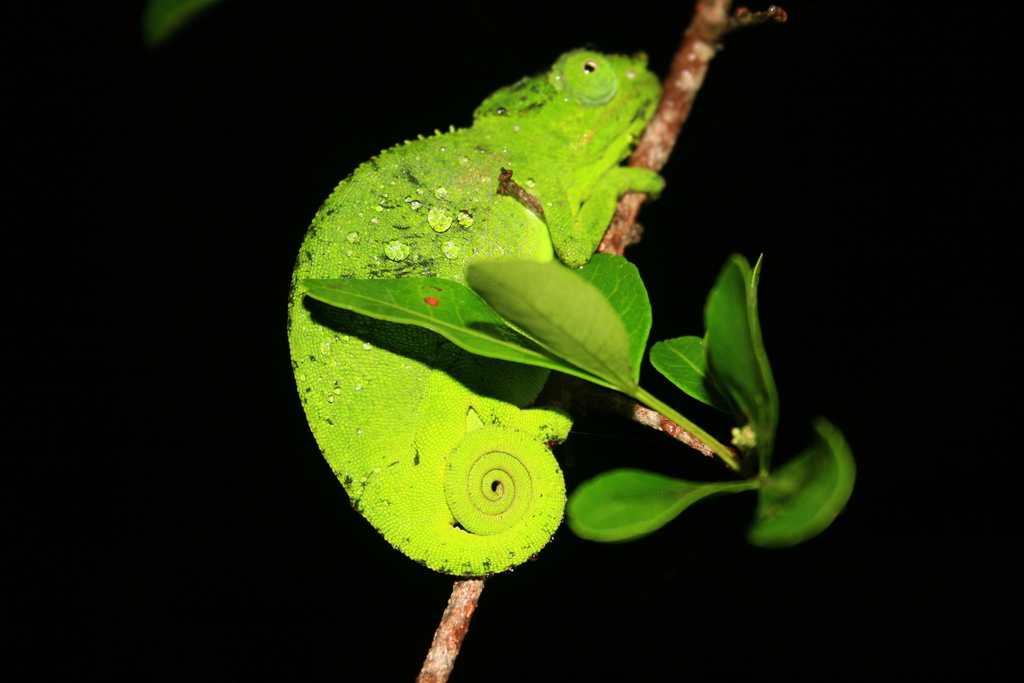
Comoro Island Dwarf Panther Chameleon
Furcifer cephalolepis
Furcifer cephalolepis is a species of chameleon that is endemic to Grande Comore. It was described by Günther in 1880. The International Union for Conservation of Nature ranked the species as Least Concern on the IUCN Red List of Threatened Species as there are no signs that this species is in decline. Furcifer cephalolepis is used in the pet trade, with 8,583 specimens being exported from Grande Comore between 2004 and 2008.
From the article Furcifer cephalolepis on Wikipedia (CC BY-SA), quoted section by section
Range & habitat
Furcifer cephalolepis is native to Grande Comore (Ngazidja) in the Comoros Islands. It is believed to cover the whole of Grande Comore (Ngazidja), 1,146 square kilometres (442 square miles), although the true coverage of the species is unknown and has not been recorded. It was ranked as Least Concern by the International Union for Conservation of Nature (IUCN) in their Red List of Threatened Species (Red List Data). Despite covering a small area and the fact that it has been used in the pet trade, the species is ranked as Least Concern (LC) because there are no signs that the population of the Furcifer cephalolepis are currently in decline. The population has been confirmed to be stable. It is found in humid regions around the coast of Grande Comore and in forests in and around towns. Between 1994 and 2003, an estimated 7,150 specimens of this chameleon were exported. Between 2004 and 2008, 8,583 living specimens of Furcifer cephalolepis were exported to be kept as pets from Grande Comore. The number of individuals of this species sold in the pet market is controlled.
Wikipedia: “Distribution and habitat”
Where it lives
Recorded sightings
—
geo-referenced records in GBIF, from museums, herbaria and field observers.
Drag the globe to turn it. Dots are where records exist, not a range map; darker means more records.
In the stacks
Searching the stacks…
Every page naming Furcifer cephalolepis in the Biodiversity Heritage Library →
This page is assembled live from iNaturalist, GBIF, Wikipedia, the Source Library and the Internet Archive. It is not yet part of the hand-edited codex. iNaturalist taxon 33014.