- Animals
- ›Chordates
- ›Vertebrates
- ›Amphibians
- ›Frogs and Toads
- ›African Reed Frogs
- ›Typical Reed Frogs
- ›Hyperolius
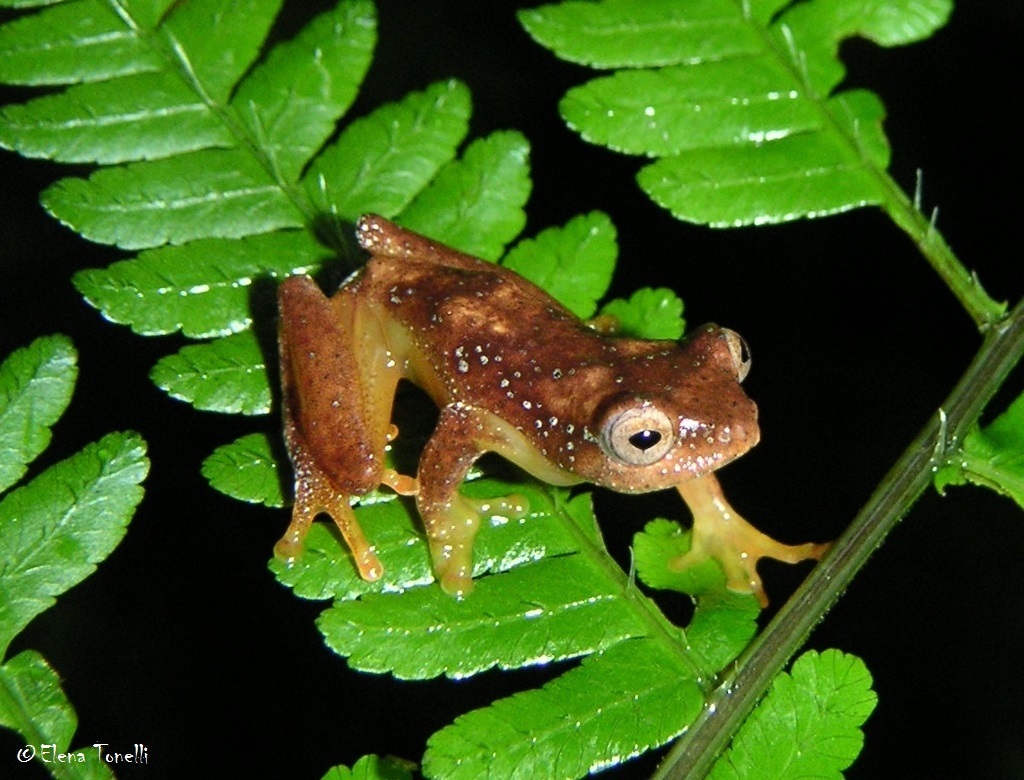
Kihanga Reed Frog
Hyperolius kihangensis
Hyperolius kihangensis is a species of frog in the family Hyperoliidae. It is endemic to Tanzania. Its natural habitats are subtropical or tropical moist montane forests and swamps. It is threatened by habitat loss.
From the article Hyperolius kihangensis on Wikipedia (CC BY-SA), quoted section by section
Description
Adult males measure 16–19 mm (0.6–0.7 in) and adult females 23–26 mm (0.9–1.0 in) in snout–vent length. The body and head are broad and flat. The eyes are large and protruding. The snout is short. Webbing between the toes is reduced. The dorsum is mottled brown and gray with small dark spots. A broad light band runs across the lower back. The heels have a small white dot each. Some individuals have an hourglass pattern on the dorsum. Toes and fingers are yellowish to reddish. The ventral surface is yellow in males and reddish in females. Males have a well-developed vocal sac that is white. The male advertisement call is a series of quiet clicks – initially, this species was suspected even to be mute.
Range & habitat
Hyperolius kihangensis inhabits swamps in dense montane forests at elevations above 1,700 m (5,600 ft). The type series was collected in a dense, swampy forest with shallow, stagnant water, and with the ground was almost completely covered by grass tufts. The eggs are deposited close to the water on leaves. This species is relatively common within its small range. It is threatened by habitat loss caused by agricultural encroachment and small-scale wood extraction. It is present in the Udzungwa Scarp Forest Reserve, which was expected (as of 2015) to become a nature reserve, improving protection of the habitat.
== References ==
Wikipedia: “Habitat and conservation”
Listen
Looking for field recordings…
Where it lives
Recorded sightings
—
geo-referenced records in GBIF, from museums, herbaria and field observers.
Drag the globe to turn it. Dots are where records exist, not a range map; darker means more records.
In the stacks
Searching the stacks…
Every page naming Hyperolius kihangensis in the Biodiversity Heritage Library →
This page is assembled live from iNaturalist, GBIF, Wikipedia, the Source Library and the Internet Archive. It is not yet part of the hand-edited codex. iNaturalist taxon 23294.