- Animals
- ›Chordates
- ›Vertebrates
- ›Ray-finned Fishes
- ›Spiny-rayed fishes
- ›Leaffishes, Snakeheads, and Gouramis
- ›Gouramis
- ›Gouramis
- ›Trichogastrinae
- ›Trichopodus
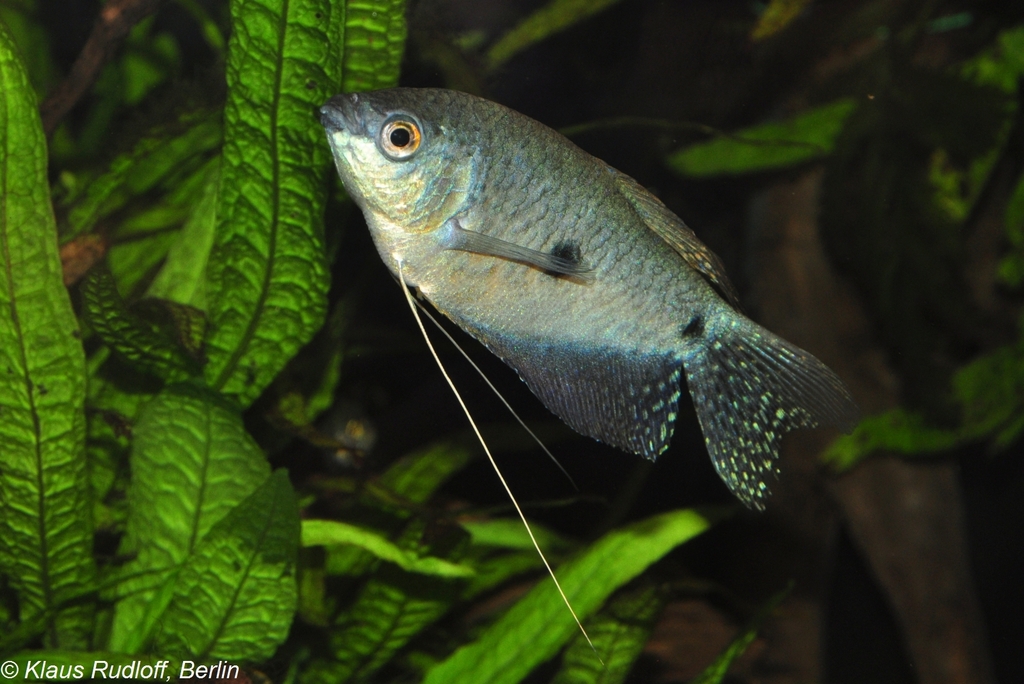
Three Spot Gourami
Trichopodus trichopterus
The three spot gourami (Trichopodus trichopterus), also known as the opaline gourami, blue gourami, and gold gourami, is a species of fish native to southeastern Asia, but also introduced elsewhere. This gourami gets its name from the two spots along each side of its body in line with the eye, considered the third spot. This species is of minor commercial importance as a food fish in its native range and is also farmed. It is also popular in the aquarium trade. The species reaches 15 cm (5.9 inches) in standard length.
From the article Three spot gourami on Wikipedia (CC BY-SA), quoted section by section
Range & habitat
Three spot gourami are native to standing or slow-moving freshwater habitats in southeastern Asia, ranging from Yunnan (China), through mainland southeast Asia (Cambodia, Laos, Malaysia, Myanmar, Singapore, Thailand and Vietnam) to Indonesia (Java, Borneo and Sumatra). They have been widely introduced outside their native range, such as the Philippines, India, Sulawesi, and southwestern Trinidad. These fish live in marshes, swamps, canals, and lowland wetlands. They migrate during the flood season from permanent water bodies to flooded areas, such as seasonally flooded forests in the middle and lower Mekong. During the dry season, they return to these permanent water bodies. These fish feed on zooplankton, crustaceans, and insect larvae. The male builds a bubble nest for the eggs, which he protects aggressively.
Wikipedia: “Distribution and ecology”
What it does
The three spot gourami is an omnivore and requires both algae-based and meaty foods. An algae-based flake food, along with freeze-dried bloodworms, tubifex worms, and brine shrimp provide these fish with the proper nutrition. Live foods such as mosquito larvae and daphnia are also beneficial.
Wikipedia: “Feeding”
Where it lives
Recorded sightings
—
geo-referenced records in GBIF, from museums, herbaria and field observers.
Drag the globe to turn it. Dots are where records exist, not a range map; darker means more records.
In the stacks
Searching the stacks…
Every page naming Trichopodus trichopterus in the Biodiversity Heritage Library →
This page is assembled live from iNaturalist, GBIF, Wikipedia, the Source Library and the Internet Archive. It is not yet part of the hand-edited codex. iNaturalist taxon 188583.