- Animals
- ›Chordates
- ›Vertebrates
- ›Ray-finned Fishes
- ›Carps, Characins, Catfishes and Allies
- ›Catfishes
- ›Siluroidei
- ›Sea Catfishes
- ›Typical Sea Catfishes
- ›Sciades
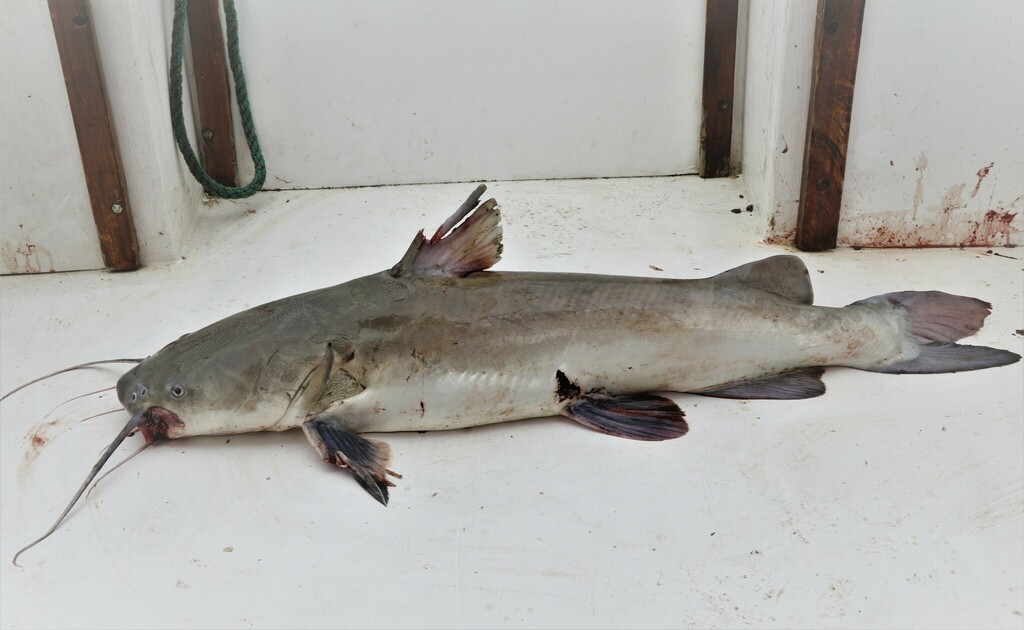
Sciades dowii
The flapnose sea catfish (Sciades dowii), also known as the brown sea catfish, is a species of catfish in the family Ariidae. It was described by Theodore Gill in 1863, originally under the genus Leptarius. It inhabits rivers and estuaries in Ecuador, Colombia, Guatemala, Costa Rica, El Salvador, Panama, Honduras, Nicaragua, Mexico, and Peru. It dwells at a depth range of 0 to 15 m (0 to 50 ft). It reaches a maximum total length of 90 cm (35 in), more commonly reaching a TL of 50 cm (20 in).
The diet of the flapnose sea catfish includes small finfish, fish scales, and benthic invertebrates. Due to a lack of known major threats to the species, it is currently ranked as Least Concern by the IUCN redlist. It has been harvested for its meat since Pre-Columbian times, and remains a commercially important foodfish to date. It is marketed both fresh and dried-salted.
From the article Flapnose sea catfish on Wikipedia (CC BY-SA), quoted section by section
In human culture
The fish is named in honor of John Melmoth Dow (1827-1892) a Panama Railroad Company ship captain and an amateur naturalist, who presented the type specimen to the Smithsonian Institution.
== References ==
Wikipedia: “Etymology”
Where it lives
Recorded sightings
—
geo-referenced records in GBIF, from museums, herbaria and field observers.
Drag the globe to turn it. Dots are where records exist, not a range map; darker means more records.
In the stacks
Searching the stacks…
Every page naming Sciades dowii in the Biodiversity Heritage Library →
This page is assembled live from iNaturalist, GBIF, Wikipedia, the Source Library and the Internet Archive. It is not yet part of the hand-edited codex. iNaturalist taxon 112302.