- Animals
- ›Chordates
- ›Vertebrates
- ›Mammals
- ›Therians
- ›Placental Mammals
- ›Ungulates, Carnivorans, and Allies
- ›Bats
- ›Yangochiroptera
- ›Vespertilionoid Bats
- ›Evening Bats
- ›Vesper Bats
- ›Antrozoini
- ›Rhogeessa
- ›Rhogeessa
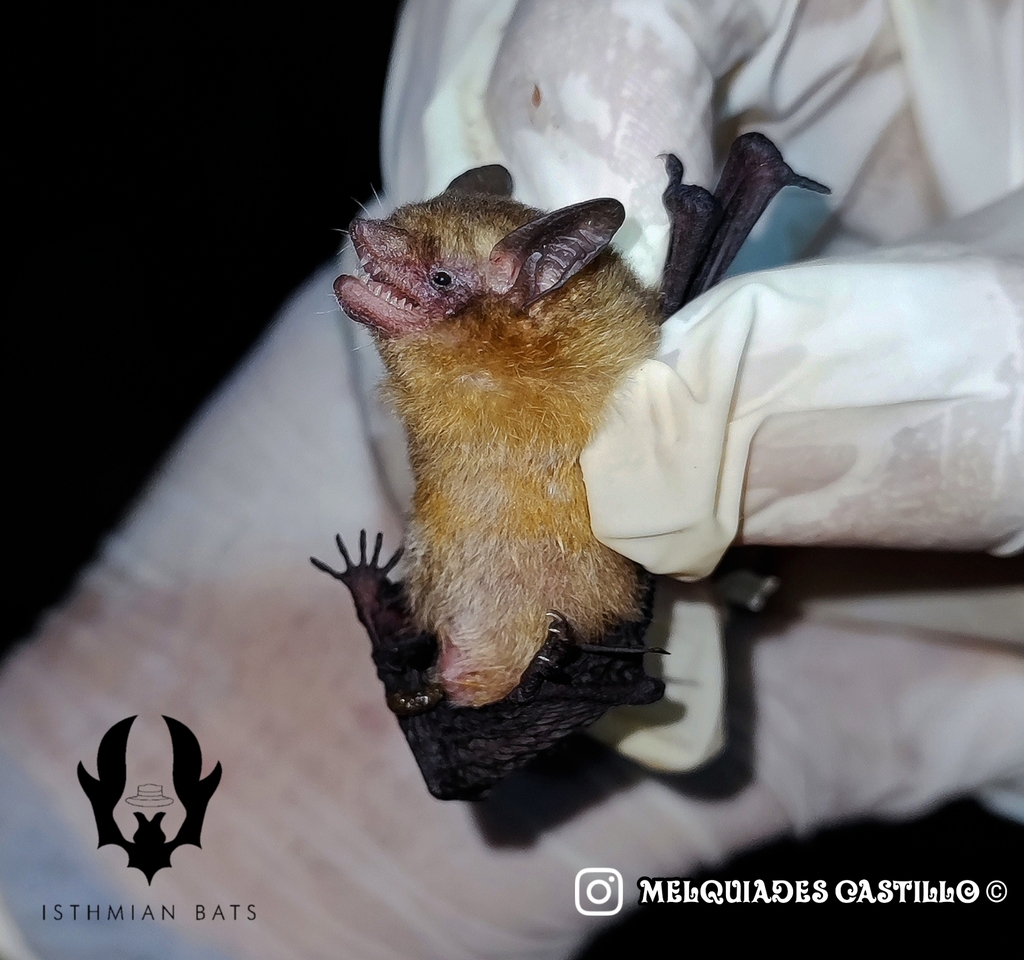
Thomas's Yellow Bat
Rhogeessa io
Thomas's yellow bat (Rhogeessa io) is a species of bat from the family Vespertilionidae.
From the article Thomas's yellow bat on Wikipedia (CC BY-SA), quoted section by section
Range & habitat
Thomas's yellow bat is native to Bolivia, Brazil, Colombia, Costa Rica, Ecuador, French Guiana, Guyana, Nicaragua, Panama, Suriname, Trinidad and Tobago, and Venezuela. It is listed as "Least Concern" by the IUCN Red List due to its wide distribution, presumed large population, occurrence in a number of protected areas, having some degree of tolerance to habitat modification, and unlikeliness of population decline at the rate to qualify for a more threatened listing.
Wikipedia: “Range and conservation”
What it does
Thomas's yellow bat inhabits many habitats, such as both evergreen and deciduous forest, thorn shrub, open areas, and villages, though it appears to favor slightly disturbed deciduous forests. Like other species in its genus, the Thomas's yellow bat can take refuge in buildings and hollow trees, although its roosts are unknown. The species is crepuscular, with peaks of activity within an hour of both dusk and of dawn, flying low to the ground along wide trails or roads. The Thomas's yellow bat is an insectivore, feeding on small, flying insects and with established hunting routes among individuals. The maximum energy of echolocation calls in the Thomas's yellow bat is 50 to 60 kHz.
Wikipedia: “Behavior and ecology”
Listen
Looking for field recordings…
Where it lives
Recorded sightings
—
geo-referenced records in GBIF, from museums, herbaria and field observers.
Drag the globe to turn it. Dots are where records exist, not a range map; darker means more records.
In the stacks
Searching the stacks…
Every page naming Rhogeessa io in the Biodiversity Heritage Library →
This page is assembled live from iNaturalist, GBIF, Wikipedia, the Source Library and the Internet Archive. It is not yet part of the hand-edited codex. iNaturalist taxon 75038.