- Animals
- ›Chordates
- ›Vertebrates
- ›Birds
- ›Pelicans, Herons, Ibises, and Allies
- ›Herons, Egrets, and Bitterns
- ›Typical Herons and Egrets
- ›Butorides
On eBird ↗
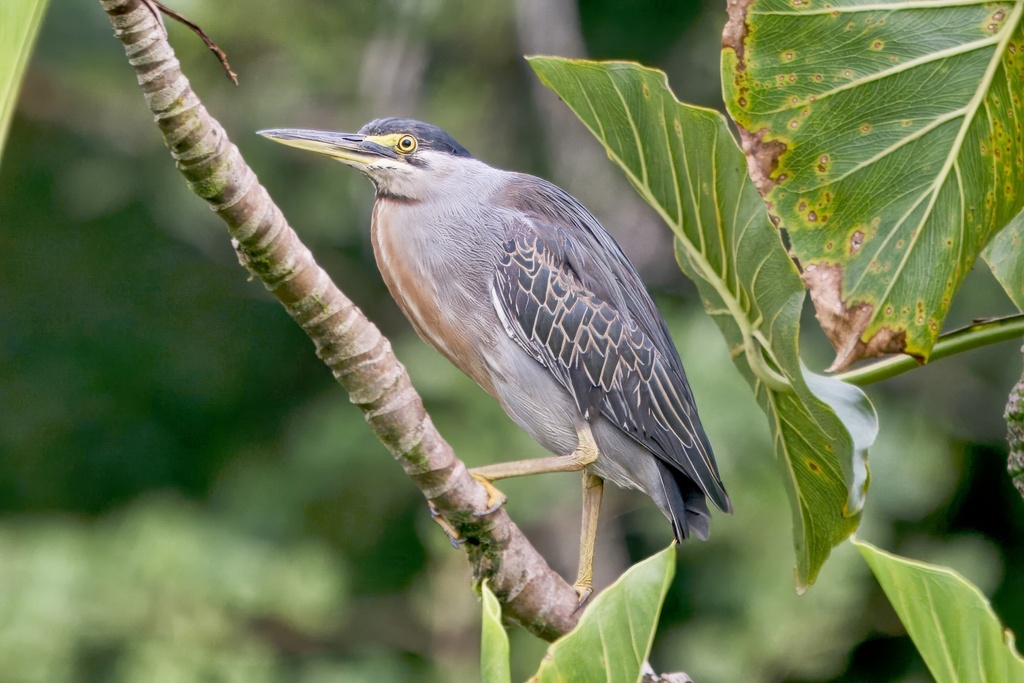
Striated Heron
Live sightings near you, the range map, bar charts of when it is seen, and Macaulay Library photos and recordings.
Striated Heron
Butorides striata
The striated heron (Butorides striata) also known as mangrove heron, little heron or green-backed heron, is a small heron, about 44 cm tall. Striated herons are mostly non-migratory and noted for some interesting behavioral traits. Their breeding habitat is small wetlands in the Old World tropics from west Africa to Japan and Australia, and in South America. Vagrants have been recorded on oceanic islands, such as Chuuk and Yap in the Federated States of Micronesia, the Marianas...
From the article Striated heron on Wikipedia (CC BY-SA), quoted section by section
Description
The striated heron is 35–48 cm (14–19 in) in length, weighs 130–250 g (4.6–8.8 oz) and has a wing-span of 52–60 cm (20–24 in). The sexes are alike. The plumage is variable below, from mid grey to pinkish-purple or orangey toned. Adults have a blue-grey back and wings, white underparts, a black cap, a dark line extends from the bill to under the eye and short yellow legs. Juveniles are browner above and heavily streaked below.
Range & habitat
It is widespread in tropical and warm temperate South America, from central and southeastern Panama south to Río Negro Province in Argentina. It is generally a lowland bird, found in marshes, lakes and rivers, in Peru up to an altitude of 800 m, thus avoiding the Andes mountains. In Trinidad and Tobago and in central Panama, it overlaps slightly in range with the closely related green heron and hybridises with it; hybrids are intermediate between the two species, generally much more purple-red below than typical striated herons.
Wikipedia: “Distribution and habitat”
What it does
These birds stand still at the water's edge and wait to ambush prey, but are easier to see than many small heron species. They mainly eat small fish, frogs and aquatic insects. They sometimes use bait, dropping a feather or leaf carefully on the water surface and picking fish that come to investigate.
Wikipedia: “Food and feeding”
Listen
Looking for field recordings…
Where it lives
Recorded sightings
—
geo-referenced records in GBIF, from museums, herbaria and field observers.
Drag the globe to turn it. Dots are where records exist, not a range map; darker means more records.
In the stacks
Searching the stacks…
Every page naming Butorides striata in the Biodiversity Heritage Library →
This page is assembled live from iNaturalist, GBIF, Wikipedia, the Source Library and the Internet Archive. It is not yet part of the hand-edited codex. iNaturalist taxon 62528.