 NL·0217
Herbarium of the Nature Library
- Name
- Aquila nipalensis
- Family
- Accipitridae
- Native to
- Breeds from southern Russia and Kazakhstan across Central Asia to Mongolia and China; winters in East Africa, Arabia, the Middle East and South Asia
- Habitat
- Steppe, Semi-desert, Savanna
On eBird ↗
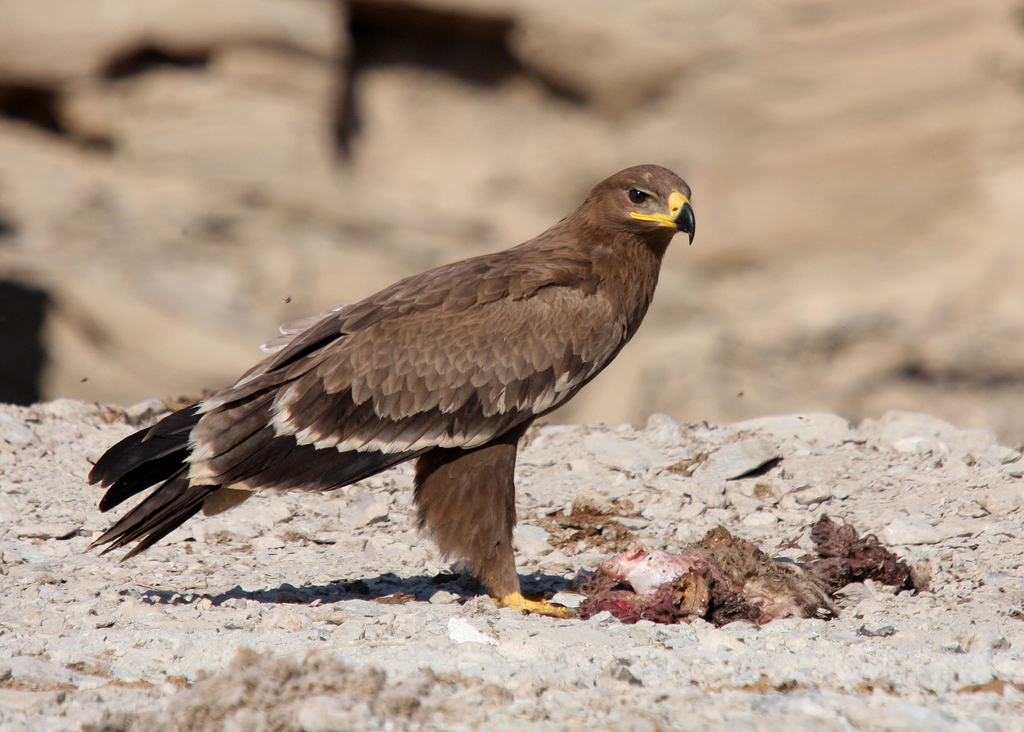
Steppe Eagle
Live sightings near you, the range map, bar charts of when it is seen, and Macaulay Library photos and recordings.
Steppe eagle
Aquila nipalensis
Also calledBozkır kartalı (Turkish) · Oqab-e dashti (Persian) · Stepnoy oryol (Russian) · Steppenadler (German) · Aigle des steppes (French)
A large, dark eagle that nests on the ground or on low bushes across the open steppes of Russia, Kazakhstan and Mongolia. Once common, it has crashed due to electrocution on power lines, poisoning and habitat loss.
The steppe eagle is a large bird of prey. Like all eagles, it belongs to the family Accipitridae. The steppe eagle's well-feathered legs illustrate it to be a member of the subfamily Aquilinae, also known as the "Booted eagles". This species was once considered to be closely related to the sedentary tawny eagle and the two forms have previously been treated as conspecific. They were split based on pronounced differences in morphology and anatomy; two molecular studies, each based on a very small number of genes, indicate that the species are distinct but disagree over how closely related they are. Wikipedia
What it can do
- iNests on the open ground, low shrubs or pylons where no trees exist
- iiPreys heavily on ground squirrels (sousliks)
- iiiMigrates thousands of kilometres around the Caspian and through the Middle East to Africa
- ivGathers in large numbers at rubbish dumps and locust swarms in winter
In the field
Field marks
- aLarge, uniformly dark brown eagle
- bLong gape line reaching back below the eye
- cJuveniles show a broad white band across the underwing and pale trailing edge
- dFingered wingtips; adults often have a rufous nape patch
- Voice
- Generally silent; a barking call near the nest.
- Not to be confused with
- Greater spotted eagle is darker with a shorter gape and a more compact shape. Tawny eagle (Africa, India) is paler with a shorter gape. Golden eagle has a longer tail and golden nape.
- Where to see it
- Kalmykia and Kazakh steppe in summer; spring passage at Eilat (Israel); winter in Oman's Raysut dump and East African savanna.
- When
- Summer visitor to breeding steppes Apr–Sep; passage Feb–Apr and Sep–Nov
Listen
Looking for field recordings…
Life & habits
- Diet
- Ground squirrels, marmots, pikas, hares; carrion; termites and locusts in winter
- Habitat
- Dry steppe and semi-desert; savanna and farmland in winter
- Size
- 62–81 cm; wingspan 165–214 cm; 2.3–4.9 kg
Thousands funnel through narrow migration bottlenecks, including Eilat in Israel and Bab-el-Mandeb between Yemen and Djibouti.
Where it lives
Recorded sightings
—
geo-referenced records in GBIF, from museums, herbaria and field observers.
Native range
Breeds from southern Russia and Kazakhstan across Central Asia to Mongolia and China; winters in East Africa, Arabia, the Middle East and South Asia
Drag the globe to turn it. Dots are where records exist, not a range map; darker means more records.
In the old herbals & bestiaries
No plate in the Source Library names this exact species, so these show its closest relatives as the old naturalists drew them: same genus, or the same kind of animal. Click a plate to read the page it came from, with translation.

History of Animals, Book I: On Viviparous Quadrupeds
Relative · Conrad Gessner · 1554 · p.377

Ornithology
Relative · Ulisse Aldrovandi · 1599 · p.267

François Bouchard — Recueil de cent-trente-trois oiseaux des plus belles especes (1775)
Relative · François Bouchard · 1775 · p.12

Ornithologiae: de avibus historiae libri XII
Relative · Ulisse Aldrovandi · 1599 · p.251

François Bouchard — Recueil de cent-trente-trois oiseaux des plus belles especes (1775)
Relative · François Bouchard · 1775 · p.6
In the stacks
Searching the stacks…
Every page naming Aquila nipalensis in the Biodiversity Heritage Library →
Marginalia
Its scientific name records the first specimen described from Nepal by Brian Houghton Hodgson in 1833, and for decades it was lumped with the tawny eagle of Africa and India.
Curiosity
It was uplisted from Least Concern to Endangered in 2015 after evidence of rapid declines across its breeding range.
Kinship
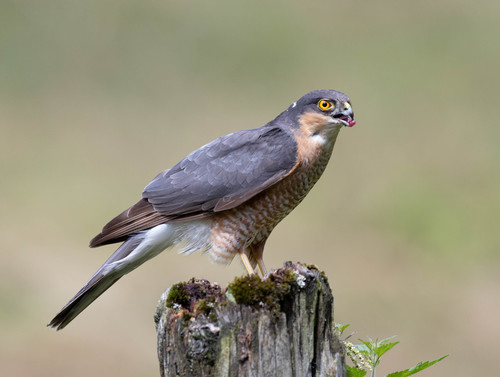

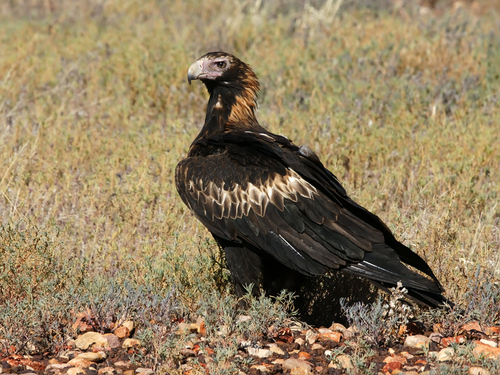
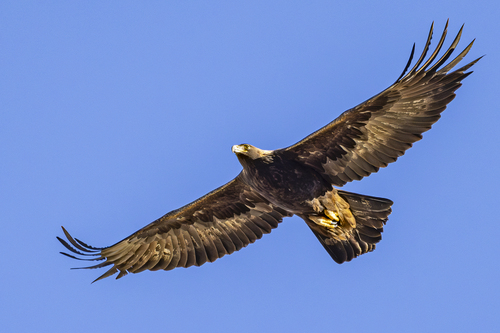
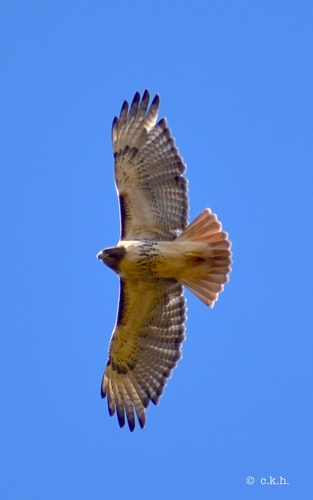

Photographs: iNaturalist contributors under the licences shown. Records: GBIF.org. Historical plates: Source Library (CC BY-SA 4.0; originals public domain). Summary text: Nature Library editors and Wikipedia (CC BY-SA). Medicinal and edibility notes are historical and educational, not advice. iNaturalist taxon 5083.