- Animals
- ›Chordates
- ›Vertebrates
- ›Mammals
- ›Therians
- ›Placental Mammals
- ›Ungulates, Carnivorans, and Allies
- ›Bats
- ›Yangochiroptera
- ›Vespertilionoid Bats
- ›Evening Bats
- ›Mouse-eared Bats
- ›Myotis
- ›Pizonyx
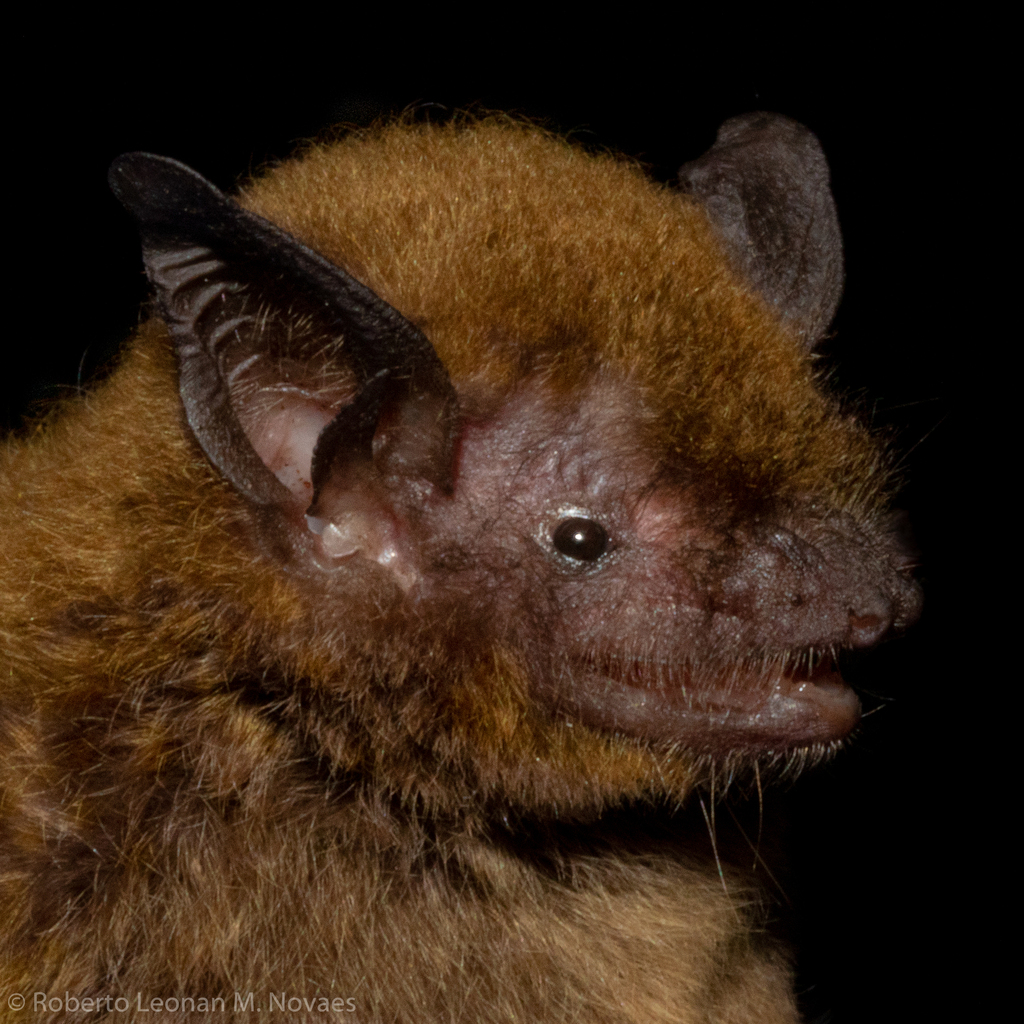
velvety myotis
Myotis simus
The velvety myotis (Myotis simus), is a species of vesper bat from South America.
From the article Velvety myotis on Wikipedia (CC BY-SA), quoted section by section
Description
The velvety myotis is a small bat, although of average size for a myotine, with a total length of 8 to 9 cm (3.1 to 3.5 in) and weighing between 5 and 11 g (0.18 and 0.39 oz). It has short, velvety, orange-brown fur over the whole of the body, which may fade to a brownish shade in preserved specimens. The ears and wing membranes are black and hairless. The ears are short and triangular, with a pointed tragus. Velvety myotis can be distinguished from all other New World members of the genus Myotis by the velvety nature of its fur, possession of larger canine teeth, and by the shape of plagiopatagium and the absence of fur on the trailing edge of the uropatagium. These differences were once considered sufficient to place the bat within its own monotypic subgenus, but this has not been supported by subsequent analysis.
Range & habitat
It is found in northern and western Brazil, southern Colombia, eastern Ecuador and Peru, and in Bolivia, Paraguay, and northwestern Argentina. It inhabits lowland forest and savannah habitats, close to bodies of fresh water. No subspecies are currently recognised, although a possible subspecies, or even full species, has been proposed for Bolivian specimens.
Wikipedia: “Distribution”
Listen
Looking for field recordings…
Where it lives
Recorded sightings
—
geo-referenced records in GBIF, from museums, herbaria and field observers.
Drag the globe to turn it. Dots are where records exist, not a range map; darker means more records.
In the stacks
Searching the stacks…
Every page naming Myotis simus in the Biodiversity Heritage Library →
This page is assembled live from iNaturalist, GBIF, Wikipedia, the Source Library and the Internet Archive. It is not yet part of the hand-edited codex. iNaturalist taxon 40280.