- Animals
- ›Chordates
- ›Vertebrates
- ›Amphibians
- ›Frogs and Toads
- ›African Box-headed Frogs
- ›Cacosterninae
- ›Microbatrachella
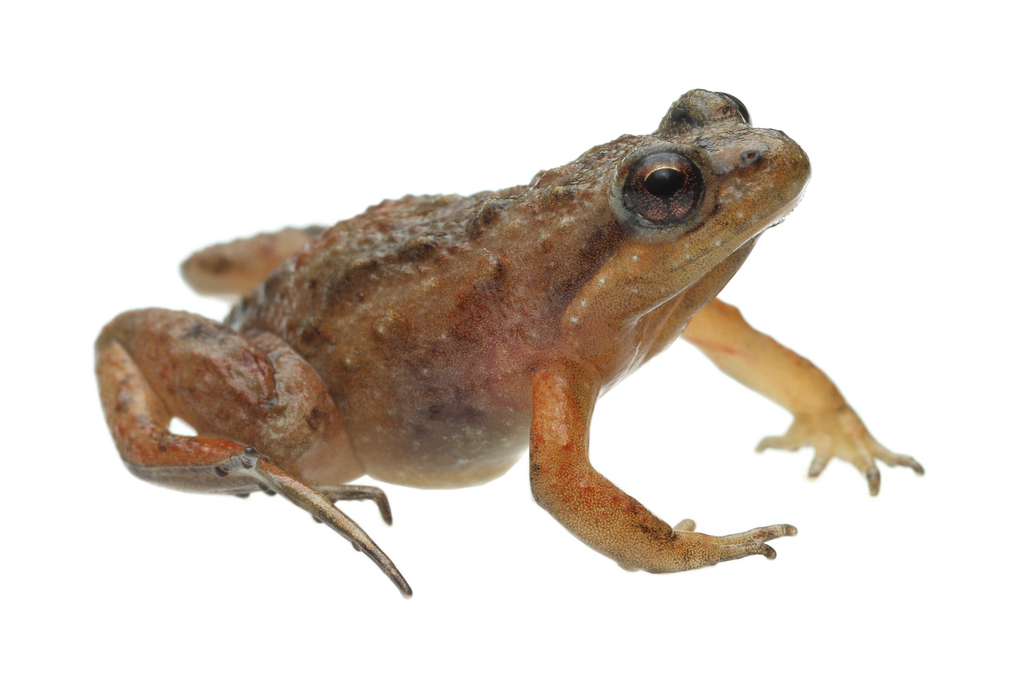
Micro Frog
Microbatrachella capensis
The micro frog (Microbatrachella capensis), or Cape Flats frog, is a species of frog less than 2 cm (0.8 in) long in the family Pyxicephalidae, in the monotypic genus Microbatrachella. Its color varies from rufous brown with dark mottling, to tan or green, depending on the population. It is endemic to the south-western Cape area of South Africa, with a single population found on the Cape Flats of Cape Town and several populations on the eastern side of False Bay. It typically lives in wetlands in coastal fynbos habitats, but its total area of occupancy is very small, and the International Union for Conservation of Nature has rated it as being "critically endangered".
From the article Micro frog on Wikipedia (CC BY-SA), quoted section by section
Description
The micro frog is a very small frog with a rounded snout and smooth skin. At around 18 mm (0.71 in) long, it is one of the smallest regional species. The dorsal surface is dark brown speckled with pale brown, and there is a pale band of color running down each flank. There is a dark bar between the eyes and a narrow pale line along the spine. The underparts are pale brown and the belly spotted with white.
Range & habitat
The micro frog is endemic to the south-western Cape area of South Africa, with a single population found on the Cape Flats of Cape Town and a series of populations on the eastern side of False Bay, from Kogelberg to Cape Agulhas. Its natural habitat is at low altitudes, in and around shallow, vegetated freshwater wetlands in coastal restioid fynbos, a Mediterranean-type vegetation dominated by restios (Cape reed). Typically, these wetlands have some areas of permanent water along with other areas inundated during the winter–spring rainy season.
Wikipedia: “Distribution and habitat”
What it does
The micro frog lives in wetlands in sandy, coastal fynbos, a type of heathland found in the Western Cape region of South Africa. It is associated with seepages and ephemeral pools, and depends on dark, acidic waters for breeding. The breeding season starts with the arrival of the rainy season, usually between July and September. Eggs are attached to the vegetation and the tadpoles develop slowly. During the dry season, these frogs bury themselves and aestivate.
Wikipedia: “Behavior”
Listen
Looking for field recordings…
Where it lives
Recorded sightings
—
geo-referenced records in GBIF, from museums, herbaria and field observers.
Drag the globe to turn it. Dots are where records exist, not a range map; darker means more records.
In the stacks
Searching the stacks…
Every page naming Microbatrachella capensis in the Biodiversity Heritage Library →
This page is assembled live from iNaturalist, GBIF, Wikipedia, the Source Library and the Internet Archive. It is not yet part of the hand-edited codex. iNaturalist taxon 25432.