- Animals
- ›Chordates
- ›Vertebrates
- ›Ray-finned Fishes
- ›Spiny-rayed fishes
- ›Butterflyfishes, Angelfishes, and Allies
- ›Temperate Basses
- ›Dicentrarchus
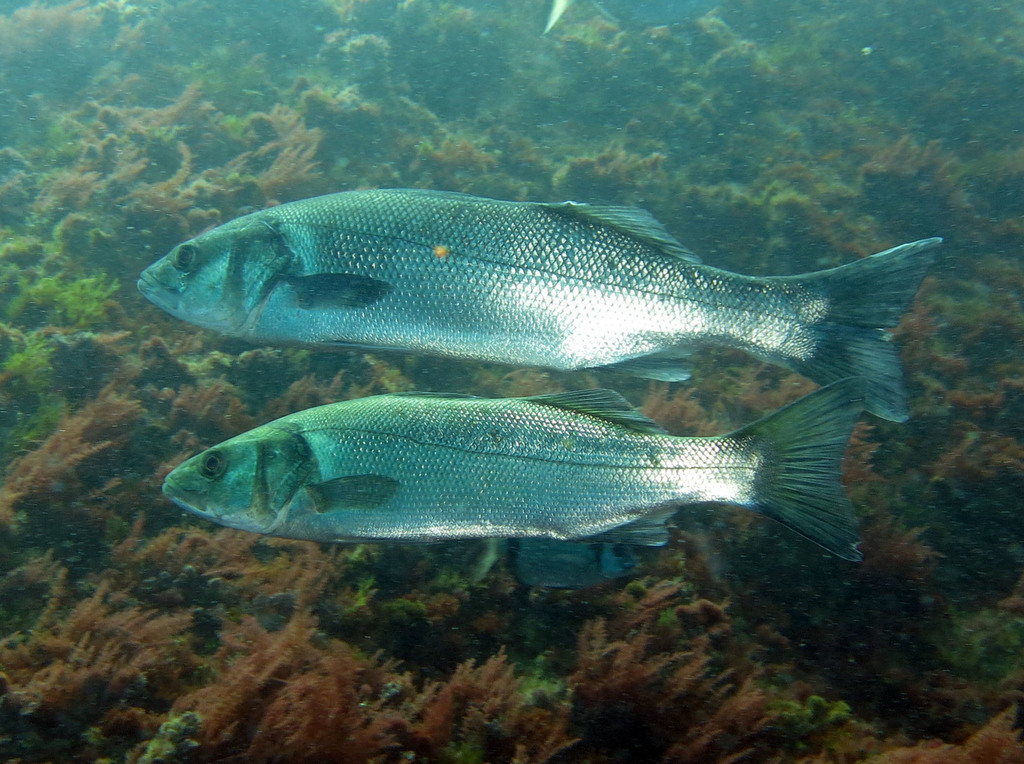
European Seabass
Dicentrarchus labrax
European seabass (Dicentrarchus labrax), also known as branzino, European bass, sea bass, common bass, white bass, capemouth, white salmon, white mullet, sea dace, levrek or loup de mer, or lavraki (λαβράκι) is a primarily ocean-going fish native to the waters off Europe's western and southern and Africa's northern coasts, though it can also be found in shallow coastal waters and river mouths during the summer months and late autumn. It is one of only six species in its family, Moronidae, collectively called the temperate basses.
It is fished and raised commercially and is considered the most important fish currently cultured in the Mediterranean. In Ireland and the United Kingdom, the popular restaurant fish sold and consumed as sea bass is exclusively the European bass. In North America, it is widely known by one of its Italian names, branzino.
From the article European seabass on Wikipedia (CC BY-SA), quoted section by section
Range & habitat
European seabass habitats include estuaries, lagoons, coastal waters, and rivers. It is found in a large part of the eastern Atlantic Ocean, from southern Norway to Senegal. It can also be found in the entire Mediterranean Sea and in the southern Black Sea but is absent from the Baltic Sea. It has entered the Red Sea through the Suez Canal as an anti-Lessepsian migrant. It is a seasonally migratory species, moving further winter spawning grounds during at least one month before moving towards their summer feeding areas.
Wikipedia: “Distribution and habitat”
What it does
The European seabass hunts as much during the day as it does at night, feeding on small fish (both pelagic, such as sardines, sprats, and sand smelts, and demersal, such as sand eels), polychaetes, cephalopods (such as squid), and crustaceans. The big fish weighing more than 4 kg (9 lb) are mostly night hunters. They spawn from February to June, mostly in inshore waters. As fry they are pelagic, but as they develop, they move into estuaries, where they stay for a year or two.
Wikipedia: “Diet and behaviour”
Where it lives
Recorded sightings
—
geo-referenced records in GBIF, from museums, herbaria and field observers.
Drag the globe to turn it. Dots are where records exist, not a range map; darker means more records.
In the stacks
Searching the stacks…
Every page naming Dicentrarchus labrax in the Biodiversity Heritage Library →
This page is assembled live from iNaturalist, GBIF, Wikipedia, the Source Library and the Internet Archive. It is not yet part of the hand-edited codex. iNaturalist taxon 99269.