- Animals
- ›Chordates
- ›Vertebrates
- ›Ray-finned Fishes
- ›Spiny-rayed fishes
- ›Blennies, Damselfishes and Allies
- ›Blennies
- ›Scaly Blennies
- ›Labrisomus
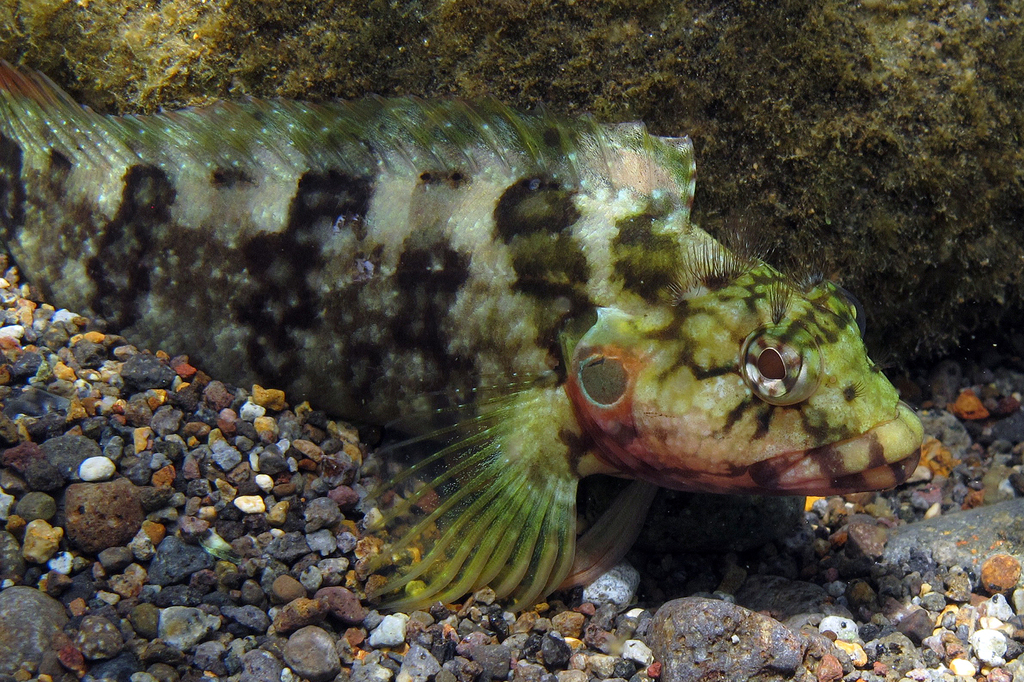
Hairy Blenny
Labrisomus nuchipinnis
Labrisomus nuchipinnis, the hairy blenny, is a species of labrisomid blenny native to the Atlantic Ocean from the coast of the Americas to the African coast. This species prefers areas that give them crevices and holes to shelter in such as areas with rock or rubble substrates, reefs or beds of seagrass. They can be found in shallow water only a few centimeters deep to a depth of 10 metres (33 ft) though they are much rarer deeper than 5 metres (16 ft). Carnivorous, they prey on such animals as crustaceans, gastropods, echinoderms such as urchins and brittle stars, polychaete worms and other fishes. This species can reach a length of 23 centimetres (9.1 in) TL, making them the largest of the Labrisomidae in the Caribbean. They can also be found in the aquarium trade.
From the article Labrisomus nuchipinnis on Wikipedia (CC BY-SA), quoted section by section
What it does
The fish prefer shallow water between 0 - 3 metres (9.8 ft), although they have been recorded up to 22 m (72 ft) deep. They are often found in the bottom water column. The fish are reef associated fish, found in coral, rock, and oyster reefs with water temperatures between 18.8 - 30.1 °C (65.84 - 86.18 °F). L. nuchipinnis lay benthic eggs, or eggs laid directly onto the seafloor. However, larvae are pelagic and planktonic. The fish exhibit paternal behavior, seen guarding and nesting. The fish are polygynous and batch spawners (to increase likelihood of successful offspring). However, courtship and mating tends to follow a similar pattern. The fish begin by identifying a prospective individual, which is followed by arousal through nudging (initiated by the female). The fish continue to court the other until the female lays eggs. The eggs, spherical and orange in color, are then externally fertilized by the male. Males have been noticed fanning the nest after this display.
Wikipedia: “Ecology and courtship”
Where it lives
Recorded sightings
—
geo-referenced records in GBIF, from museums, herbaria and field observers.
Drag the globe to turn it. Dots are where records exist, not a range map; darker means more records.
In the stacks
Searching the stacks…
Every page naming Labrisomus nuchipinnis in the Biodiversity Heritage Library →
This page is assembled live from iNaturalist, GBIF, Wikipedia, the Source Library and the Internet Archive. It is not yet part of the hand-edited codex. iNaturalist taxon 179551.