- Animals
- ›Chordates
- ›Vertebrates
- ›Ray-finned Fishes
- ›Spiny-rayed fishes
- ›Perches, Scorpionfishes, Sticklebacks, and Allies
- ›Perches, groupers and allies
- ›Perches, Darters, and allies
- ›Darters
- ›Etheostoma
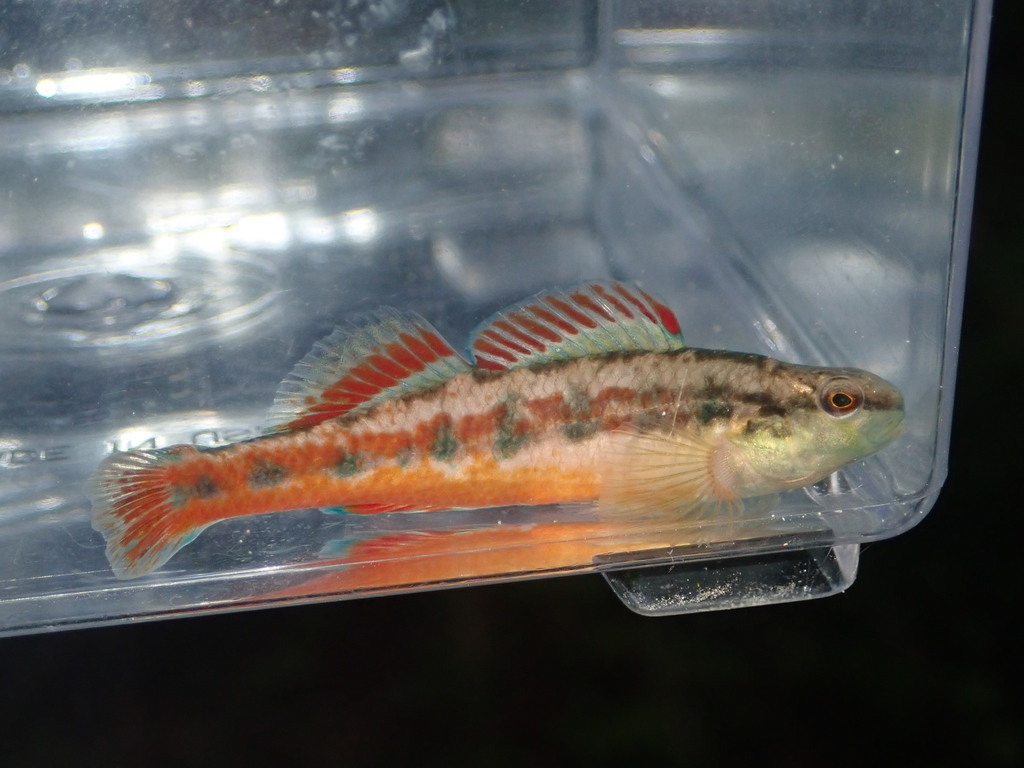
Firebelly Darter
Etheostoma pyrrhogaster
The firebelly darter (Etheostoma pyrrhogaster) is a species of freshwater ray-finned fish, a darter from the subfamily Etheostomatinae, part of the family Percidae, which also contains the perches, ruffes and pikeperches. It is endemic to the eastern United States, where it is only known to occur in the drainage systems of the Obion and Forked Deer rivers of Kentucky and Tennessee. It inhabits gravel or sand-bottomed pools in creeks up to small rivers. This species can reach a length of 7 centimetres (2.8 in) TL.
From the article Firebelly darter on Wikipedia (CC BY-SA), quoted section by section
Range & habitat
Firebelly darters occur in small to medium streams, and adults typically occupy the swiftest waters and coarsest substrates available. In the low gradient streams where they occur, these habitats are gentle riffles with fine gravel substrates. They often encounter them in areas with rooted aquatic vegetation, but this probably reflects a preference for clearer streams rather than the vegetation, since they are abundant in several Obion River system streams where vegetation is absent.
Wikipedia: “Habitat”
Where it lives
Recorded sightings
—
geo-referenced records in GBIF, from museums, herbaria and field observers.
Drag the globe to turn it. Dots are where records exist, not a range map; darker means more records.
In the stacks
Searching the stacks…
Every page naming Etheostoma pyrrhogaster in the Biodiversity Heritage Library →
This page is assembled live from iNaturalist, GBIF, Wikipedia, the Source Library and the Internet Archive. It is not yet part of the hand-edited codex. iNaturalist taxon 100528.