- Animals
- ›Chordates
- ›Vertebrates
- ›Ray-finned Fishes
- ›Spiny-rayed fishes
- ›Blennies, Damselfishes and Allies
- ›Blennies
- ›Pike-Blennies, Tube-Blennies, and Flagblennies
- ›Emblemaria
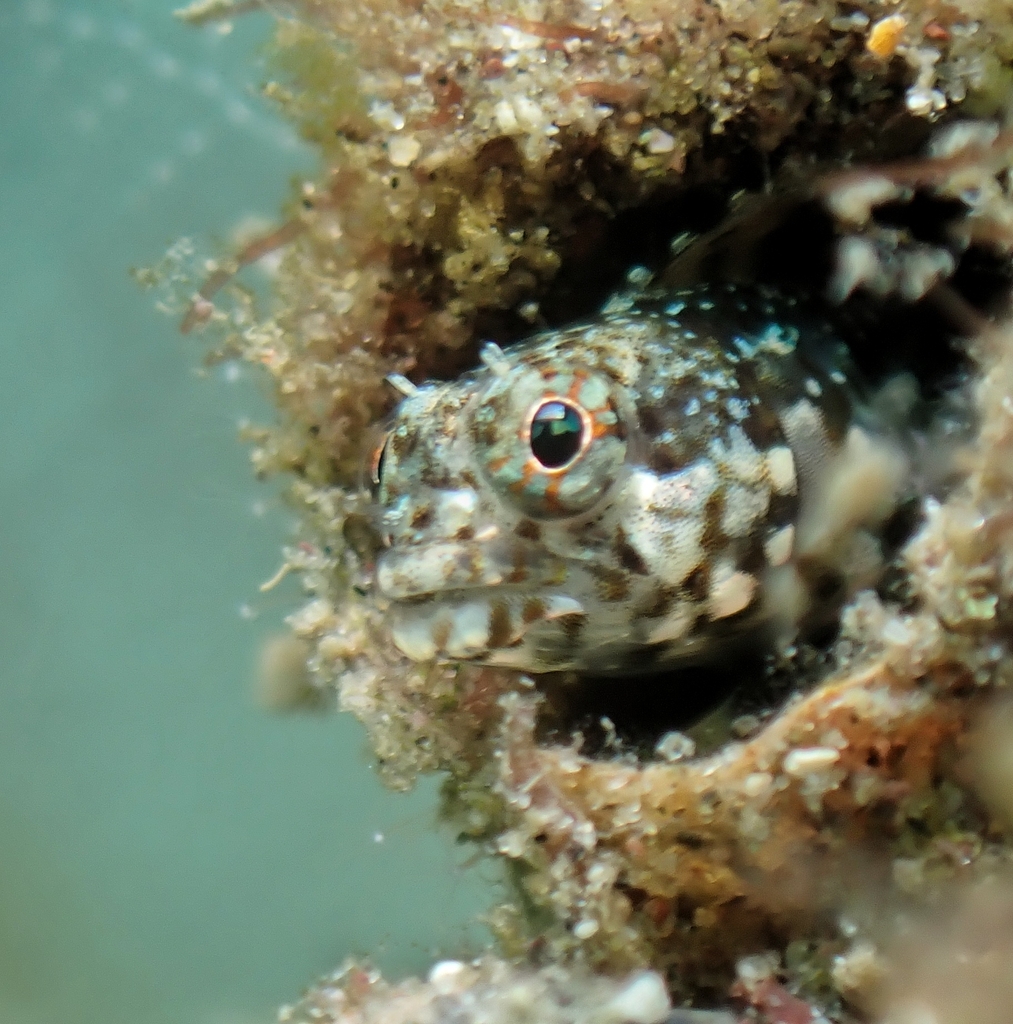
Emblemaria piratica
The sailfin signal blenny (Emblemaria piratica) is a species of tube-dwelling blenny part of the family Chaenopsidae found in the eastern Pacific Ocean extending from southern Mexico to Panama. Due to their name as tube blennies, members of the family commonly forage on small benthic invertebrates such as barnacles, mollusks, zooplankton and polychaete tube worms. The species is known for its large prominent spiny dorsal fin and sexual dimorphism found between both genders. Notably sexual dimorphism is common across the family Chaenopsidae with varying degrees of variation that is used in territorial and courtship displays.
From the article Emblemaria piratica on Wikipedia (CC BY-SA), quoted section by section
Range & habitat
Emblemaria piratica is commonly found across all of Central America including countries such as Costa Rica, El Salvador, Guatemala, Honduras, Nicaragua, Panama, and parts of Southern Mexico. It mainly occupies shallow waters and coral reefs often residing in abandoned worm tubes and small crevices for protection and shelter. In regards to depth, the species can be from 5m-30m. These microhabitats play a crucial role in its development and life history shaping its ecological interactions.
Wikipedia: “Distribution”
In human culture
Within the family Chaenopsidae, the sailfin signal blenny start their journey as larval eggs deposited by one or more females in shelter cavities which are guarded by breeding males. Once they hatch, they have a planktonic larval stage that disperses from the reef before inhabiting suitable microhabitats such as abandoned worm tubes, crevices, and cross rubble fragments as adults. Their success in selecting microhabitats are dictated by strong environmental interactions such as niche availability, competition, and predator pressure influencing their overall survival and reproduction. As adults, males are highly territorial, displaying flagging behavior through the use of their prominent dorsal fin to signal dominance and deter any nearby males from encroaching. The elongated dorsal of a male signal blenny is crucial towards survival and success often indicating health and fitness which plays a key role in mate selection. In contrast, juvenile and female blennes are cryptically colored which helps them avoid predation and forage on small benthic invertebrates aiding their growth and survival. …
Wikipedia: “Biology & Life History”
Where it lives
Recorded sightings
—
geo-referenced records in GBIF, from museums, herbaria and field observers.
Drag the globe to turn it. Dots are where records exist, not a range map; darker means more records.
In the stacks
Searching the stacks…
Every page naming Emblemaria piratica in the Biodiversity Heritage Library →
This page is assembled live from iNaturalist, GBIF, Wikipedia, the Source Library and the Internet Archive. It is not yet part of the hand-edited codex. iNaturalist taxon 99870.