- Animals
- ›Chordates
- ›Vertebrates
- ›Ray-finned Fishes
- ›Carps, Characins, Catfishes and Allies
- ›Minnows, Suckers, Carps, and Loaches
- ›Loaches
- ›True Loaches
- ›Misgurnus
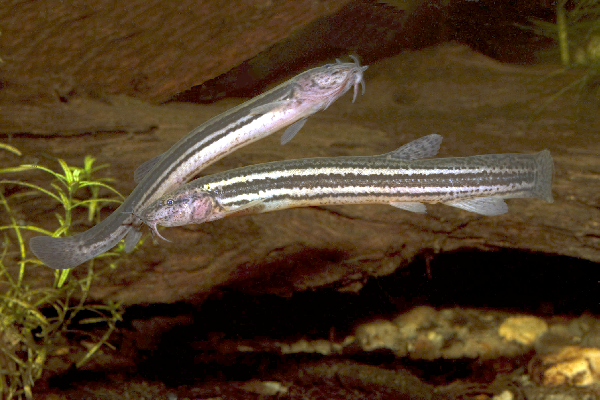
European Weatherfish
Misgurnus fossilis
The weatherfish (Misgurnus fossilis) is a species of true loach that has a wide range in Europe and some parts of Asia. It is an omnivorous scavenger bottom feeder, using its sensitive barbels to find edible items. The diet mostly consists of small aquatic invertebrates along with some detritus. The weatherfish is long and thin which allows it to burrow through the substrate and navigate through places that deeper bodied fish would have trouble with. It grows up to 30 cm (12 in) in total length, though there are fishermen who say they have caught longer, up to 45 cm (17.7 in). If true, this would make Misgurnus fossilis the largest species of true loach.
This loach has a very wide range, especially in Europe. It occurs north of the Alps, from the Meuse River in western Europe all the way to the Neva River in northwestern Russia. It also occurs in the northern part of the Black Sea basin from the Danube River to the Kuban River, and in the Caspian Sea in the River Volga and River Ural drainages. It is also introduced in a few different areas, but not to the extent of the pond loach (Misgurnus anguillicaudatus).
Where it lives
Recorded sightings
—
geo-referenced records in GBIF, from museums, herbaria and field observers.
Drag the globe to turn it. Dots are where records exist, not a range map; darker means more records.
In the stacks
Searching the stacks…
Every page naming Misgurnus fossilis in the Biodiversity Heritage Library →
This page is assembled live from iNaturalist, GBIF, Wikipedia, the Source Library and the Internet Archive. It is not yet part of the hand-edited codex. iNaturalist taxon 105910.