- Animals
- ›Chordates
- ›Vertebrates
- ›Ray-finned Fishes
- ›Carps, Characins, Catfishes and Allies
- ›Minnows, Suckers, Carps, and Loaches
- ›Carps and Minnows
- ›True Minnows
- ›North American Minnows
- ›Phenacobius
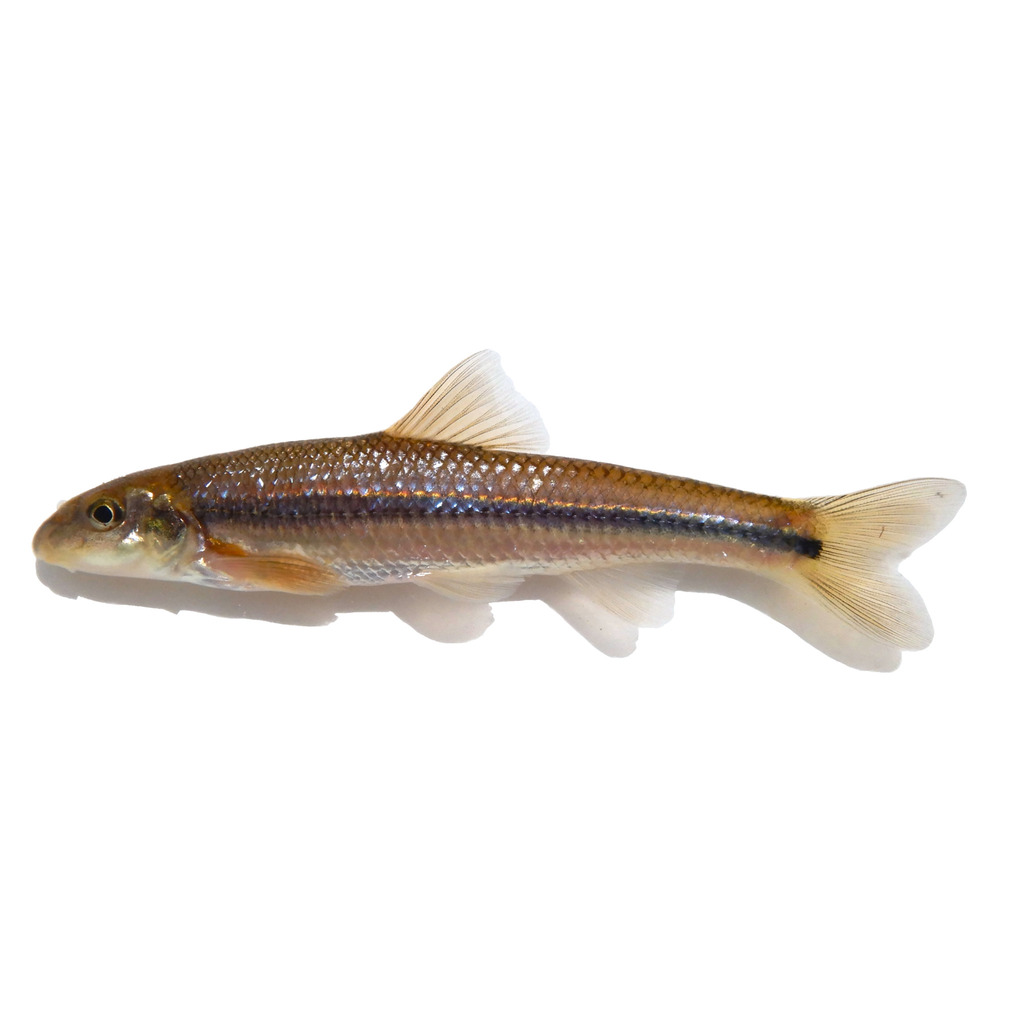
Suckermouth Minnow
Phenacobius mirabilis
Phenacobius mirabilis, or the suckermouth minnow, is a species of freshwater ray-finned fish beloinging to the family Leuciscidae, the shiners, daces and minnows. This species is found in North America where it occurs in the Mississippi River basin from Ohio and West Virginia to Wyoming, Colorado and New Mexico, and from southeastern Minnesota to northern Alabama, eastern Oklahoma and southern Kansas. It also occurs in the western Lake Erie drainage in Ohio.
From the article Phenacobius mirabilis on Wikipedia (CC BY-SA), quoted section by section
Description
This species gets its name from its sucker-like mouth and fleshy lower lip. They are bicolored, meaning the dorsal side is a brownish tone and the ventral side is a silvery white shade. A thin black stripe separates the colors, and a black spot is located on the base of the caudal fin. Males typically are more colorful, while females are larger to aid in reproduction. They range from 5–13 cm.
Wikipedia: “Appearance”
What it does
The suckermouth minnow inhabits small- to moderate-size streams and rivers with clear to turbid water. They prefer a water temperature of 5–25 degrees Celsius and a mixed sandy gravel substrate. Streams with permanent flow and riffles with little siltation are ideal for this species. A highly adaptable species, it has been observed that these minnows can travel long distances. Suckermouth minnows often can be observed swimming along the sandy gravel, where they feed on chironomid midge larvae and pupae, caddisfly larvae and plankton. They can be cannibalistic.
Wikipedia: “Ecology”
Where it lives
Recorded sightings
—
geo-referenced records in GBIF, from museums, herbaria and field observers.
Drag the globe to turn it. Dots are where records exist, not a range map; darker means more records.
In the stacks
Searching the stacks…
Every page naming Phenacobius mirabilis in the Biodiversity Heritage Library →
This page is assembled live from iNaturalist, GBIF, Wikipedia, the Source Library and the Internet Archive. It is not yet part of the hand-edited codex. iNaturalist taxon 109261.