- Animals
- ›Chordates
- ›Vertebrates
- ›Ray-finned Fishes
- ›Carps, Characins, Catfishes and Allies
- ›Catfishes
- ›Siluroidei
- ›Schilbid Catfishes
- ›Pareutropius
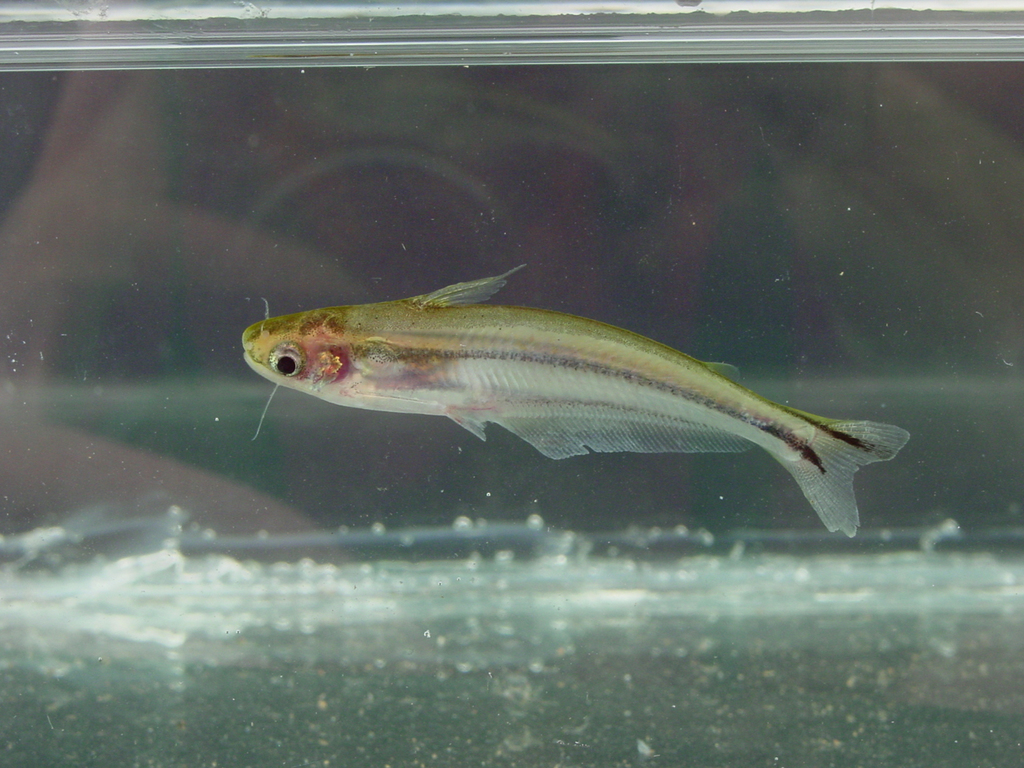
African glass catfish
Pareutropius debauwi
Pareutropius debauwi is a species of fish in the Schilbeidae, the schilbid catfishes. Its common name is African glass catfish. It is native to Africa, where it can be found in the Central African Republic, the Republic of the Congo, the Democratic Republic of the Congo, and Gabon. It is widespread and faces no serious threats.
From the article Pareutropius debauwi on Wikipedia (CC BY-SA), quoted section by section
Range & habitat
This species is native to Africa and is spread throughout Angola, the Republic of the Congo, Democratic Republic of the Congo, and Gabon. This species can be found in shallow water systems. Pareutropius debauwi are a freshwater species, specifically found in tropical waters. Pareutropius debauwi are a riverine species that can be found in large and small moderate water systems.
Wikipedia: “Distribution & Habitat”
What it does
Pareutropius debauwi are omnivores, with some being carnivorous for insects. Mating behavior includes distinct pairing. Reproduction cycles coincide with flood periods. Females tend to be larger than males and have a rounded, short genital papilla. Pareutropius debauwi are an oviparous species. Eggs are unguarded and have no parental care. Are strongly diurnal and are a schooling species. Members within this species can reach up to 15 cm in length. The expected lifespan for this species is around eight years.
Wikipedia: “Biology & Behavior”
In human culture
The name of the genus is derived from the Greek words par, eu, and tropis, which respectively translate to "beside or near", "well", and "keel". This is in reference to the families compressed body form. The species name is derived from the Latin work vittatus, which loosely translates to "covered with stripes". This refers to the color and pattern found on this species.
Wikipedia: “Etymology & Taxonomic History”
Where it lives
Recorded sightings
—
geo-referenced records in GBIF, from museums, herbaria and field observers.
Drag the globe to turn it. Dots are where records exist, not a range map; darker means more records.
In the stacks
Searching the stacks…
Every page naming Pareutropius debauwi in the Biodiversity Heritage Library →
This page is assembled live from iNaturalist, GBIF, Wikipedia, the Source Library and the Internet Archive. It is not yet part of the hand-edited codex. iNaturalist taxon 108774.