- Animals
- ›Chordates
- ›Vertebrates
- ›Ray-finned Fishes
- ›Spiny-rayed fishes
- ›Perches, Scorpionfishes, Sticklebacks, and Allies
- ›Sculpins and Allies
- ›Fathead Sculpins
- ›Myoxocephalus
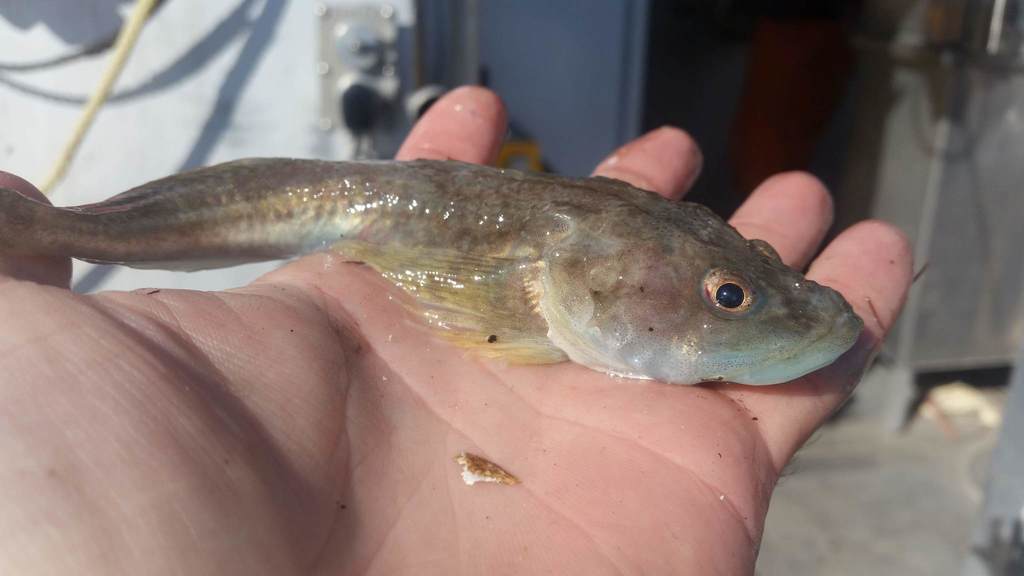
Deepwater Sculpin
Myoxocephalus thompsonii
The deepwater sculpin (Myoxocephalus thompsonii) is a freshwater sculpin that inhabits the bottoms of cold, deep freshwater lakes of northern North America. Its distribution ranges from the Great Bear Lake of Canada to the Great Lakes. It is a designated at-risk fish species in Canada, protected as a species of Special Concern under Canada's Species at Risk Act.
From the article Deepwater sculpin on Wikipedia (CC BY-SA), quoted section by section
Description
The deepwater sculpin is a small fish on average between 51–76 millimetres (2.0–3.0 in) in total length. Its body is generally flattened in shape and tapers from the head to the caudal peduncle. It does not have true scales but some spines are present on the opercle, body, and fins. The skin is mottled green, gray and brown on the back and whitish underneath. The deepwater sculpin can be distinguished from other freshwater sculpins in its range by a distinct gap between the two dorsal fins. It is most similar in appearance to the fourhorn sculpin, a fish found in salt and brackish water in the arctic but lacks the four bony spines found on the head of that species. Age estimation with otoliths suggests that deepwater sculpin can live up to nine years.
Range & habitat
The deepwater sculpin is found from the Gatineau through the Laurentian Great Lakes, Manitoba, and Saskatchewan to the Great Slave and Great Bear Lakes. It is also found in Waterton Lake within Waterton Lakes National Park and Glacier National Park. Within its range, it is limited to deep, well-oxygenated lakes with ties to former Wisconsinan glacial lakes or the Champlain Sea. The deepwater sculpin inhabits the demersal zone. It prefers water temperatures that remain less than 5 °C (41 °F). In lakes in the southern part of its range, it has been observed only in deep water where temperature remains cold annually.
Wikipedia: “Distribution and habitat”
What it does
The deepwater sculpin feeds primarily on small crustaceans Mysis diluviana and Diporeia. They will also take chironomid larvae. Zooplankton are likely prey at the larval stage.
Wikipedia: “Diet”
Where it lives
Recorded sightings
—
geo-referenced records in GBIF, from museums, herbaria and field observers.
Drag the globe to turn it. Dots are where records exist, not a range map; darker means more records.
In the stacks
Searching the stacks…
Every page naming Myoxocephalus thompsonii in the Biodiversity Heritage Library →
This page is assembled live from iNaturalist, GBIF, Wikipedia, the Source Library and the Internet Archive. It is not yet part of the hand-edited codex. iNaturalist taxon 106352.