- Animals
- ›Chordates
- ›Vertebrates
- ›Mammals
- ›Therians
- ›Placental Mammals
- ›Ungulates, Carnivorans, and Allies
- ›Bats
- ›Yangochiroptera
- ›Vespertilionoid Bats
- ›Evening Bats
- ›Vesper Bats
- ›Plecotini
- ›Plecotus
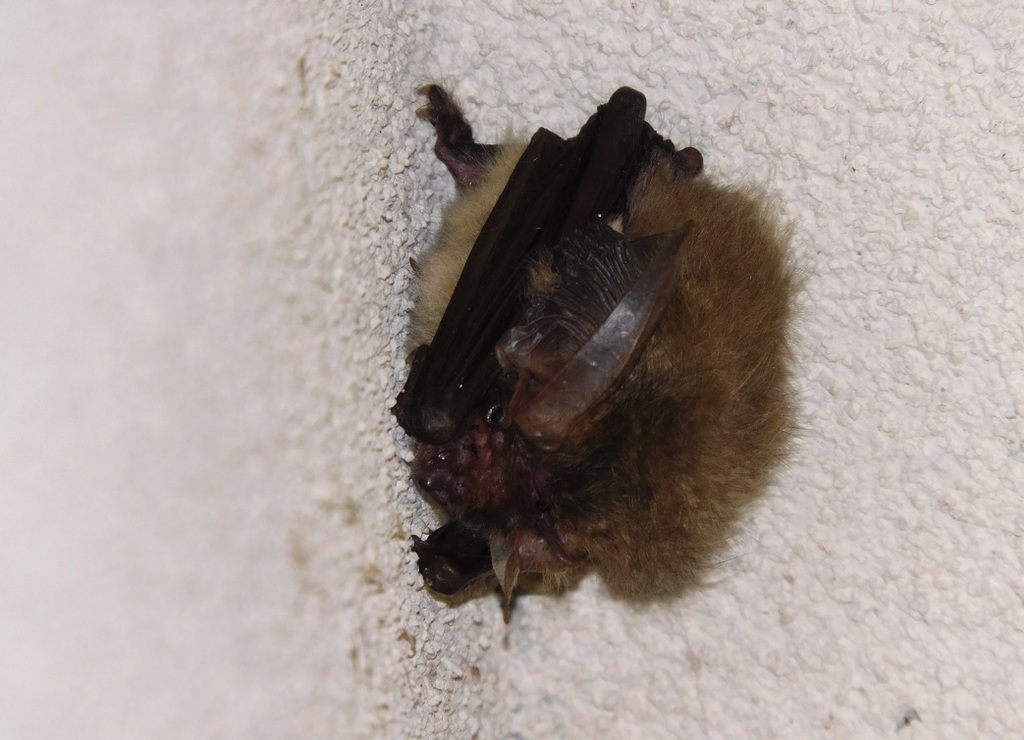
Japanese Long-eared Bat
Plecotus sacrimontis
The Japanese long-eared bat (Plecotus sacrimontis) is a species of vesper bat endemic to Japan, where it is found in Hokkaido, Honshu and Shikoku. It has distinctive, long ears, hence its Japanese name, the 'rabbit bat'. Formerly included as a subspecies of the European bat Plecotus auritus, genetic studies now indicate Plecotus sacrimontis is a separate species.
From the article Japanese long-eared bat on Wikipedia (CC BY-SA), quoted section by section
Range & habitat
Its range includes several islands of Japan, including Hokkaido, Honshu, Shikoku, Rebun, and Rishiri. It is also found on the Kuril Islands, specifically Iturup and Kunashir. It has been documented at a range of elevations from 700–1,700 m (2,300–5,600 ft) above sea level.
Wikipedia: “Range and habitat”
In human culture
It was described as a new species in 1908 by American zoologist Glover Morrill Allen. The holotype had been collected in December 1906 by Alan Owston on Mount Fuji. Allen received the specimen from Thomas Barbour. Allen noted that it resembled the brown long-eared bat, Plecotus auritus. Its species name "sacrimontis" is from Latin sacer meaning "sacred" and mons meaning "mountain." In 1929, Nikolay Alekseyevich Bobrinski published that he considered P. sacrimontis as a synonym of P. auritus. In 1938, Allen himself expressed doubts about P. sacrimontis as a species, saying "Bobrinski...is very likely right in believing the name a synonym of P. auritus." In 1942, George Henry Hamilton Tate published that he considered P. sacrimontis as a subspecies of P. auritus, with a trinomen of P. auritus sacrimontis. This was largely maintained until 2006, when Spitzenberger et al. revised the genus Plecotus. They found that P. sacrimontis had a high genetic distance from other Plecotus species, and thus determined that it should be considered a full species rather than a subspecies of P. auritus.
Wikipedia: “Taxonomy and etymology”
Listen
Looking for field recordings…
Where it lives
Recorded sightings
—
geo-referenced records in GBIF, from museums, herbaria and field observers.
Drag the globe to turn it. Dots are where records exist, not a range map; darker means more records.
In the stacks
Searching the stacks…
Every page naming Plecotus sacrimontis in the Biodiversity Heritage Library →
This page is assembled live from iNaturalist, GBIF, Wikipedia, the Source Library and the Internet Archive. It is not yet part of the hand-edited codex. iNaturalist taxon 74929.