- Animales
- ›Insectos, arácnidos y crustáceos
- ›Hexápodos
- ›Insectos
- ›Insectos alados
- ›Mariposas y polillas
- ›Polillas búho
- ›Polillas tigre y parientes
- ›Lymantriinae
- ›Orgyiini
- ›Orgyia
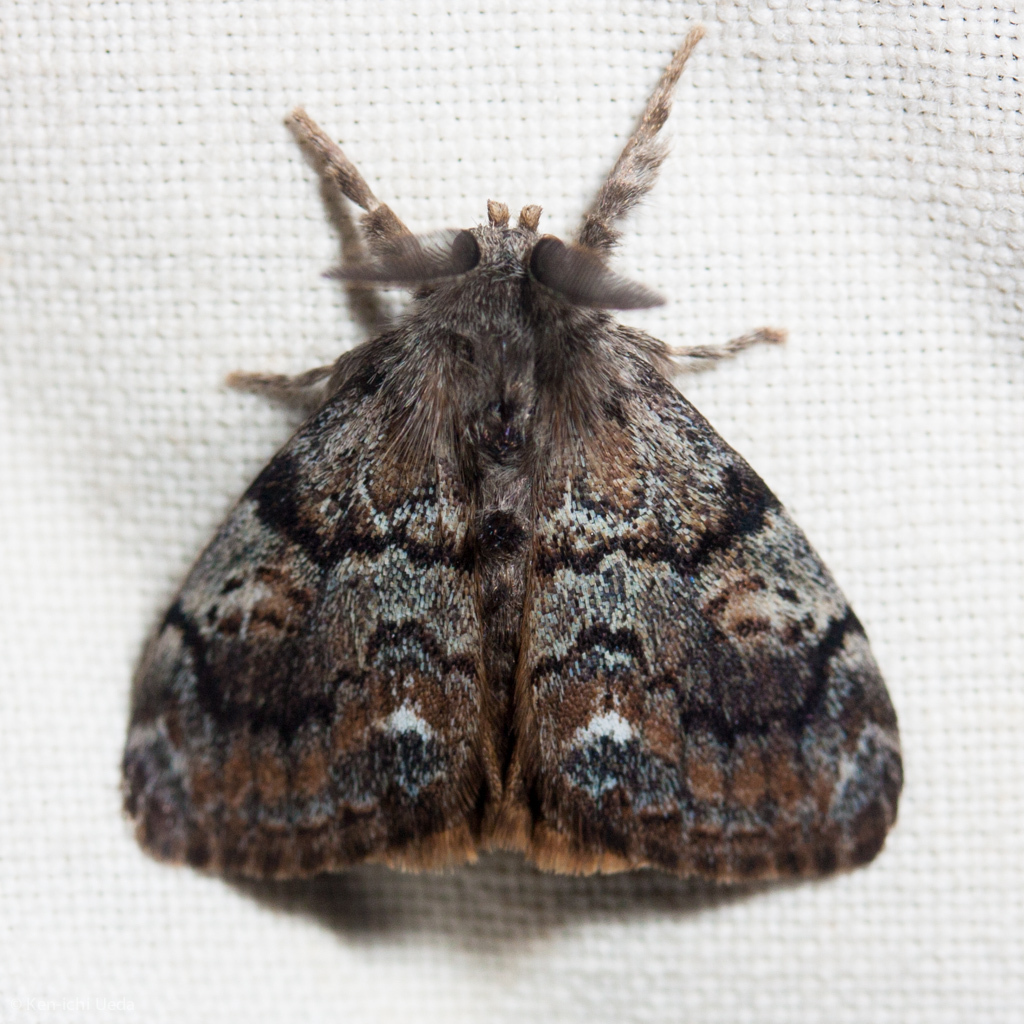
Polilla con mechones del oeste
Orgyia vetusta
Orgyia vetusta, also known as the western tussock moth, formerly Hemerocampa vetusta, is a moth found in the Pacific States and British Columbia. The species is dimorphic; the females are flightless.
The Western tussock moth is reported on virtually all California oak species as well as various fruit and nut trees, ceanothus, hawthorn, manzanita, pyracantha, toyon, walnut, and willow. There is an isolated population in Boise County, Idaho. This species has also been seen in U.S. gulf coast states such as Louisiana..
Del artículo Western tussock moth de Wikipedia (CC BY-SA), citado sección por sección
En la cultura humana
Tussock moth eggs are white and are laid in a mass, which overwinters. The female covers the eggs with setae. The caterpillars emerge in early spring (February-May) and exhibit minimal disperse via ballooning, a process by while caterpillars hang from silk threads and are spread by wind. This is also observed in other species within the family Erebidae, such as Lymantria dispar dispar. Larvae have hairs that may cause minor skin irritation or allergic reactions in humans. Adults emerge from cocoons between June and August.
Wikipedia: «Life history»
Escuchar
Buscando grabaciones de campo…
Dónde vive
Avistamientos registrados
—
registros georreferenciados en GBIF, de museos, herbarios y observadores de campo.
Arrastra el globo para girarlo. Los puntos marcan dónde hay registros, no un mapa de distribución; más oscuro significa más registros.
En los depósitos
Buscando en los depósitos…
Todas las páginas que nombran Orgyia vetusta en la Biodiversity Heritage Library →
Esta página se compone en directo a partir de iNaturalist, GBIF, Wikipedia, la Source Library y el Internet Archive. Aún no forma parte del códice editado a mano. Taxón 61908 de iNaturalist.