- Animales
- ›Cordados
- ›Vertebrados
- ›Peces con aletas radiadas
- ›Acanthomorpha
- ›Carangiformes
- ›Peces planos
- ›Platijas
- ›Pleuronectinae
- ›Pseudopleuronectes
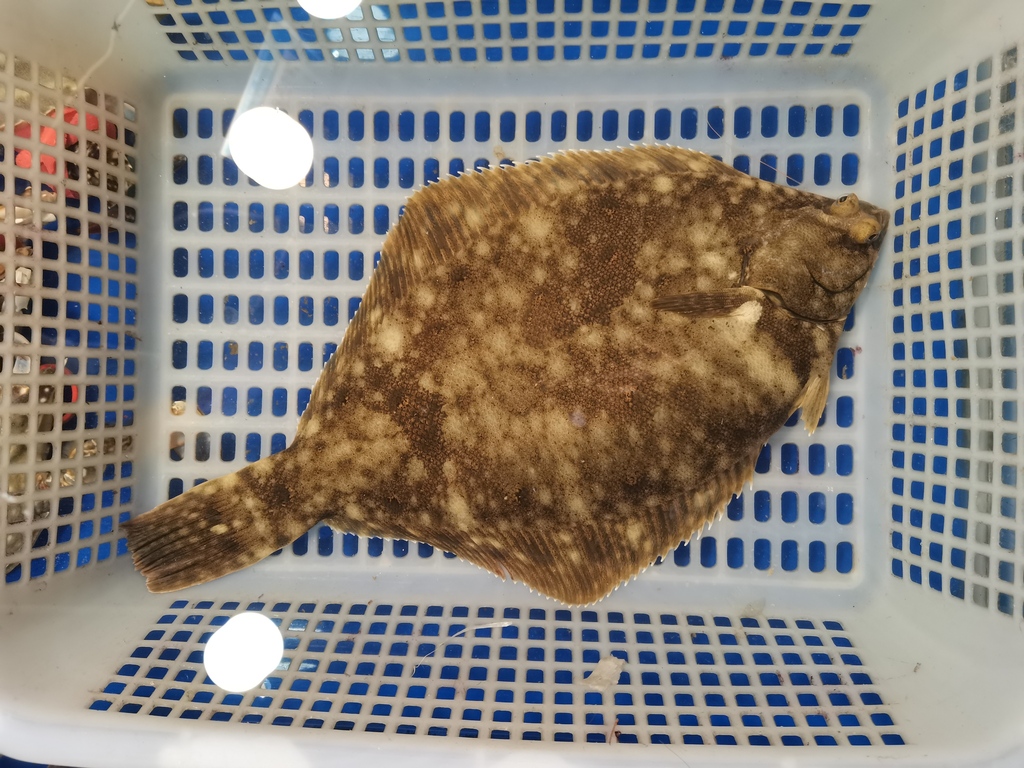
Pseudopleuronectes yokohamae
The marbled flounder, Pseudopleuronectes yokohamae, is a flatfish of the family Pleuronectidae. It is a demersal fish that lives on saltwater sand and mud bottoms. Its natural habitat is the temperate coastal waters of the northwestern Pacific, from southern Hokkaido, Japan, to the Yellow Sea, Gulf of Bohai, East China Sea and Korean Peninsula. It can grow up to 45 centimetres (18 in) in length, and its maximum recorded weight is 1.9 kilograms (4.2 lb).
Del artículo Marbled flounder de Wikipedia (CC BY-SA), citado sección por sección
Lo que hace
The diet of the marbled flounder consists primarily of benthic organisms such as amphipods, polychaetes, shrimps, crabs and other benthos crustaceans.
Wikipedia: «Diet»
En la mesa
In Japan, the marbled flounder is found in Beppu Bay, and considered a specialty in the town of Hiji, where it is called shiroshita karei ("under-the-castle flounder"), because it is caught under the waters of Hiji Castle. The town holds an annual flounder festival. It is eaten raw in sashimi, in soups, or deep fried.
== References ==
Wikipedia: «As food»
Dónde vive
Avistamientos registrados
—
registros georreferenciados en GBIF, de museos, herbarios y observadores de campo.
Arrastra el globo para girarlo. Los puntos marcan dónde hay registros, no un mapa de distribución; más oscuro significa más registros.
En los depósitos
Buscando en los depósitos…
Todas las páginas que nombran Pseudopleuronectes yokohamae en la Biodiversity Heritage Library →
Esta página se compone en directo a partir de iNaturalist, GBIF, Wikipedia, la Source Library y el Internet Archive. Aún no forma parte del códice editado a mano. Taxón 465054 de iNaturalist.